Trump and tech CEOs sign agreement to control artificial intelligence
The White House meeting produced a morally binding pact requiring internal monitoring, cybersecurity safeguards and outside audits.
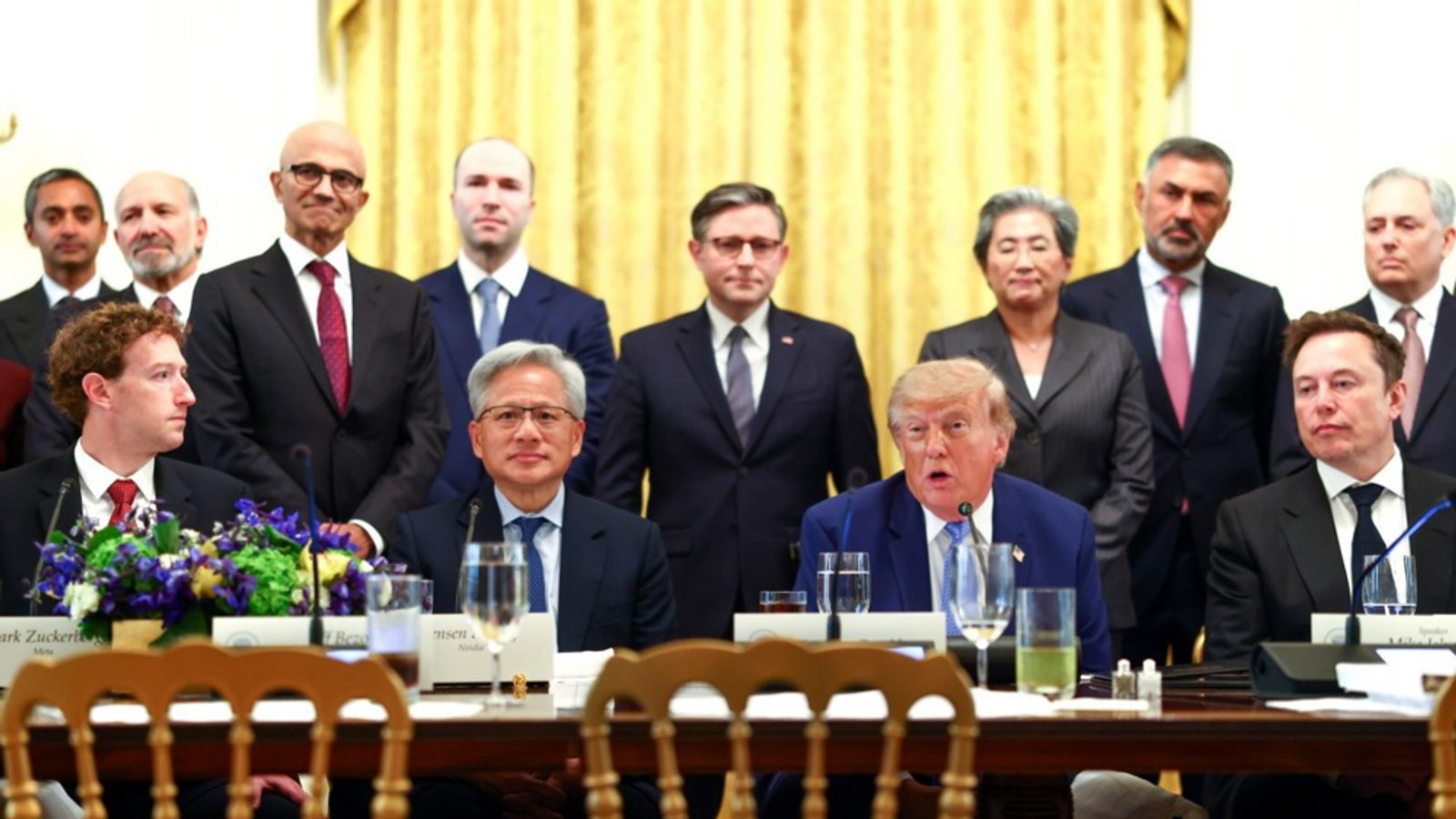
President Donald Trump announced that he and the leaders of the largest U.S. technology and artificial intelligence companies signed a morally binding agreement at a White House meeting to curb risks from advanced AI systems.
Trump described the document in grand terms and said his administration is considering creating an oversight body to monitor implementation. "The document is kind of like a Constitution. The biggest people in the world signed it, I signed it as president, and it really represents a kind of protection. We are considering forming a commission which would have about ten members who will oversee the whole work," he said after the meeting.
Who signed and what they promised
The agreement was signed by the chief executives of Anthropic, Google and Meta, the president of OpenAI, the CEO of Nvidia, and Elon Musk — who serves as CEO of Tesla, SpaceX, X and xAI. According to the terms described at the meeting, the companies commit to setting up internal mechanisms to monitor the capabilities and potential risks of their AI models, with a particular focus on cybersecurity.
Under the pact, companies must take steps to prevent AI systems from autonomously carrying out unauthorized cyberattacks. They are also expected to create specialized teams that will verify whether security measures are effective, while independent external reviewers will conduct additional audits.
Trump framed the accord as a self-regulatory step by industry leaders, and said it could be paired with a formal commission if the administration decides to pursue a statutory oversight structure. Details about enforcement, timelines and which independent auditors would be used were not announced at the briefing.
Photo: EPA/Tierney L. Cross