Gambling payments hit €1.6bn in H1 2026 as relocation rules await implementation
First‑half receipts near €1.6bn; new rules on ownership, advertising and 500m school distance take effect with implementation deadlines up to 1 Jan 2028.
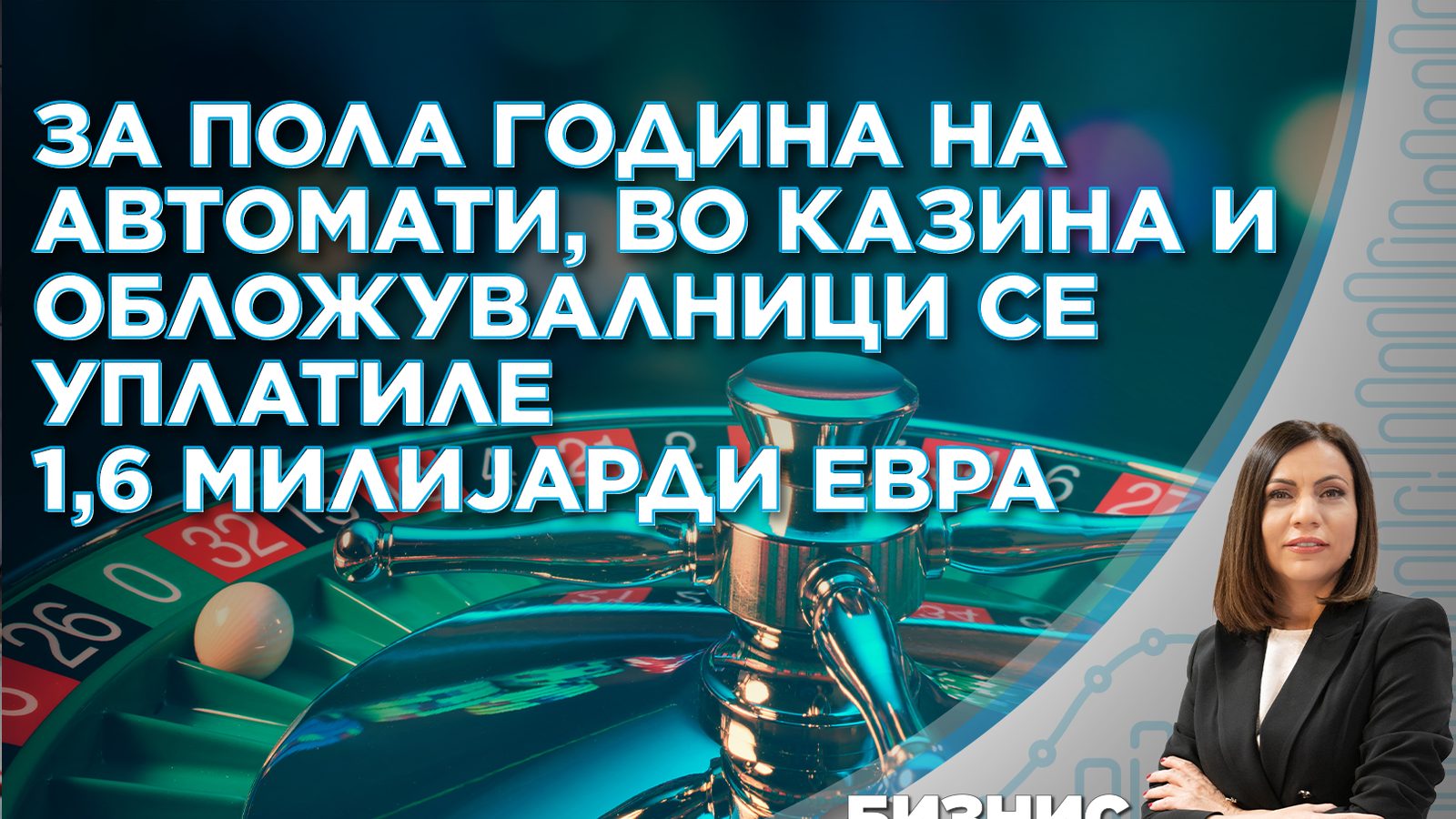
Payments at casinos, slot clubs and bookmakers in North Macedonia reached almost €1.6 billion in the first half of 2026, official tax data show, even as deadlines approach for new relocation and transparency rules.
New law, implementation timetable
The 2026 law adopted in July tightened controls on ownership and the origin of funds, limited advertising and set a minimum distance of 500 metres between gambling venues (casinos, slot clubs and electronic gambling machines, including those inside betting shops) and primary and secondary schools. That distance rule is due to begin on 1 January 2028. "The rulebook on the method for determining the distance and the form and content of the geodetic report shall be prescribed by the Director of the Agency for Real Estate Cadastre, which will be adopted within one year from the day the Law enters into force (as of 14.07.2026). Therefore, the exact definition of the method by which the distance from primary and secondary schools will be measured will be prescribed by the Agency for Real Estate Cadastre with the above rulebook," say the Ministry of Finance.
Compared with the full-year total of €2.8 billion in 2025, the first-half figures mean that if current trends continue the sector could overtake last year’s receipts. Machine gambling accounts for the largest share — more than €1 billion in payments — while casinos recorded about €380 million and bookmakers nearly €120 million from 1 January to 30 June.
Winnings were concentrated differently: bookmakers paid out the most in prizes, casinos the least. Taxes on personal income from gambling winnings in the first half of 2026 totalled €14.25 million — more than €11 million came from bookmakers, around €2 million from slot clubs, and under €1 million from casinos.
Operators warn the timing and detail of the new rules create legal uncertainty and risk business closures. "At the moment we face inconsistencies and ambiguities that we pointed out even before the new law was adopted. Namely, regarding the levies that have been increased by the new law there are certain ambiguities for their application because existing gambling licences are issued for a six-year period and were granted under the old Law on Games of Chance. With the new amendments they are increased, however this represents legal uncertainty," said Goran Stoimenov, representative of the Association of Gambling Operators.
Stoimenov and other industry representatives also argued the relocation requirement will de‑facto force many operators to close and could encourage illegal gambling. "State institutions make an incorrect estimate and calculation if they assume that by reducing the number of business premises for organising games of chance, and at the same time increasing the levies, they will reach the same level of revenue that the budget receives from gambling, which exceeds €350 million annually. With respect to relocation, primarily jobs will be lost, that is the first and basic negative effect that will result from relocation. Second, organisers will suffer huge losses in terms of investment and in terms of adapting business premises that have clearly prescribed legal provisions on how they should be built and what they should contain. Third, landlords will lose rents, and ultimately the state will be left without the guaranteed revenues it used to receive from gambling. Relocation does not mean those same business premises will be moved to another site. 70% of the premises that will have to relocate will be closed because it is neither spatially nor investment-wise possible to transfer them to another place," Stoimenov warned.
Survey data cited by authorities show one in four pupils sometimes gambles for money. Officials say the new rules are intended to protect children from daily exposure to gambling and to prevent normalising gambling as a lifestyle.
Mirjana Joveska
Photo: press material from the event