September 20 — Venerable Kassia of Constantinople, patron of artists and marginalized women
September 20 marks the feast of Venerable Kassia, hymnographer and protector of artists and women who suffer injustice.
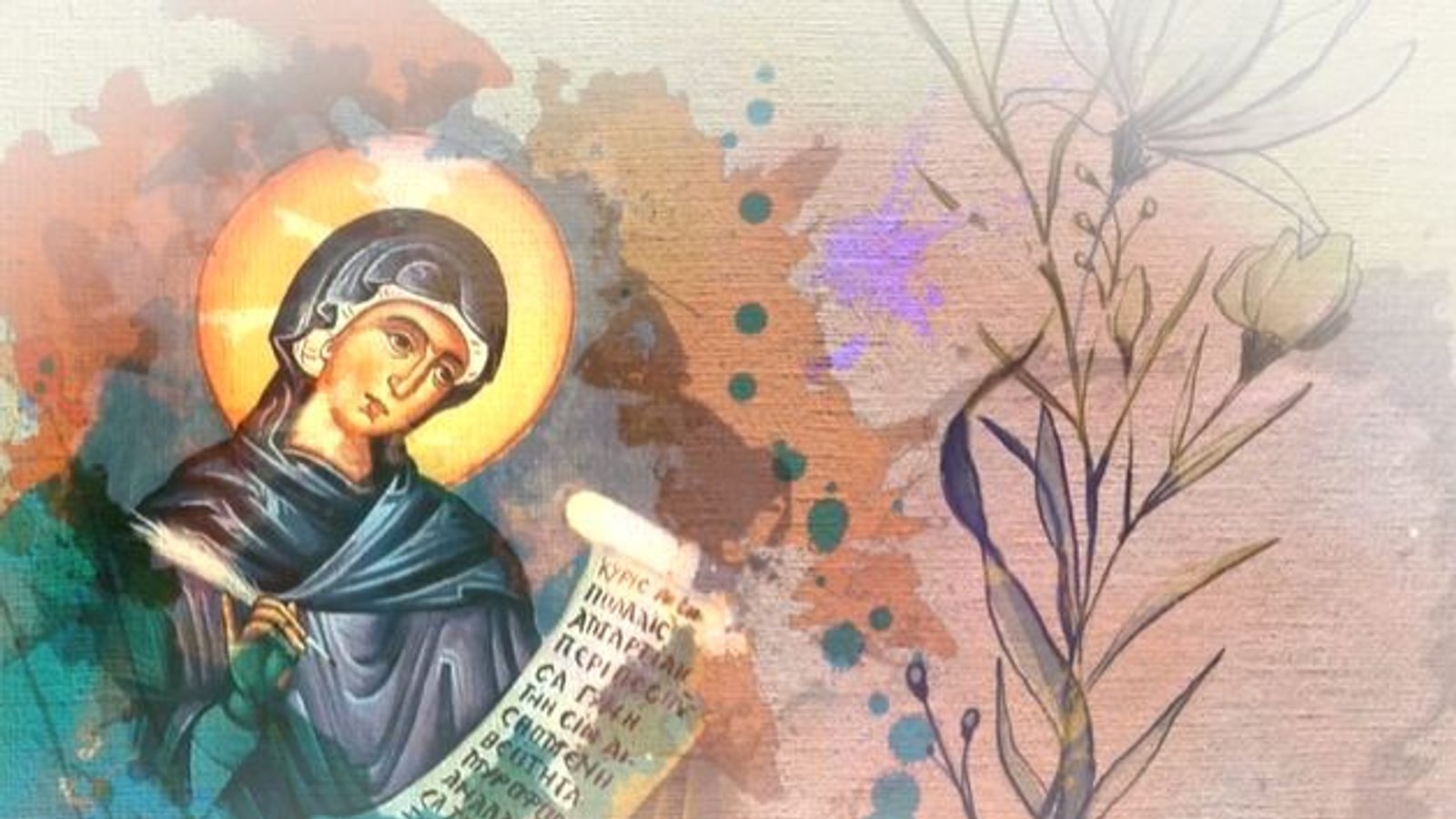
On September 20 the Orthodox calendar remembers one of its most singular female figures: Venerable Kassia the Hymnographer of Constantinople, a woman celebrated for learning, poetic talent and steadfast faith.
Life between the imperial court and the cloister
Born in Constantinople between 805 and 810 into a noble household, Kassia stood out early for both striking beauty and exceptional education. She was even considered among candidates to marry the Byzantine emperor Theophilus, who once provoked her with the saying, "From woman have come the greatest evils." Kassia answered him plainly and firmly: "And the greatest goods too."
Rejecting a life at court, Kassia chose a monastic calling. In 834 she established a monastery (a communal convent) west of Constantinople and became its first abbess. Her restless spirit also led her to travel — accounts place her in Italy and Crete — and she ultimately completed her earthly journey on the Greek island of Kasos.
As a leading hymnographer and poet, she left a legacy of sacred hymns. Among her works is a well-known sticheron for Holy Wednesday dedicated to the sinful woman who poured fragrant oils on Christ's feet — a piece that has endured in the Eastern Christian liturgical tradition.
Kassia is regarded in popular piety as the patron of artists, writers, poets and hymnographers — essentially those whose craft is the word and the creative voice. She is also seen as a protector of women who face injustice, prejudice or belittlement of their intellect and labour.
Believers turn to her in prayer for spiritual wisdom, eloquence, strength in trials and protection of family life. Tradition holds that she most readily answers prayers spoken from a contrite and sincere heart, especially requests for guidance when someone faces difficult life choices or seeks relief from slander, injustice or social contempt.
On her feast people — and especially women — are encouraged to dedicate the day to reading, writing, learning or artistic expression, to seek reconciliation with those they are estranged from, and to practise forgiveness and care for the weaker. Her example as an abbess and leader is often invoked to stress that active, creative work and concern for others bring particular blessing on this day.
Photo: press material from the event