Weidel and Le Pen propose curbs on Brussels' power
Both call for a union of sovereign states and cuts to EU budget contributions, but differ on fiscal policy, energy and EU institutions.
Ahead of possible shifts in Brussels, two prominent European right-wing leaders have outlined competing blueprints for reshaping the EU while stopping short of calling for withdrawal from the bloc.
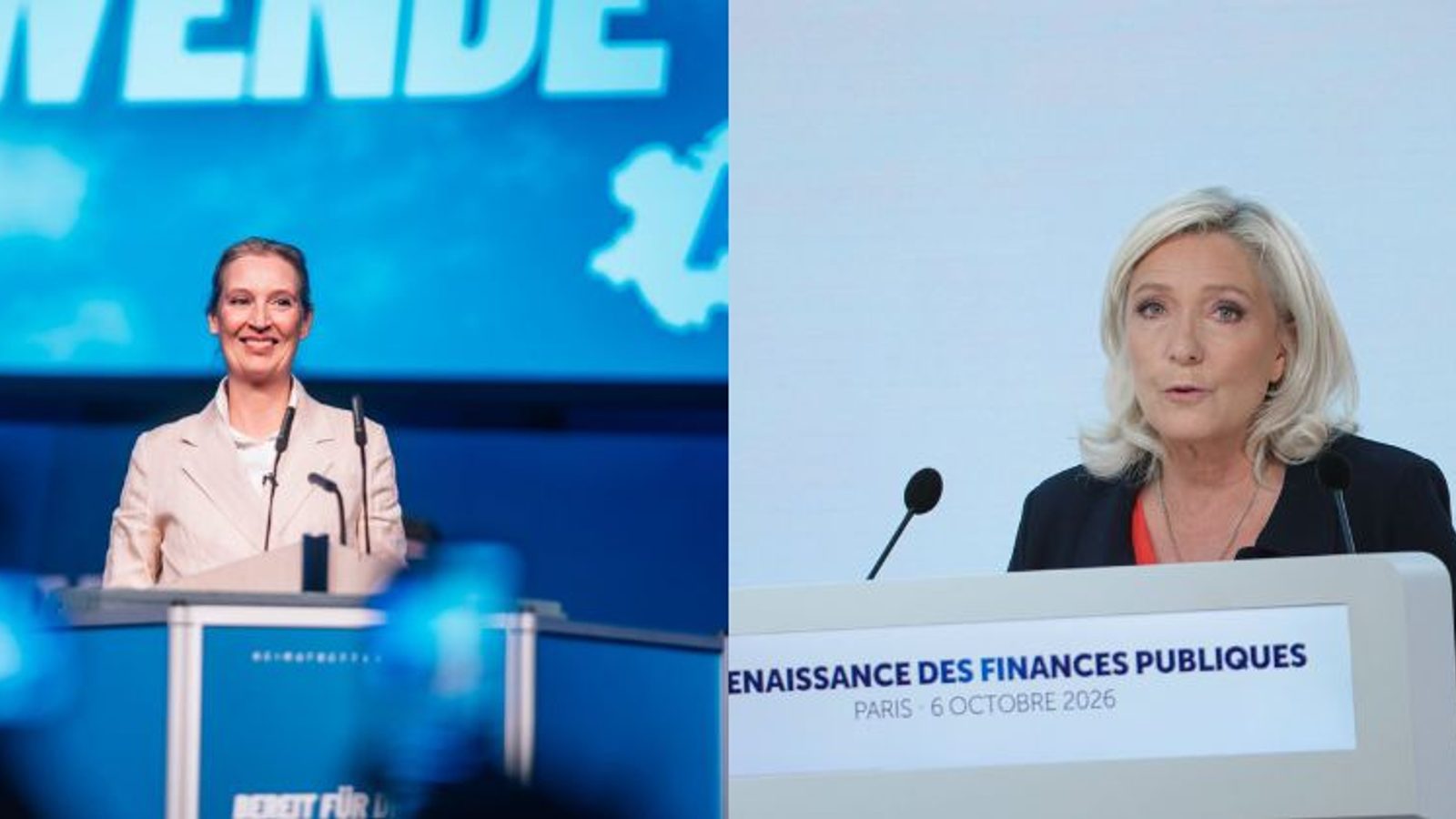
Alice Weidel, leader of Alternative for Germany (AfD), presented her "New Deal for Europe" in Strasbourg one week after Marine Le Pen set out her own vision in Brussels. Both seek to reorganize the Union around national sovereignty and to reduce the power of central institutions, but they diverge sharply on fiscal rules, energy policy and the scale of proposed reforms.
Key policy divides and shared demands
Politically, both women are riding strong domestic momentum. AfD scored a September regional victory in Saxony-Anhalt and is on course to lead a German state for the first time; the party also tops some national polls. Weidel said their objective is to "take governmental responsibility after the next parliamentary elections." In France, Ifop surveys put Le Pen between 34 and 38 percent in first-round support for the 2027 presidential election.
On foreign policy, the parties have common ground in asking for an immediate halt to funding Ukraine's defence and denouncing what they see as excessive EU regulation. Le Pen argues that "exhausted French public finances" can no longer sustain sending aid to Kyiv and has called for lifting sanctions on Russia while keeping training and equipment deliveries but not direct financial transfers. Weidel has urged a negotiated peace that respects the security interests of both Ukraine and Russia, adding that, according to her, Ukraine has already lost the war.
The largest rift concerns economic policy. Le Pen proposes harmonising taxes on tobacco, alcohol and large corporations across Europe to curb tax competition and wants to change the European Central Bank mandate to prioritise growth, employment and innovation. AfD emphatically rejects any transfer of fiscal sovereignty to Brussels and insists the central bank be confined strictly to price stability; Weidel has claimed that the ECB is currently "illegally financing state debts." Both sides, however, oppose common EU borrowing and want national contributions to the EU budget reduced — Le Pen suggests a €5 billion ceiling for France while AfD demands an end to Germany's role as the bloc's main financier.
They also clash on energy. Le Pen defends a European carbon border tax and would link member states' budgetary contributions to pollution levels and compliance with the Paris climate agreement. AfD calls for full national freedom to set energy mixes — including coal, nuclear, gas and renewables — and portrays the European Green Deal and bans on internal combustion engines as harmful market interference.
Institutional proposals overlap in the intent to weaken Brussels: both want the European Commission reduced to a secretariat serving member states. Le Pen seeks abolition of the Committee of the Regions and the European Economic and Social Committee; AfD goes further, proposing that members of the European Parliament be delegated by national parliaments rather than elected directly.
Strategically, Le Pen hopes to reshape the bloc through allied wins in countries such as Spain, Italy and Poland, while AfD sees 2029 as a turning point. If Brussels' reform efforts fail, AfD has said it may unilaterally opt Germany out of key EU policies — notably Schengen and migration quotas, under which Berlin is due in 2026 to accept redistribution of 4.555 asylum seekers. As a last resort the party envisages letting German citizens decide on membership in a referendum, though Belgian analyst Dave Sinardet notes that after Brexit an exit from the Union is no longer a realistic option for leading right-wing forces.
Photo: Fejsbuk)