VLT reveals unusual object near CD-35 2722 — possible first candidate for an exomoon
An unusual companion in the CD-35 2722 system (about 73 light-years away) could be an exomoon or an object that blurs the division between planets and moons.
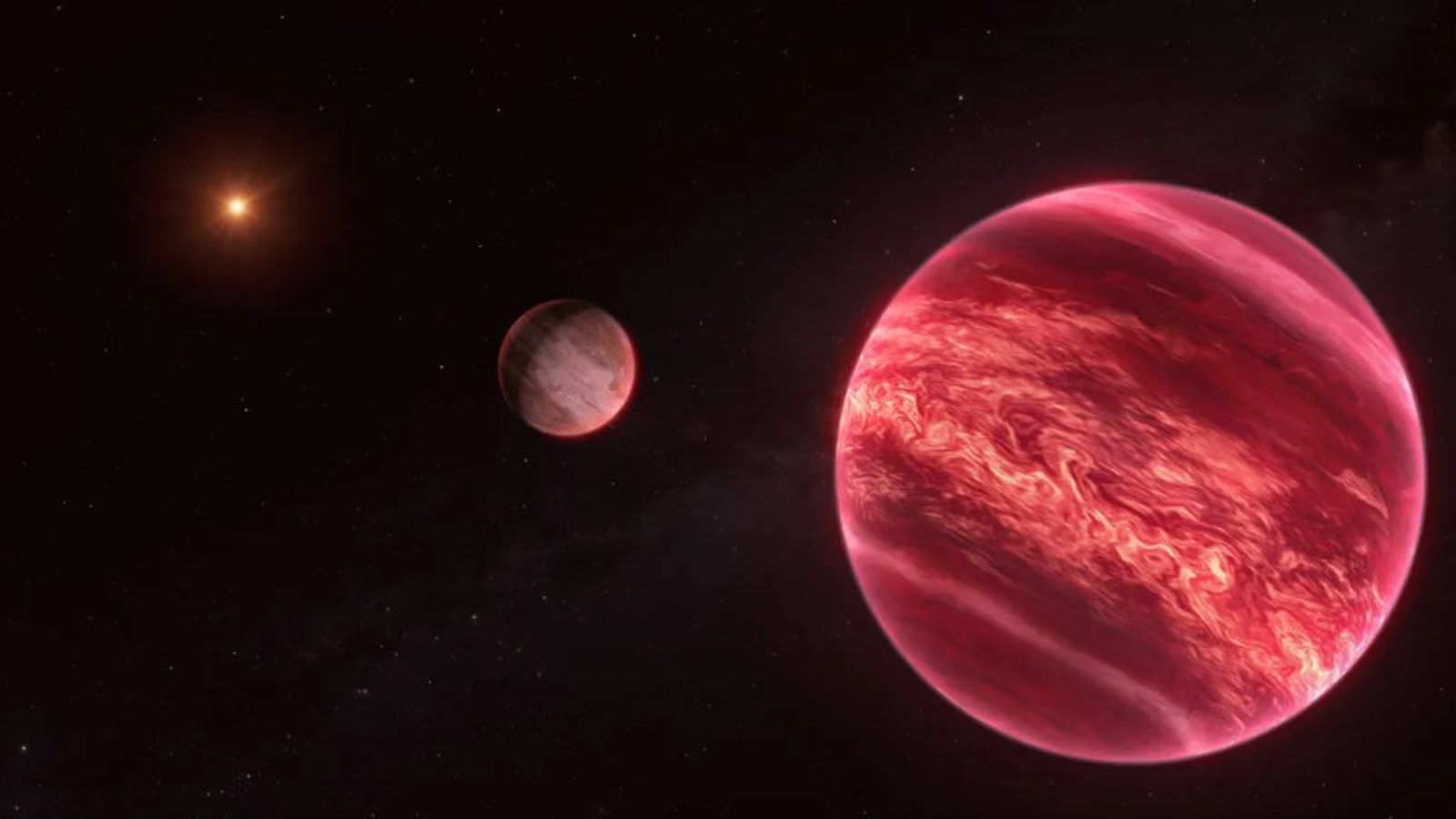
With observations carried out using the Very Large Telescope (VLT), scientists have identified an unusual object in the stellar system designated CD-35 2722, located about 73 light-years from Earth. The discovery attracted attention because the body could be an exomoon — a natural satellite of a world outside our solar system — or an object that would call for a new approach to defining what is a planet and what is a moon.
Since the discovery of the first exoplanets in the 1990s, astronomers have confirmed the existence of more than 6,000 in NASA's catalog. However, natural satellites around those worlds have so far remained unconfirmed in official records, although models and observations suggest that exomoons should exist.
The signal recorded with the VLT marks the object as an anomaly in the system's data, and scientific teams have therefore labeled it a candidate for further study. The challenge with such observations is that faint companion bodies are difficult to distinguish from noise, background stars, or instrumental effects.
What this means for classification
If the object is confirmed to orbit an exoplanet, it would be the first clearly confirmed discovery of a moon outside the solar system. But there is also the possibility that its characteristics place it in an overlapping category — i.e., that it does not fully fit either the definition of a planet or a moon — which would force a revision of the taxonomic and theoretical framework for the formation of such bodies.
Researchers emphasize that the current results are cautious: additional observations and independent analyses are required to rule out other options, such as a distant background star or a transient phenomenon. Still, the object represents a clear target for future campaigns with large ground-based telescopes and space observatories.
Whether it ultimately becomes the first confirmed exomoon or a new type of substellar object, the reported observation confirms that the direct detection of satellites around exoplanets is one of the next major achievements in observational astronomy.
Photo: CNET)