Aphasia Club opens at the Centre for Rehabilitation of Verbal Communication in Skopje
New club complements clinical rehabilitation with social, educational and recreational activities and a single registry for users.
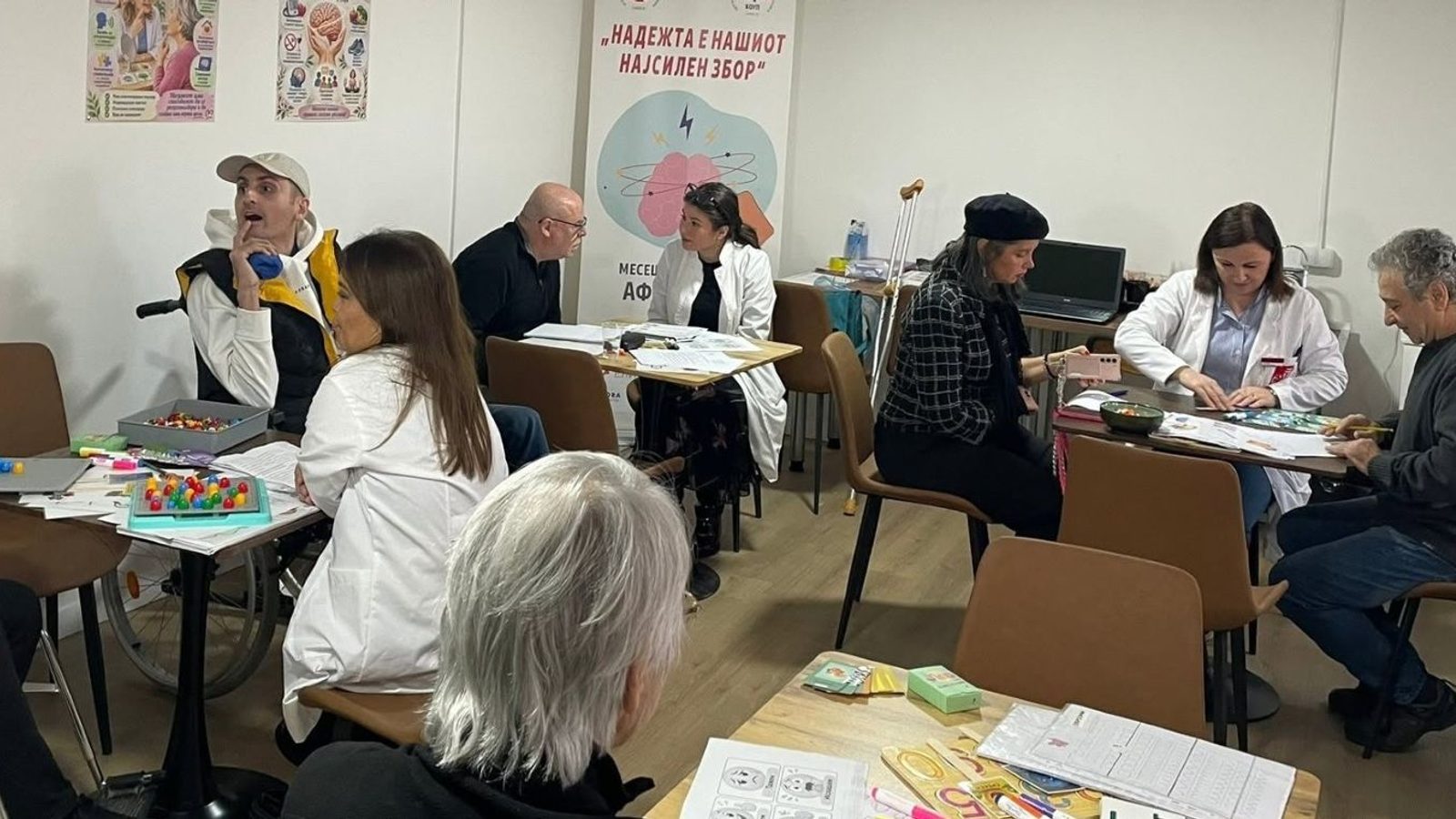
The Center for Rehabilitation of Verbal Communication Pathology in Skopje has launched an Aphasia Club aimed at improving the quality of life for people with aphasia by promoting social participation, communication and active community involvement, said Dr. Nermin Telovska, director of the centre.
The club operates as an informal unit within the Department for Acquired Speech-Language Disorders, where participants already receive clinical treatment. The department’s team includes experienced speech therapists working alongside a psychologist, psychiatrist, special educator and rehabilitator, with other specialists engaged as needed.
Clinical services remain separate from the club’s work. Group therapy and counselling are provided as regulated health services under accredited procedures, with service codes and reimbursement covered by the Health Insurance Fund. The Aphasia Club is intended as a complementary environment focused on social support and inclusion rather than a substitute for medical care.
Activities, partnerships and a user registry
The club will offer educational, social, cultural and recreational activities such as social gatherings, creative workshops, public awareness campaigns and cooperation with civic associations and socially responsible organizations. Partnerships with local communities and NGOs are expected to expand the range of activities and opportunities for people with aphasia.
To support planning and professional work, the centre has introduced a registry for people with aphasia who use its services. Each person is entered into the registry once at first contact and receives a unique registration number. Unlike outpatient logs that record each visit, the registry is a single user database and does not require repeated entries for the same individual.
"Because of the communication difficulties, people with aphasia often face reduced social interaction, a sense of isolation, decreased self-confidence and limited participation in family, social and professional life. Although speech therapy treatment and counseling are basic forms of rehabilitation, the need for continuous opportunities for communication and social inclusion remains present outside the therapeutic process. For these reasons, the formation of the Aphasia Club represents a significant additional form of support for these people and their families," says Dr. Telovska.
"The club provides a supportive environment in which people with aphasia can establish and maintain social contacts, exchange experiences, gain a sense of belonging and strengthen their self-confidence. By organizing various social, educational, cultural and recreational activities, the club contributes to reducing the consequences of communication limitations, preventing social isolation and encouraging independence and active living. In this way, it represents a significant complement to the rehabilitation process and support for people with aphasia and their families," the director added.
Photo: Centar za rehabilitacija na patologija na verbalna komunikac