Expert at Gjoko Ristov trial: improper handling may have introduced foreign DNA into evidence
Forensic expert said foils and banknotes seized in Negotino on 18 January 2026 were not documented or protected, creating a real risk of DNA contamination.
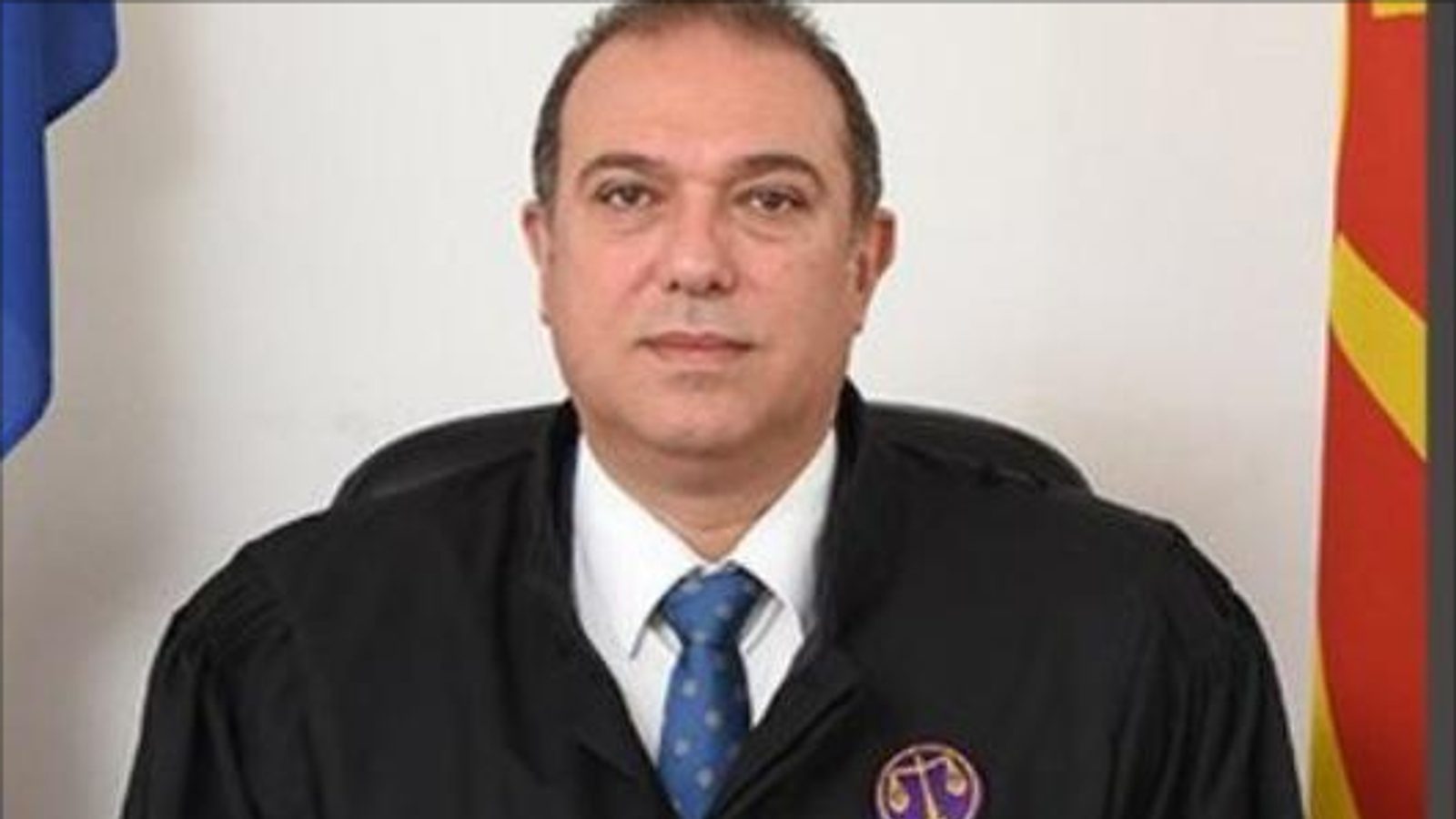
An expert in criminalistics, Atanas Kozarev, testified today at the Criminal Court in Skopje in the trial of appellate judge Gjoko Ristov, saying that evidence collected during the search of a house in Negotino on 18 January 2026 was not handled according to standard procedures and that there was a real possibility that foreign DNA could have been introduced or transferred onto the exhibits.
Kozarev said his analysis focused on how authorised officers dealt with the aluminium foils and the banknotes in which the money was found — how they were opened, separated, labelled and repackaged. He told the court he had not previously seen evidence handled in a way where foils were opened, separated, their chain of custody lost and some left on the floor, which he said showed unfamiliarity with basic evidence-handling rules and risked contamination by biological material from multiple people.
Documentation and traceability
He stressed the importance of documenting each foil before opening so later DNA swabs can be clearly linked to a specific foil and the exact surface they were taken from. "By photographing and marking before opening, it should be recorded which foil wrapped a particular bundle of banknotes, how it was folded and which side was facing inwards and outwards. This is important so later every swab for DNA testing can be connected to the exact foil and the exact surface from which it was taken," he told the court.
Kozarev said the available video material did not show that each foil had been photographed from all relevant sides, with a label and scale. Without such documentation it may be impossible to determine whether a swab came from the external or internal face of a foil, from the edge or the folded part, or from a section exposed only after opening. "Without such documentation, it cannot be determined with certainty whether a particular swab was taken from the outside or the inside surface..." he added.
Asked for his overall conclusion, Kozarev told the court: "A key conclusion would be that in this specific case, due to the absence of anti-contamination measures, the evidentiary material is not fully protected and there is a real possibility of introduction or transfer of foreign DNA."
Prosecutor Iskra Hadzhi Vasileva asked the court to play a YouTube video showing how Italian police handled a similar case of cash hidden in a wall; the judge allowed the material despite objections. Kozarev commented on the footage: "I am horrified by that video which shows some people wearing gloves and some not," he said.
The proceeding concerns €350,000 found during a search at the home of Ristov's parents in Negotino on 18 January 2026. The Public Prosecutor's Office reported the money was packed in 13 packages — a total of 610 banknotes of €500 and 225 banknotes of €200, some with hand-marked amounts — hidden inside hollowed bricks in a wall. Ristov is suspected of failing to report assets and of giving false information about his property and his family's property; the prosecution says it has solid evidence regarding ownership of the funds. Judge Biljana Kocevska is presiding; the next hearing is scheduled for 9 December 2026.
Photo: press material from the event