Vučić threatens to change Ibar's course, ties threat to treatment of Serbs — Pristina protests
Vučić said Belgrade has consulted engineers and warned the move would respond to Pristina's treatment of the Serbian population near Gazivode lake.

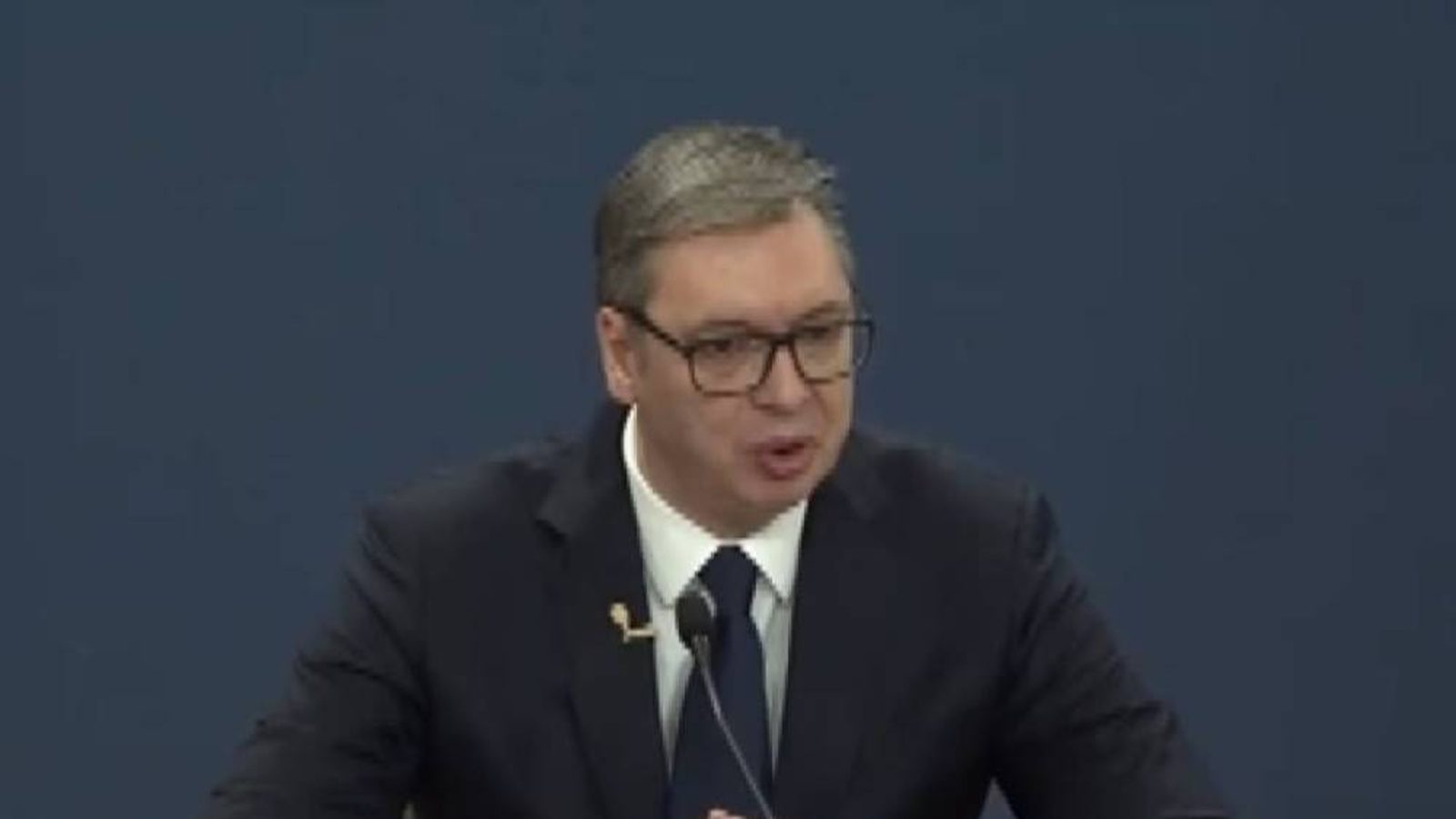
Serbian President Aleksandar Vučić on Sunday threatened that Serbia could alter the course of the Ibar River, linking the warning to what he described as mistreatment of Serbs in Kosovo and Metohija and saying Belgrade has already called in specialists to study the idea.
Speaking to reporters while inspecting work on the Old Railway Bridge in Belgrade, Vučić said experts from construction and engineering sectors have been engaged and repeated that the move would be a response to actions by Pristina. He told journalists: "We have already called in specialists who deal with this, the construction sector, engineers and others, so when they are mistreating our people so much, let us see — we have various reasons to change the course of the Ibar, so we'll see what the Albanians will do and how they will behave."
The Ibar is dammed on the territory of Kosovo and Metohija, forming the artificial Gazivode Lake. In recent days authorities in Pristina have demolished Serbian-owned buildings near the reservoir; a hotel and 16 weekend cottages have been torn down so far.
Hydropower generated at the Gazivode plant supplies a significant portion of Kosovo's electricity needs, and the Ibar–Lepenac water system is used to provide drinking water for local communities.
Vučić also framed the step as an assertion of national sovereignty, saying: "We are a sovereign country, you know, sometimes we have such, and sometimes different interests and according to that we will behave." He added that the Serbian population in Kosovo and Metohija lives in extremely difficult conditions and that the state is doing everything it can to ease their situation.
Reaction from Pristina
Fitore Pacolli, Kosovo's minister of environment, spatial planning and infrastructure, called Vučić's remarks "deeply worrying and unacceptable." She warned that water resources must not be used as an instrument of threat, pressure or destabilisation, and invoked the Helsinki (UNECE) convention on transboundary waters, saying states have an obligation to cooperate on reasonable use, to prevent transboundary harm and to protect aquatic ecosystems.
Pacolli said Kosovo will protect its water resources, critical infrastructure and the interests of its citizens in accordance with the Constitution, Kosovo law and principles of international law.
Legal experts note that the Ibar flows through several territories: it rises in Montenegro, runs through Kosovo and Gazivode Lake, and continues into central Serbia. Serbia and Montenegro are parties to the UNECE Convention on the Protection and Use of Transboundary Watercourses, which requires states to prevent significant transboundary harm, to use waters equitably and to cooperate.
Because Montenegro recognises Kosovo while Serbia does not, formal interstate procedures are complicated; nevertheless, any assessment of a plan to alter the river's course would depend on where the intervention would take place, how much the flow would change and the downstream consequences. Vučić did not provide technical details of the proposal.
Photo: EPA-EFE/OLIVIER HOSLET