Vucic: "The Serbian Church is one everywhere" — from Mrkonjić Grad to Skopje and Melbourne
From Mrkonjić Grad Vučić warned against "polycentric" plans for the Serbian Orthodox Church, calling them "death for the Serbian people."
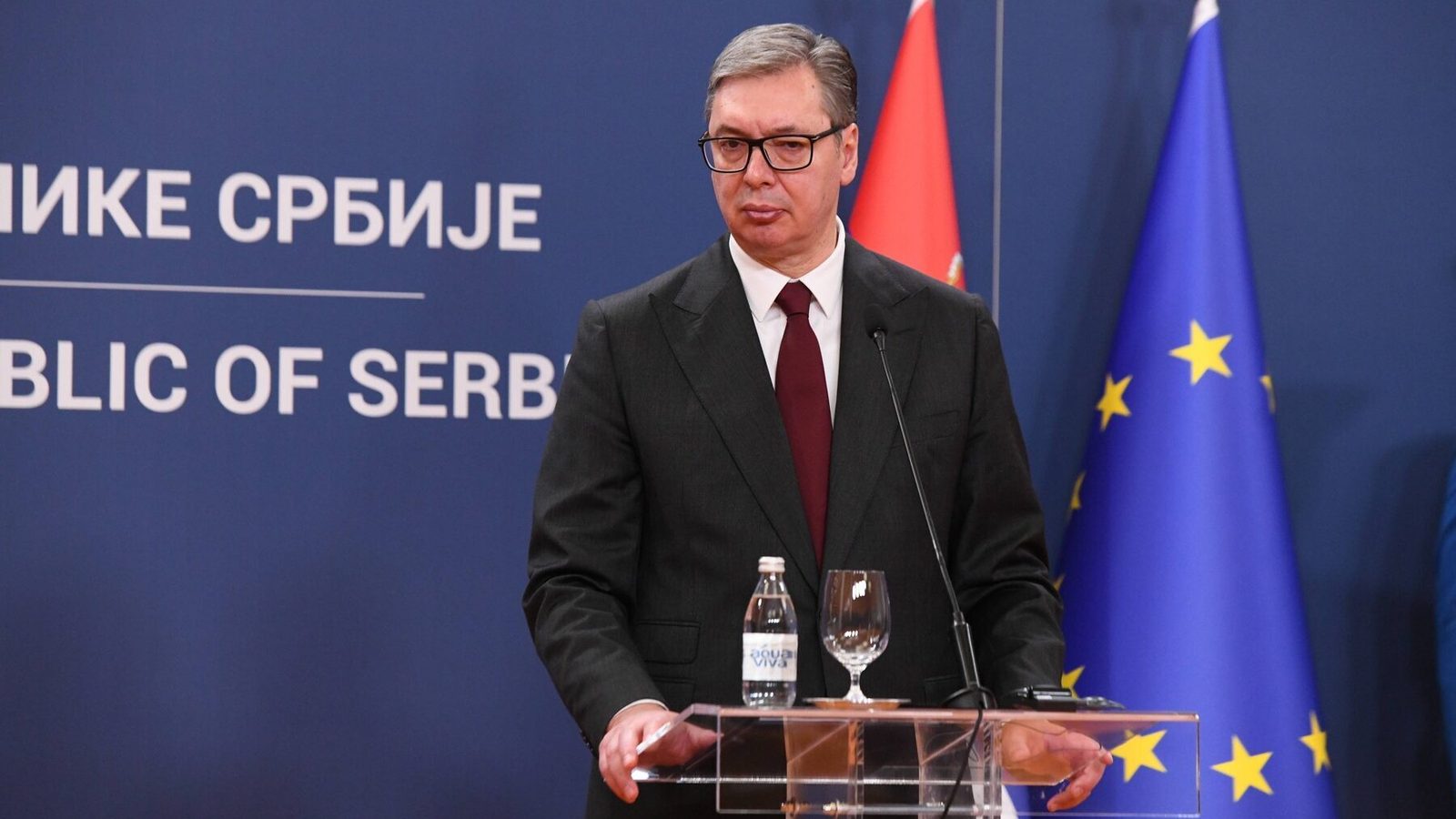
Serbian president Aleksandar Vučić said the Serbian Orthodox Church is uniform "in Mrkonjić Grad, Pirot, Sydney, Skopje, Frankfurt, Melbourne and every other place in the world" during remarks made in Mrkonjić Grad in Bosnia and Herzegovina, where a recent commemorative meeting took place for victims of the Croatian Operation "Storm".
Vučić framed his comments around what he described as "polycentric ideas" inside the Church — proposals to federalize or confederate its structure. He warned those proposals would have dire consequences, saying: "That is death for the Serbian people, that is death for the Serbian Church."
Claims about Montenegro and church jurisdiction
Addressing the 2020 protests and processions in Montenegro, Vučić said those demonstrations began when "some wanted to create an Orthodox Church in Montenegro, only to erase the word 'Serbian'." He also recalled that, "back then Patriarch Irinej, he and the Serbian archbishops recognized what was happening," presenting those earlier decisions as a warning against decentralizing the Church.
The speech rekindles an old regional debate about ecclesiastical authority. The Serbian Orthodox Church exercised jurisdiction over dioceses on the territory of what is today North Macedonia until 1967, when the Ohrid Archiepiscopate was restored in the form of the Macedonian Orthodox Church. The narrative that the Serbian Church was "expelled" from Macedonia remains a common theme in Serbian nationalist discourse.
Vučić's comments, made at a memorial context in Bosnia and Herzegovina, mix contemporary political concerns about church organization with appeals to national and religious unity. They are likely to reverberate in capitals across the Western Balkans where questions of church identity intersect with politics and memory.
Political and religious leaders in the region have in recent years treated ecclesiastical structure as a matter with clear political implications, and Vučić's statement is another example of how leaders invoke religious institutions when addressing questions of national belonging and regional influence.
Photo: MILAN ILIC/BETAPHOTO / Sipa Press / Profimedia