Warmed Mediterranean may trigger powerful cyclones and large floods in the Balkans this autumn
Meteorologist Slavcho Poposki warns the heated Mediterranean can spawn powerful cyclones that may cause above‑average rainfall and floods in North Macedonia this autumn.
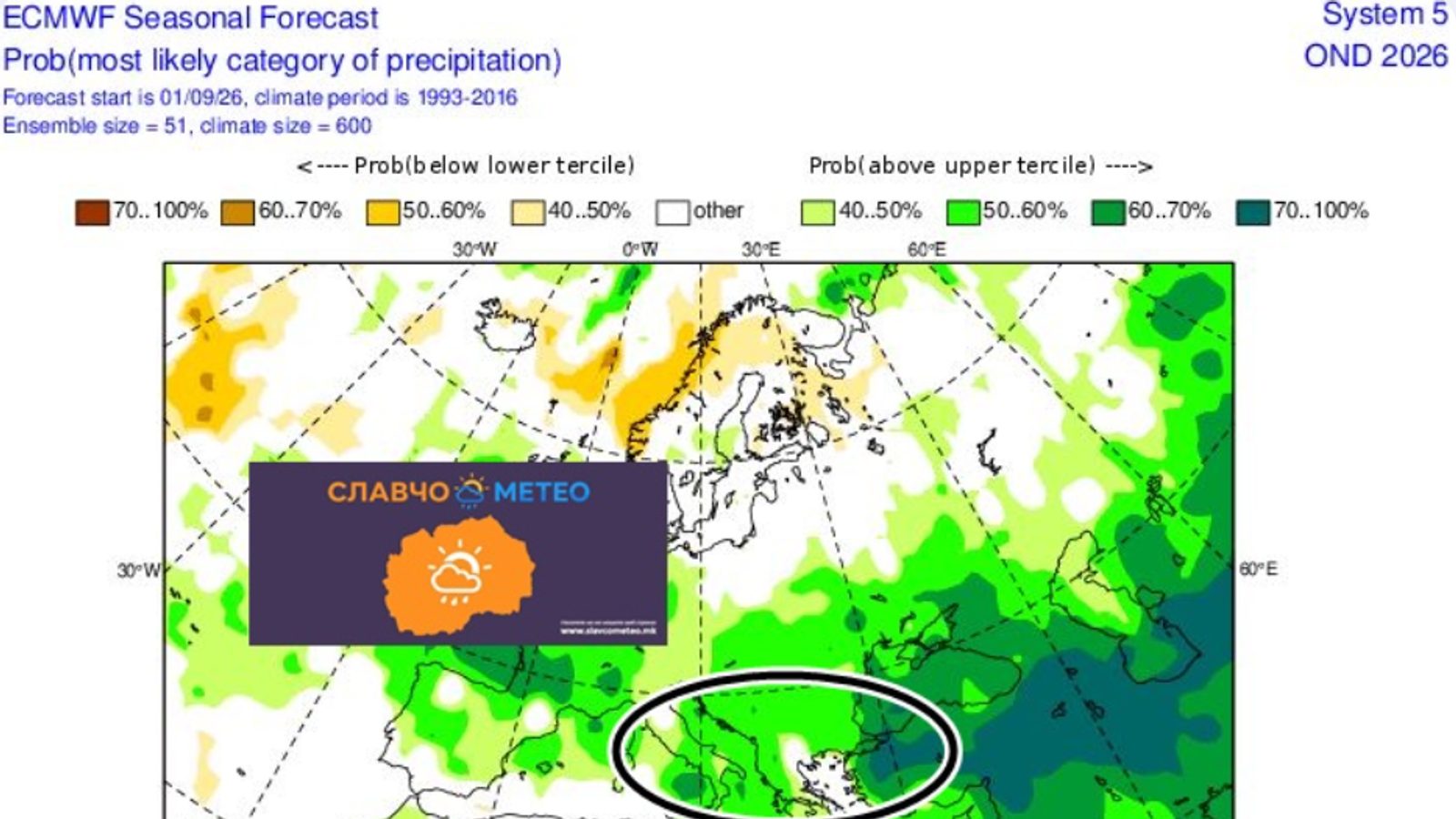
The unusually hot summer in parts of western and southwestern Europe has left the Mediterranean Sea with anomalously high temperatures, a condition that could foster the development of intense cyclones and heavy rain over the Balkans this autumn, warned meteorologist Slavcho Poposki.
"This warming of the Mediterranean Sea is very likely to trigger the formation of powerful cyclones that will bring a large amount of precipitation to the Balkans, including Macedonia. This autumn there is a high probability that rainfall across the Balkans and in Macedonia will be significantly above average.
In such a situation, there is a strong likelihood that the Balkans, and Macedonia, will face problems with precipitation — namely frequent and heavy rain and weather extremes which are increasingly likely this autumn in the Balkans and in Macedonia and may cause serious floods and many problems.
For this reason, I urge citizens to be prepared in good time for extreme meteorological events this autumn, which are becoming more probable in the Balkans and in Macedonia," Poposki said.
Why a warm Mediterranean matters
Warm sea surface temperatures supply energy and moisture to developing low-pressure systems. When those systems move northward or form near the sea, the extra heat can lead to stronger cyclonic circulation and far greater rainfall totals than under normal conditions.
For North Macedonia this means a heightened risk of intense, concentrated downpours and flash flooding in river basins and urban areas, especially if storms stall over the same locations. Authorities and emergency services may face increased pressure managing river levels, landslide-prone slopes, and urban drainage.
Poposki's warning follows reports of an exceptionally warm summer across parts of Europe and growing concerns among forecasters about broader climate drivers — including signals that a strong El Niño may develop this winter — factors that can change seasonal weather patterns across the region.
Civic authorities, infrastructure managers and citizens are being advised to review flood preparedness plans, clear vulnerable drains, and follow official meteorological updates as autumn progresses.
Photo: press material from the event