Bitola school produces its own electricity, replaces oil heating with heat pumps
Roof-mounted solar panels, an energy-efficient façade and new heat pumps cut bills and lower emissions at Stev Naumov Primary School in Bitola.
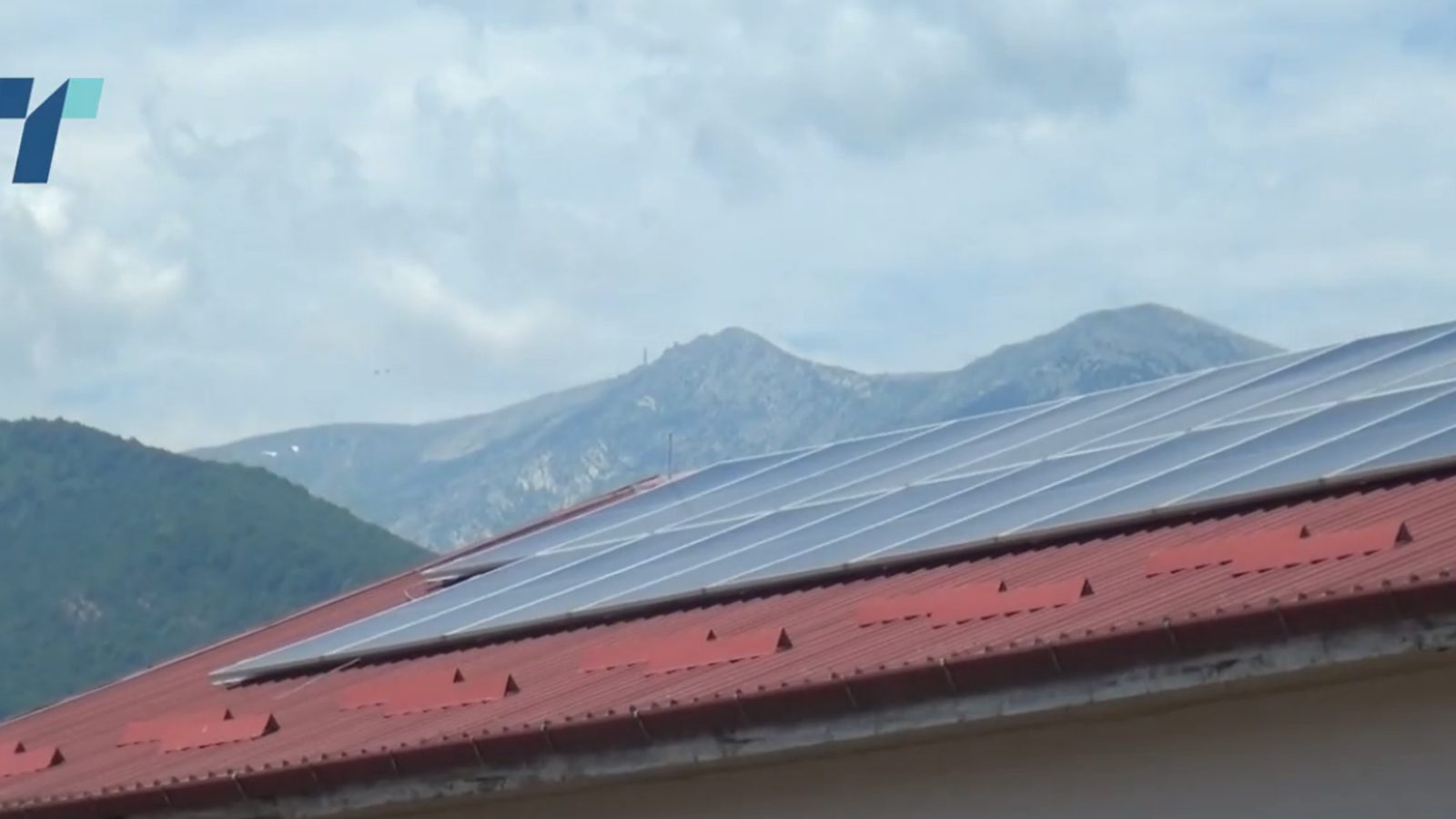
Stev Naumov Primary School in Bitola has completed a multi-year renovation that replaced oil heating with more efficient measures and added on-site electricity generation, municipal officials and school leaders say. The project combines a thermal-tight facade, rooftop photovoltaic panels and the recent installation of heat pumps to lower costs and emissions.
From insulation first to solar power
"When I became principal the window frames had already been replaced. Then we started the project for an energy-efficient façade. With the approval of the project, which is worth 7,681,000 denars, we automatically joined the schools that could move to the second phase with the installation of photovoltaics. At the moment we are also installing heat pumps, so the school is really becoming a green school," said Nikola Piskachev, principal of Stev Naumov Primary School in Bitola.
School officials emphasise that the upgrades followed a sequence: first stop heat losses through roof, windows and walls, then add renewable generation so the new systems deliver measurable savings. The renovated roof now produces electricity for the school, the insulated façade retains heat, and heat pumps are replacing the oil-based boilers that were used until last year.
"That means removing oil as an energy source, i.e. pollution. We contribute to clean green energy and an ecological environment. The school makes large savings with the installation of the energy-efficient façade because that energy we have does not escape," Piskachev added.
Emilija Sarafska from the Department for Economic Development in the Municipality of Bitola said the municipality chose schools that were not connected to district heating for the heat-pump rollout and expects improved conditions for pupils already from the next heating season. She also noted the system will serve the school's sports hall.
Mayor Toni Konjanovski said the effort has grown into a municipal programme. "From the start of the mandate we have been actively involved in implementing solutions for higher energy efficiency and environmental protection. Today we have installed photovoltaics in 10 schools — seven primary and three secondary. We already have projects for three more, so by the end of the year we will have 13 schools covered with photovoltaics," he said, adding that Bitola was selected as the only city in the country to join a pilot capacity-building project under an energy community based in Vienna.
Financial and environmental results are already visible. "At Krste Petkov Misirkov school, in only one year after installing photovoltaics the savings were more than 95,000 denars. If we add up all the buildings with installed renewable sources, today we are talking about around 17,000 euros in annual savings. We expect those savings to increase with the installation of heat pumps. It is not only the economic aspect — with renewables the carbon dioxide emissions are reduced by about 200 to 220 tons per year. That is a benefit we do not see daily, but it is extremely important for the environment," Sarafska said.
The saved funds are being re-invested into school life rather than remaining as figures on a spreadsheet. Pupils propose projects on how to use the revenue from sold electricity, and the winning proposals receive funding. "With the installation of photovoltaics we achieved electricity savings. Photovoltaics produce electricity, and between 7 and 12 percent of the produced electricity on a monthly basis is used for the school's needs. The remaining electricity is placed on the open market, and the funds from its sale are reinvested in the school. The students proposed projects for how those funds will be used, and the best idea will be implemented. The children formed three project groups. The best project was chosen by seventh graders — to create an open-air classroom. We expect that from September 1 classes will be able to take place outside. That is another benefit of the photovoltaics," Piskachev said.
Municipal leaders and school managers describe the panels as the first visible stage in a broader energy transition: schools are an initial segment of public infrastructure to be made more energy-efficient, and officials say the coming challenge is to extend the approach to other public institutions to secure long-term fiscal and environmental gains.
Photo: press material from the event