Sloviansk braces for another winter as civilians stay on the frontline
Residents who stay face daily strikes, shortages and unaffordable relocation costs as the city braces for another winter of war.
By Hanna Sokolova — 26 October 2026.
Sloviansk sits on the front line in eastern Ukraine; many residents have left, but those who remain are trying to carry on as attacks continue. A reporter visited the city and spent time with people who say they have nowhere else to go.
Life among damaged apartment blocks and empty streets
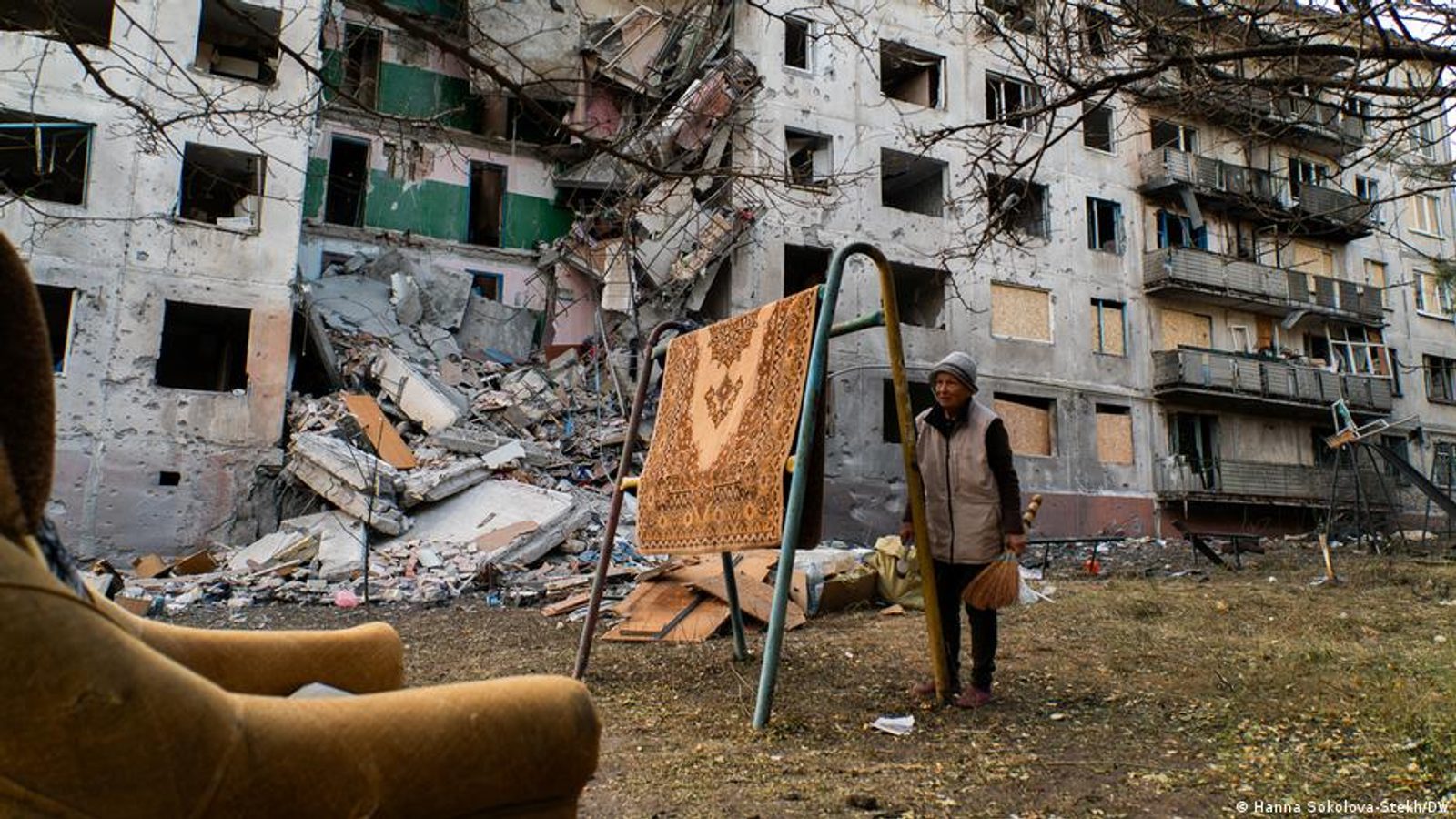
In a courtyard on the city’s western edge, surrounded by pockmarked residential towers, an elderly woman hangs a dusty carpet on a metal frame once used as a playground swing. Tetiana says she dragged the rug out from her flat, now filled with rubble, to clean it after a Russian strike hit the neighbourhood. One of the bombs struck a five‑storey block, damaging part of the building and injuring seven people.
“Windows were flying toward me, but they didn't even touch me,” Tetiana recalls, adding that another bomb had hit the second floor of the neighbouring block. “On the fourth floor there was a woman who shouted loudly for help. They managed to rescue her before that part of the building collapsed.” Despite being offered evacuation, Tetiana — who receives a pension of 3,400 hryvnias (about €67) — says she cannot afford to leave. “Even if I received 2,000 hryvnias to relocate, I could not live anywhere on roughly one hundred euros a month. Rents now can cost up to 20,000 hryvnias per month,” she explains. In her sector the electricity and water are working, but gas has been cut off. “We will survive. Everything will be fine, that is what I tell everyone. I so much want to believe it,” she adds.
Clearing damaged flats has become routine. A man works by himself replacing shattered windows while others try to salvage what remains after strikes. A young couple who had been evacuated to the Kyiv region returned to nail boards over their flat’s windows and collect belongings; while they worked, another Russian strike hit a building housing the emergency medical centre and the Red Cross office. Firefighters fought blazes as rescuers saved equipment and swept glass from floors. Eight people were injured in that attack.
At one point, a rescuer shouted, “Planes!” and everyone immediately abandoned the building. Many people, however, do not go down into basements and instead wait on benches between blocks. Pensioner Natalia says she stood on her balcony during a recent strike. “The feeling was like someone hit me on the head. The explosion was deafening,” she says. Natalia cares for her immobile twin sister and complains that bread is not available every day. “Today I could not buy bread for her, so I brought her twice‑baked bread,” she adds.
In the city centre the damage is extensive and only a few shops remain open. Of the roughly 100,000 residents who once lived here, about 20,000 remain, mostly elderly people with nowhere else to go. Vasyl, who arrived from the village of Maiaky north of Sloviansk, says people have grown accustomed to living under shelling. “We have gotten used to living with grenades,” he says, and adds: “it is a bad habit we should have freed ourselves from long ago.”
“I don’t remember the last time I slept through the night,” says Irina, who keeps cats and refuses to leave them behind. “I take valerian, but even that does not help much,” she adds. At the market, sellers try to keep stalls running despite fewer traders and customers after recent strikes injured at least three people. A lingerie seller, Valeriia, works with her five‑year‑old daughter Sofia because kindergartens are closed. “We have already gotten used to this life. We were evacuated in 2022, then we returned, and now we are again waiting for a new evacuation,” she says. Nearby, her mother Tetiana has started sending goods to the Dnipropetrovsk region in the hope the family can find shelter there.
“It is hard to watch how they destroy our Ukraine,” Tetiana says through tears. “I hope we will return. But when I think of Bakhmut, there are already no houses left for people to come back to. I believe our boys will defend the cities, though I know how hard it is.”
Photo: press material from the event