Why German parties are losing support among voters with a migration background
A DeZIM study finds rising electoral weight among voters with migration backgrounds — but traditional parties are losing ground.
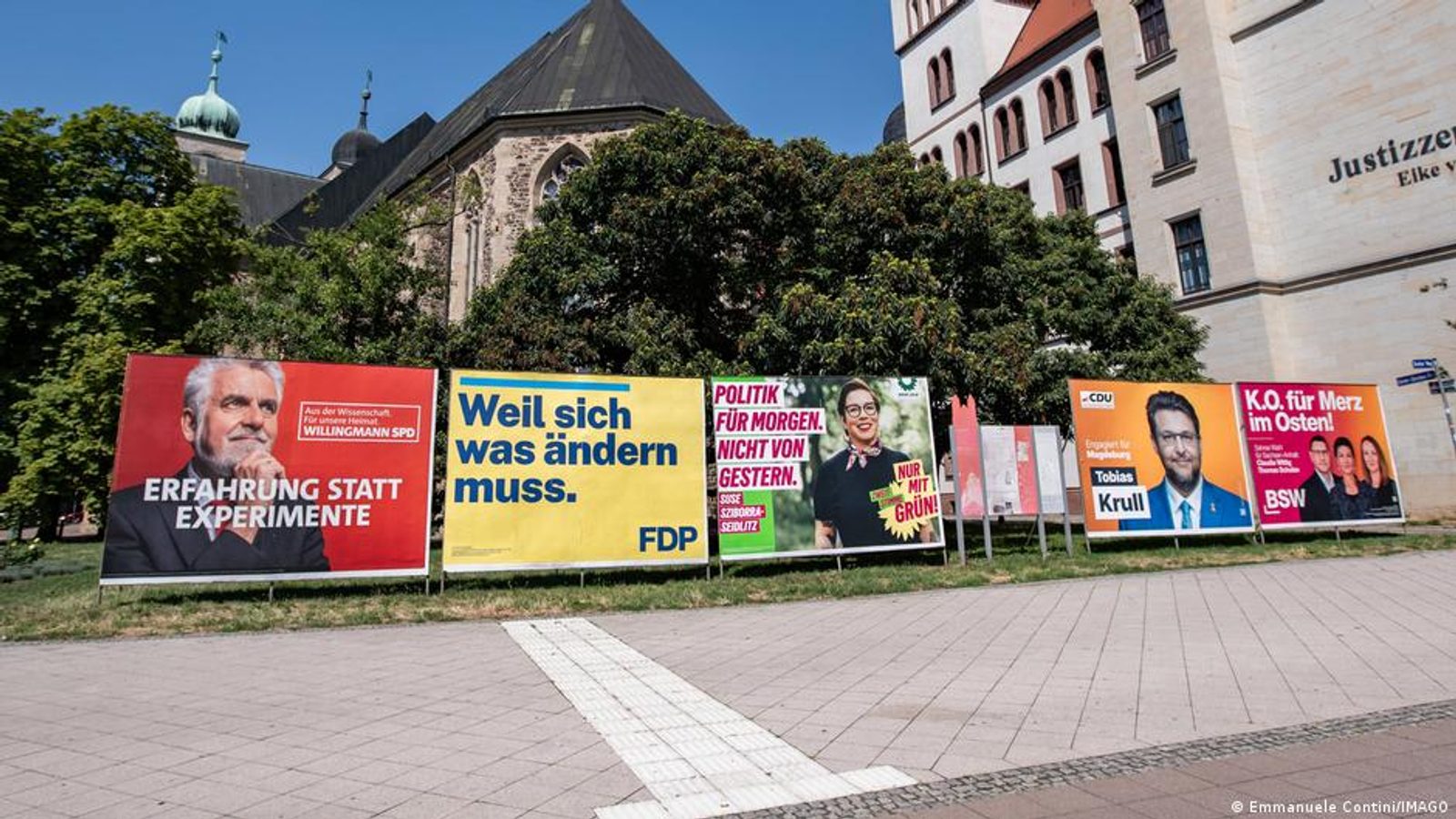
As several state votes approach in Germany, established parties are receiving worrying signals from voters with a migration background: their support is eroding. A recent study by the German Center for Research on Integration and Migration (DeZIM) finds that people with migration roots are distancing themselves from the major parties faster than the electorate at large.
Electoral weight is growing, but loyalties are shifting
The group’s political influence is expanding. In 2023, 12 percent of those eligible to vote in Germany had a migration background — more than seven million people — and that number continues to rise. That make this bloc a decisive factor in close races such as the upcoming state elections in Saxony-Anhalt and Mecklenburg-Western Pomerania, and the Berlin state parliament vote.
Despite the trend, the Social Democratic Party of Germany (SPD) still retains the largest electoral potential among voters with a migration background: roughly two-thirds of respondents say the SPD is a party they could consider voting for. CDU and CSU follow closely. Only one in five respondents said they would categorically rule out the SPD, CDU and CSU.
“Older respondents with a migration background tend to favor the SPD. In the past the tie between the SPD and migrant voters was relatively strong, but it appears to be breaking down among younger generations,” says Friederike Remer, co-author of the study at the German Center for Research on Integration and Migration.
At the same time, Alternative for Germany (AfD) faces the strongest outright rejection: nearly two-thirds of those surveyed said voting for AfD is out of the question. The rejection is particularly pronounced among people with roots in Turkey, the Middle East and North Africa — yet AfD has worked to exploit this voter segment.
“For a long time it was the first party to communicate in the mother tongue and to use messages and visual material that worked,” says Martin Gerlach, executive director of the Turkish Community in Germany, recalling AfD’s campaign in Berlin’s Neukölln during the 2021 federal election. “Their slogan was: ‘Atatürk would vote for the AfD.’ Other parties simply do not make enough effort to think about specific target groups. It's incredible, because if you manage to win over a large share of voters with a migration background, then you win elections,” Gerlach adds.
Gerlach also highlights issues other parties have underplayed. “Parties almost never address the issue of security, and this is a huge question. People from our community feel seriously threatened in many places and don't even travel to the Baltic coast,” he says, pointing to instances of xenophobic violence. He warns that anti-Muslim racism hits these groups hard and that many anti-discrimination measures are misunderstood as merely progressive or left-wing. “But for the community of Turkish origin they represent protection of the constitutional order in its most basic sense. I believe that through such a narrative much can be achieved.”
Political scientist Ozgur Ozvatan argues established parties have so far failed to adapt to a demographic transformation: “They do not address voters with a migration background in the way they should. They neither attract them into their parties, nor as volunteers, nor simply as voters. Unfortunately, we are in a situation where we are sleeping on and postponing this social change and demand.” He urges faster access to citizenship with voting rights: “We can harness that potential if we enable them to acquire citizenship with voting rights as quickly as possible.”
With the migrant-origin electorate growing, parties that fail to develop targeted outreach and address issues such as safety, discrimination and naturalization risk ceding ground to more radical or populist competitors — even if those competitors are widely rejected in principle.
Photo: press material from the event