U.S. local governments tighten brakes on data‑center construction
After New York’s moratorium, hundreds of U.S. localities are restricting new facilities amid concerns about water, power and community costs.
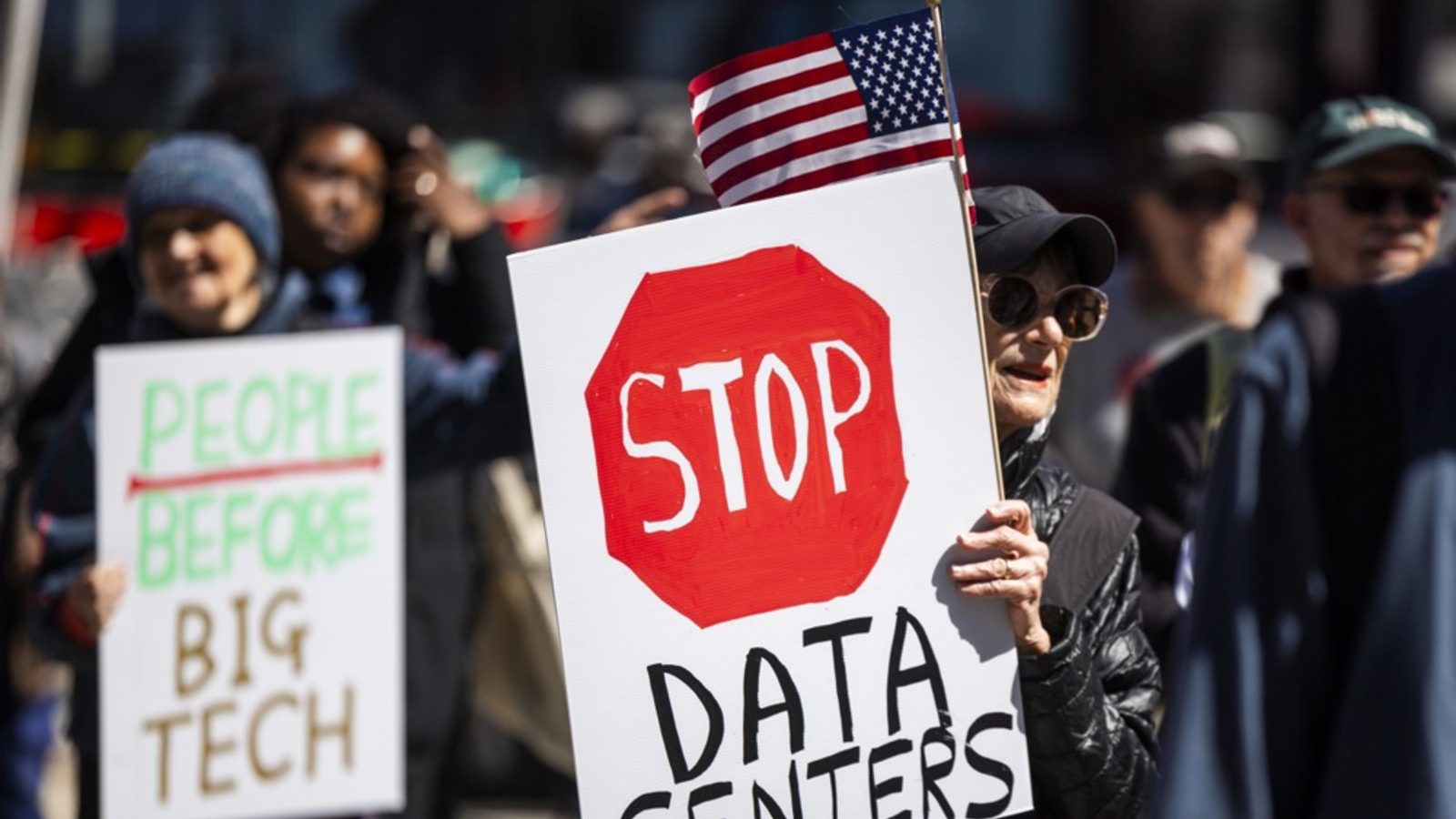
Local governments across the United States are increasingly blocking new data‑center projects amid worries about water and power use, costs for residents, and the broader strain these facilities place on communities — a trend that gathered momentum after New York imposed a one‑year moratorium on large data centers last month.
More than 500 local authorities pressing the brake
According to counts compiled since New York’s decision, more than 500 local jurisdictions have moved to restrict or delay data‑center construction, and over 150 adopted bans just last month as tech companies and investors run into growing local resistance. Summer protests from Fredericksburg, Virginia, to Tyler, Texas, have highlighted environmental and energy‑use concerns.
"There is a fairly strong feeling that local people want to push back, and part of the reason is that tech leaders are imposing artificial intelligence on us," said Paul Triolo, a partner at the DGA‑Albright Stonebridge Group. "Part of the work is to change that public perception. We say: 'Hey, maybe there is a way to solve this problem in a way that is good for both sides.'"
Resistance has reached state capitals as well. New York Governor Kathy Hochul introduced a one‑year moratorium on large data centers — defined as facilities consuming 50 megawatts or more — saying construction threatens to raise electricity bills, drain natural resources and create uncertainty for residents. Texas Governor Greg Abbott issued a pause on new data‑center approvals while state agencies review their rules; no deadline for that pause has been set.
President Donald Trump has publicly defended data centers as vital to competing with China and as economic boosters for U.S. communities. "Any community that rejects artificial intelligence is making a big mistake," he said in an interview last week, calling the projects "fantastic" and even suggesting that "data centers could be more important than oil." His position, however, clashes with polling that shows broad public skepticism.
Surveys cited in recent reporting find deep opposition among Americans: a Reuters‑Ipsos poll in June showed 45 percent oppose data centers while only 16 percent view them positively; a Gallup survey in March found seven in ten Americans oppose building data centers in their own area. While 61 percent in the Reuters survey said large data centers are necessary, 77 percent preferred they be sited far from population centers; overall, respondents said the costs outweigh the benefits by 71 to 29 percent.
That U.S. debate has reached North Macedonia. Prime Minister Hristijan Mickoski said negotiations are underway with dozens of companies about potential data‑center investments and dismissed online criticism as "unnecessary hysteria." The Ministry of Digital Transformation has floated placing data centers in techno‑industrial zones and has stressed that any construction must pass environmental impact studies.
Minister of Digital Transformation Stefan Andonovski told reporters that one option is to site centers where existing industrial infrastructure would allow brownfield investments and insisted "every build must go through proper environmental protection studies, especially for foreign investment. We will not take any step that would mean compromising nature." He added that the discussion is about capacity, scale and environmental standards rather than opposition to data centers as such.
Environmental campaigners have pushed back. The initiative "Green Human City" warned that recent technical papers, including a United Nations study, show data centers consume enormous amounts of electricity and water and that, by 2030, data centers could generate roughly 2.5 million tonnes of electronic waste — a burden many countries and localities may lack the infrastructure to manage.
Photo: EPA / Facebook