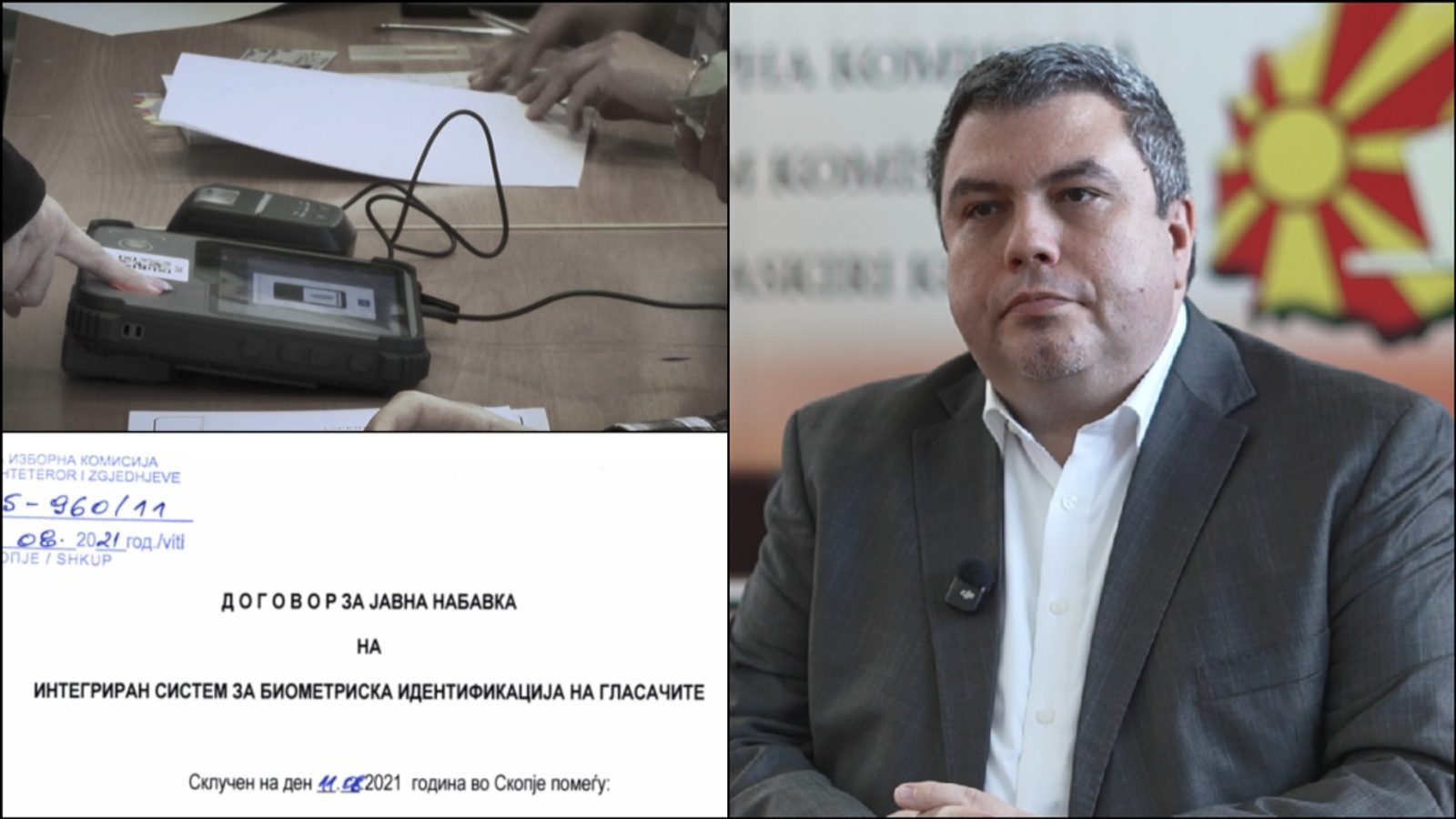
Cvetanovski again assigned to give opinion in 'Talir 2'
The Senior Public Prosecutor who in 2023 sought annulment of the verdict must now give an opinion on the appeal in the 'Talir 2' case.

Senior Public Prosecutor Jovan Cvetanovski has again been assigned to provide an opinion to the Appellate Court in the "Talir 2" case, which will determine whether the decision to confiscate the property of the ruling party VMRO‑DPMNE will be confirmed or annulled. The case reached the Appellate Court last week after the Prosecution appealed the verdict that acquitted the defendant.
Cvetanovski is the same Senior Public Prosecutor who in 2023 represented the case before the Appellate Court and then requested annulment of the verdict and remand of the case for reconsideration after the Basic Court in the first instance convicted former prime minister Nikola Gruevski to six years in prison and issued a decision to confiscate the party's Paris headquarters. According to his statement, within a day or two he will submit an opinion to the Appellate Court on whether the appeal by his colleague from the Skopje Public Prosecutor's Office is substantiated.
Why it matters that he is the one giving the opinion
When the case was considered by the Appellate Court in 2023, Cvetanovski challenged part of the court's legal analysis and proposed returning the case for a new decision, also citing amendments to the Criminal Code. He then said: "The court erred in assessing the disproportionality of the percentages, but does not base its conclusion on the regulated norm. The court is engaging in an evaluation of economic and commercial market activities in the real estate sector. The court does not distinguish between a public procurement and a public service. We propose that the case be returned for a retrial and that the detected violations be removed. The amendments to the Criminal Code for Article 353 should be taken into account and applied, which would result in absolute statute of limitations for the case."
Under the legal procedure, the Appellate Court may confirm or alter the first-instance verdict, annul it and schedule a public hearing, or return the case for a retrial. Until then, the property covered by the case remains frozen until the decision becomes final.
Legal options for seizing the party's property are limited: the Prosecution's appeal is the last regular legal tool to try to recover the property, but there are also special mechanisms that can be activated if the case becomes time‑barred or the verdict becomes final. Darko Avramovski, director of the Coalition "All for a Fair Trial", warned that although such mechanisms exist, their practical applicability is complex and problematic. He said: "If a statute of limitations occurs, that in itself does not automatically exclude the possibility of confiscation. There are special mechanisms through which the issue of property seizure can be opened even without a criminal conviction, under the provisions of the Criminal Procedure Code for confiscation without a conviction, as well as under the Law on Confiscation of Property in Civil Proceedings, if the conditions set out by law are met. However, a major problem is the practical applicability of these mechanisms. The Criminal Procedure Code provides for the possibility of confiscation without a conviction, but the procedure is not sufficiently detailed, that is, clear procedural rules are missing for how it should be conducted, evidentiary questions and procedural safeguards, which creates serious dilemmas about its practical application. On the other hand, the Law on Confiscation of Property in Civil Proceedings was conceived precisely as an additional mechanism for situations in which property cannot be seized through regular criminal proceedings. However, already at its adoption we warned that the way the procedure is set up would create serious problems in application. The results so far are extremely modest, and practical problems in initiating and conducting the procedures are one of the reasons why work is already underway to change the legal framework."
Additional pressure is created by the statute of limitations deadline: if the Appellate Court does not issue a decision before 31 August, absolute statute of limitations may occur that would close the regular criminal options for confiscation. The 2023 amendments to the Criminal Code, which reduced penalties for some offenses, have already shortened the limitation periods, further complicating the Prosecution's ability to obtain a final conviction and carry out the confiscation before the deadline expires. After the verdict for Gruevski, Ristoska reacted with the words: "'Talir 2' was taken from me to save VMRO‑DPMNE's property."
Photo: Sloboden Pechat