North Macedonia considers shift to hourly pay as productivity debate intensifies
Union of Chambers of Commerce and the Ministry of Economy urge focus on productivity; unions warn hourly wages need legal safeguards.
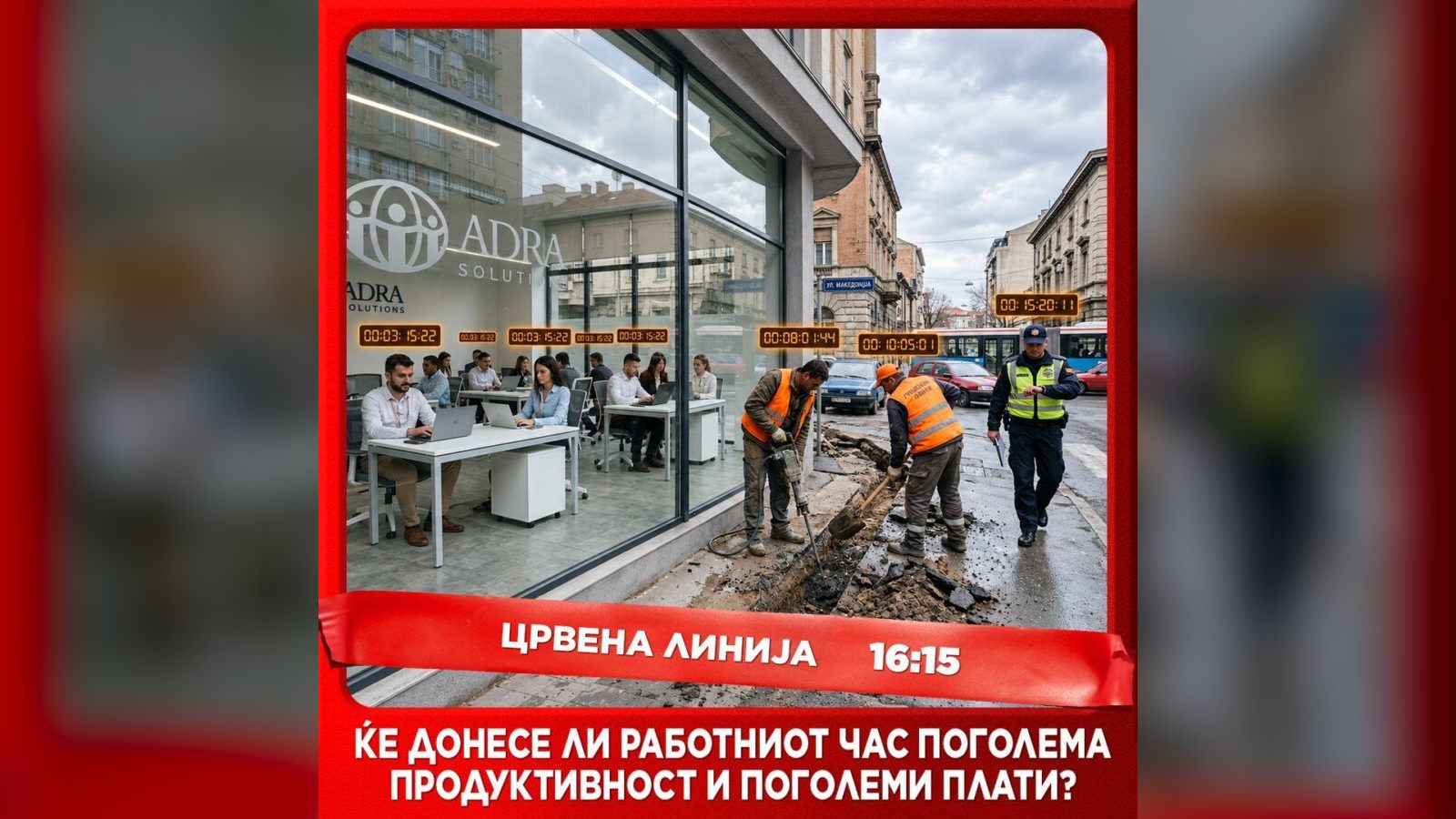
A public debate in North Macedonia has reopened the question of whether wages should be paid by the hour instead of as a fixed monthly salary. The discussion, highlighted ahead of the Crvena linija broadcast at 16:15 on 5 November 2026, places productivity at the centre of proposed changes, proponents say.
Questions for employers, workers and lawmakers
Representatives of the Union of Chambers of Commerce and the Ministry of Economy are calling for measures to raise productivity and argue that revising how pay is calculated could be part of that effort. They say an hourly-pay model would more closely link pay to output and working time.
Some trade unions welcome the idea, suggesting that payment by the hour could bring greater transparency and even create room to increase the statutory minimum wage. However, other union voices warn that, without clear legal guarantees, an hourly system risks becoming a tool for lowering workers' incomes — especially in months with fewer working hours.
The debate focuses on several concrete questions: where to draw the line between higher productivity and employment security; whether companies will commit to guaranteeing a minimum number of paid hours each month; and, ultimately, who would carry the cost of any transition — the worker or the employer.
Poll: Will payment by the hour bring higher wages for workers? Yes / No
The discussion is likely to continue among employers, unions and policymakers as they weigh legislative changes and safeguards that would accompany any shift toward hourly remuneration.
Photo: press material from the event