Gjurgjic: St. George's feast on 16 November and traditional customs
The Macedonian Orthodox Church commemorates Saint George on 16 November, a feast tied to relics, folk rules and the start of the "wolf days".
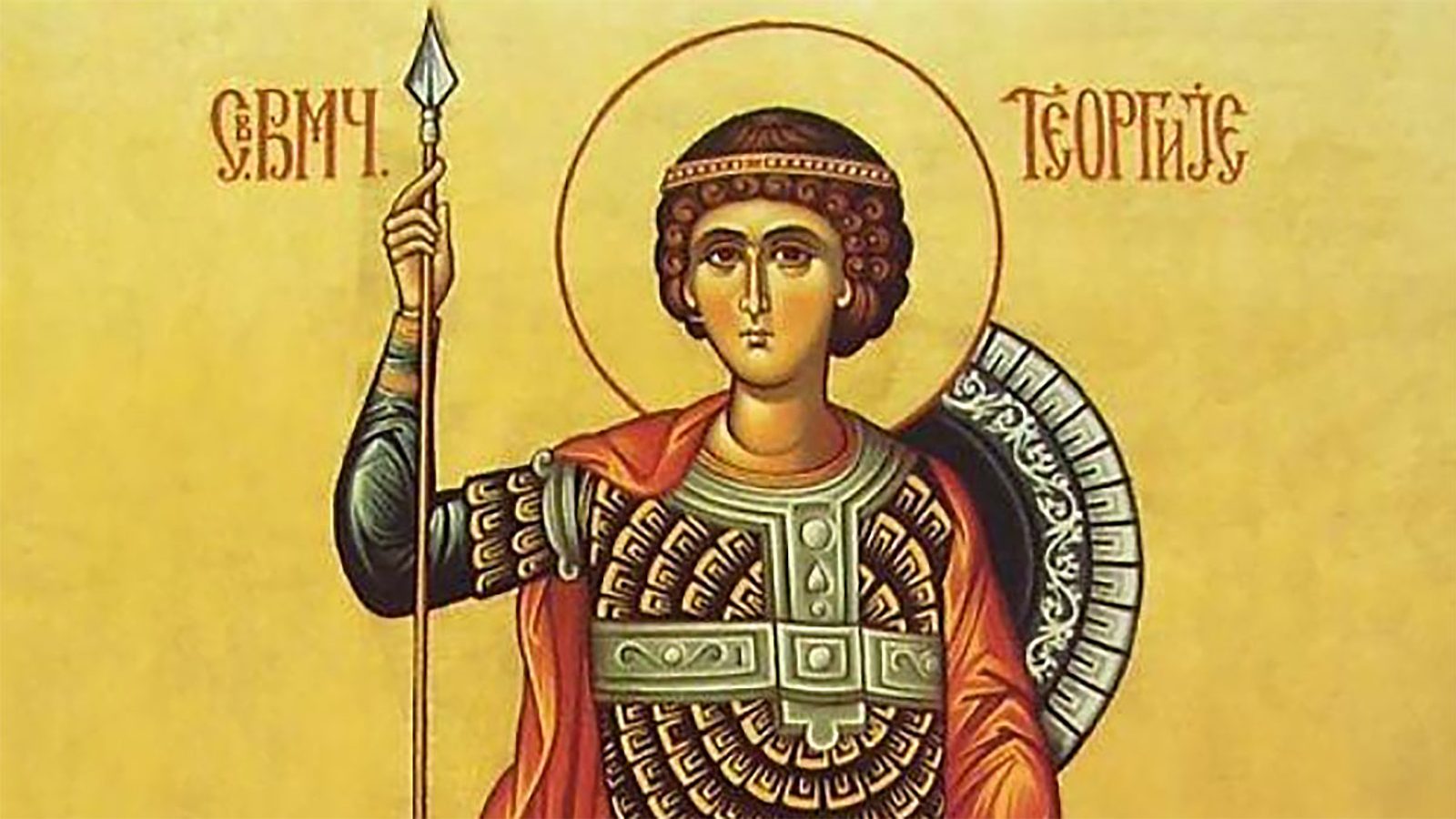
Today, 16 November, the Macedonian Orthodox Church and many faithful mark the feast of Saint George the Great Martyr — the celebration known in popular tradition as Gjurgjic, commemorating the consecration of the saint's church in Lydda (Palestine) and the translation of his relics.
Saint George is one of the most venerated figures among Christians in this country. He appears twice in the church calendar: as Gjurgjic on 16 November (the translation of the relics) and as Gjurgjovden on 6 May (the day of his martyrdom). Unlike the spring feast, Gjurgjic is not printed in red in calendars, but it retains deep traditional meaning and widespread respect.
Life and memory of the martyr
George was a celebrated soldier-martyr from Cappadocia. By the age of twenty he had risen to the rank of tribune and served in the army of Emperor Diocletian. When Diocletian began his severe persecution of Christians, George openly declared his faith and faced brutal tortures: he was placed on a stake, bound to a wheel with sharp nails and buried in a trench. By divine grace he repeatedly recovered, and many, including the emperor's wife Alexandra, embraced Christianity.
The emperor ultimately condemned them to death by the sword. Empress Alexandra expired at the execution site before the sentence could be carried out, and Saint George himself was martyred in the year 303. Before his death he asked his loyal servant to take his body to Lydda in Palestine, where his mother had been born and where he had owned land that he gave to the poor.
In the reign of Constantine the Great, devout Christians erected a splendid church in Lydda and during its consecration his relics were solemnly translated; countless miracles and healings were reported at that site, which reinforced his cult through the centuries.
In folk practice the feast of Gjurgjic opens the period known as the "wolf days," which last until 24 November. Traditional beliefs prescribe that during these days women should avoid heavy household tasks and needlework, and that tailors and shoemakers should rest. It was also firmly believed that killing wolves in this period would bring misfortune on the family for the year ahead.
Customs also linked weather on Gjurgjic to the coming winter: foggy weather was taken as a sign of a changeable, mild winter, while a clear sky foretold a cold, frosty season. On icons of Gjurgjic Saint George is usually depicted standing as an infantryman without a horse, holding a spear or sword — a contrast to his spring representation on horseback slaying the dragon.
Tropar: "As liberator of captives and protector of the poor, healer of the weak, helper of rulers, victorious great martyr George, beseech Christ our God to save our souls."
Kondak: "Having found refuge in your swift and invincible protection, O Christ-bearing sufferer, we who hymn you plead to be delivered from the assaults of the enemy, and from all misfortunes and dangers, that we may cry out: Rejoice, martyr George!"
Photo: press material from the event