Heat waves curb nuclear output and rattle Europe’s power markets
Heat waves have forced reactors to reduce output in several countries, removing multiple gigawatts of available capacity at critical moments and affecting cross‑border trade and prices.
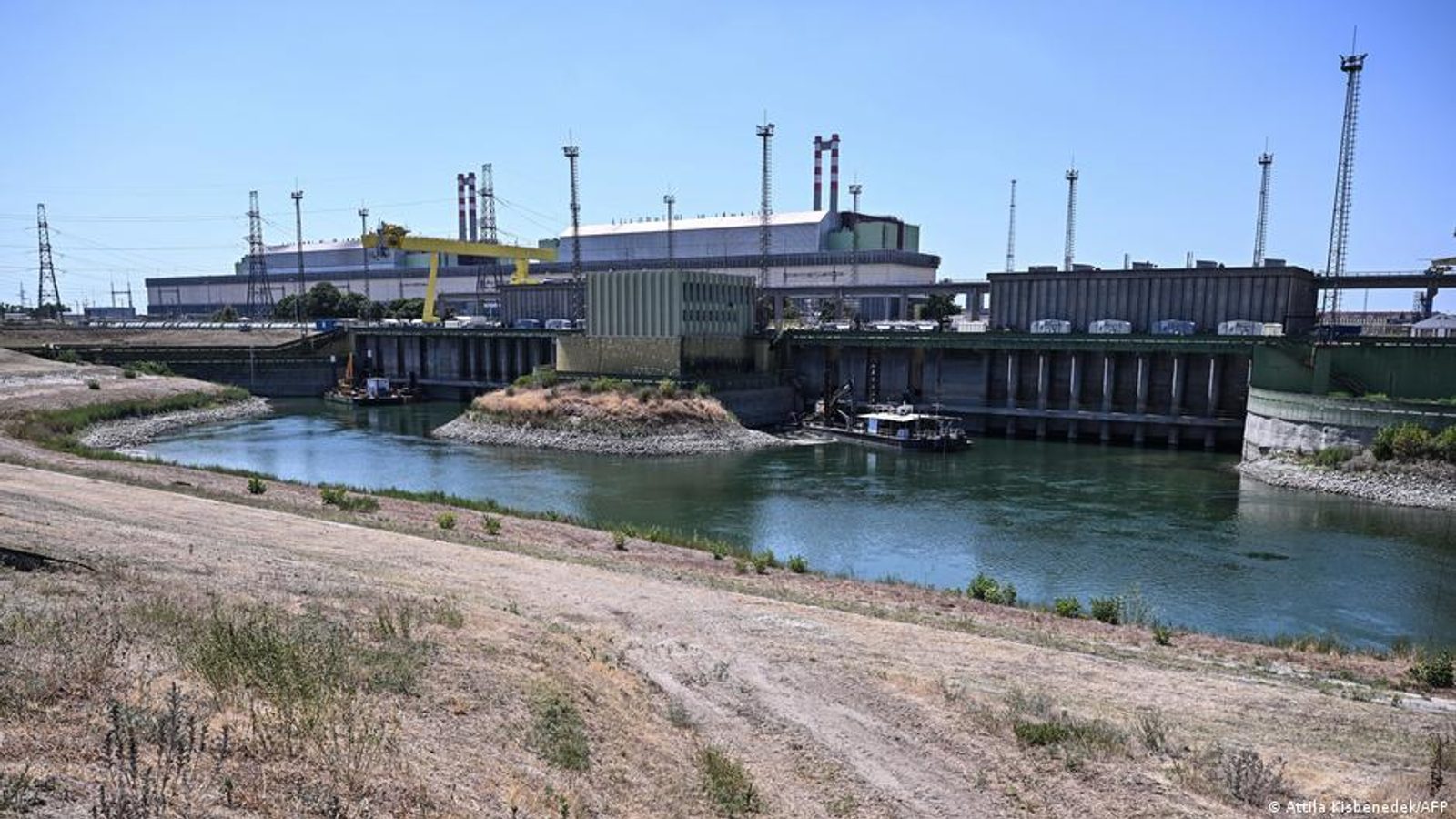
Heat this summer has forced several European nuclear stations to trim output and in some cases run on only part of their capacity, a development that removed gigawatts of flexible generation at moments of high demand and pushed prices in neighbouring markets.
Why rivers matter for reactors
On the Danube, Hungary’s Paks plant — which normally supplies about 40 percent of the country’s electricity — has at times been operating with only one of its four turbine units. Record low water levels on the Danube even produced a risk of a full shutdown at one point.
France is far more consequential for the European electricity market because no other country in Europe relies so heavily on nuclear power for its domestic supply. When French reactors are constrained, the country exports less electricity to neighbours or can become an importer.
Yearly totals can understate the problem: a State Audit Office report on nuclear energy (2023) finds that between 2000 and 2022 annual production losses due to high water temperatures and low river flows were, in almost all years, under one percent of total nuclear output. Even in the extreme heat of 2003, losses amounted to about 1.5 percent. But during short extreme heat waves the reductions can be large. In 2003 French reactors had to cut more than six gigawatts of power temporarily; during the heat spells at the end of June and mid-July 2026 maximum available capacity was temporarily reduced by eight to nine gigawatts — roughly one fifth of typical summer nuclear capacity.
Not every gigawatt of reduced availability translated into an immediate shortfall of generation for days, because some reactors would not have been at full load anyway due to lower summer demand, strong solar output or network constraints. Grid operators reported, however, that France retained reserves and overall remained an electricity exporter during the 2026 heat waves.
On June 24, about 4.1 gigawatts of French nuclear capacity were limited by high river temperatures; French exports fell to roughly three gigawatts after the previous week’s dispatch of ten to twelve gigawatts to neighbours. Combined with higher domestic demand from air-conditioning, weaker wind production and heavier use of gas plants, the shortage contributed to electricity prices in France and Germany temporarily reaching their highest levels since January 2025. By July 13, eight reactors with a combined capacity of 6.3 gigawatts were affected and two were fully disconnected, although France still exported more than ten gigawatts and intermittently imported cheap solar and wind power from Spain.
Rivers and seas are used to dissipate most of a reactor’s waste heat: only about one third of the thermal energy created in a reactor becomes electricity, the remainder is released via cooling systems. If a river’s flow is low the same quantity of waste heat warms a smaller volume of water, and temperature limits set to protect fish and other life force operators to reduce power as an environmental safeguard. Authorities sometimes grant temporary exceptions to these limits in critical supply situations, allowing EDF to run reactors a little longer while closely monitoring watercourses.
Cooling towers reduce freshwater needs and the heat discharged into rivers, but they do not make plants weatherproof. Golfech, located on the Garonne, remains one of France’s more vulnerable sites even with towers; Chooz on the Meuse had to cut output in 2020 despite towers in order not to jeopardise drinking-water supplies in Belgium.
Beyond weather, maintenance and ageing have also depressed French output: four years ago French reactors produced nearly 82 terawatt-hours less than in 2021, driven more by stress corrosion and delayed maintenance than by climate effects. Auditors expect that climate-related unavailability of reactors could rise three to four times by 2050.
France plans to adapt newbuilds to higher temperatures: four of the six originally planned EPR2 reactors are slated for coastal sites at Penly and Gravelines, while the third pair will be built on the Rhône at Bugey where cooling towers should limit river heat loading and freshwater use. Still, retrofitting or redesign — deeper water intakes, additional towers and changed maintenance schedules — is costly and space-consuming.
Whether heat-driven constraints become a continent-wide bottleneck will depend on the evolution of foreign demand and the availability of wind and solar reserves: in the short term, operators and traders say, the issue is not the seasonal sum of lost production but whether capacity is available exactly when demand and network conditions require it.
Photo: press material from the event