North Macedonia: new EU rules only acceptable with faster accession
Analysts in Skopje say temporary limits on vetoes or funds must be paired with a clear, quicker route to full EU membership.
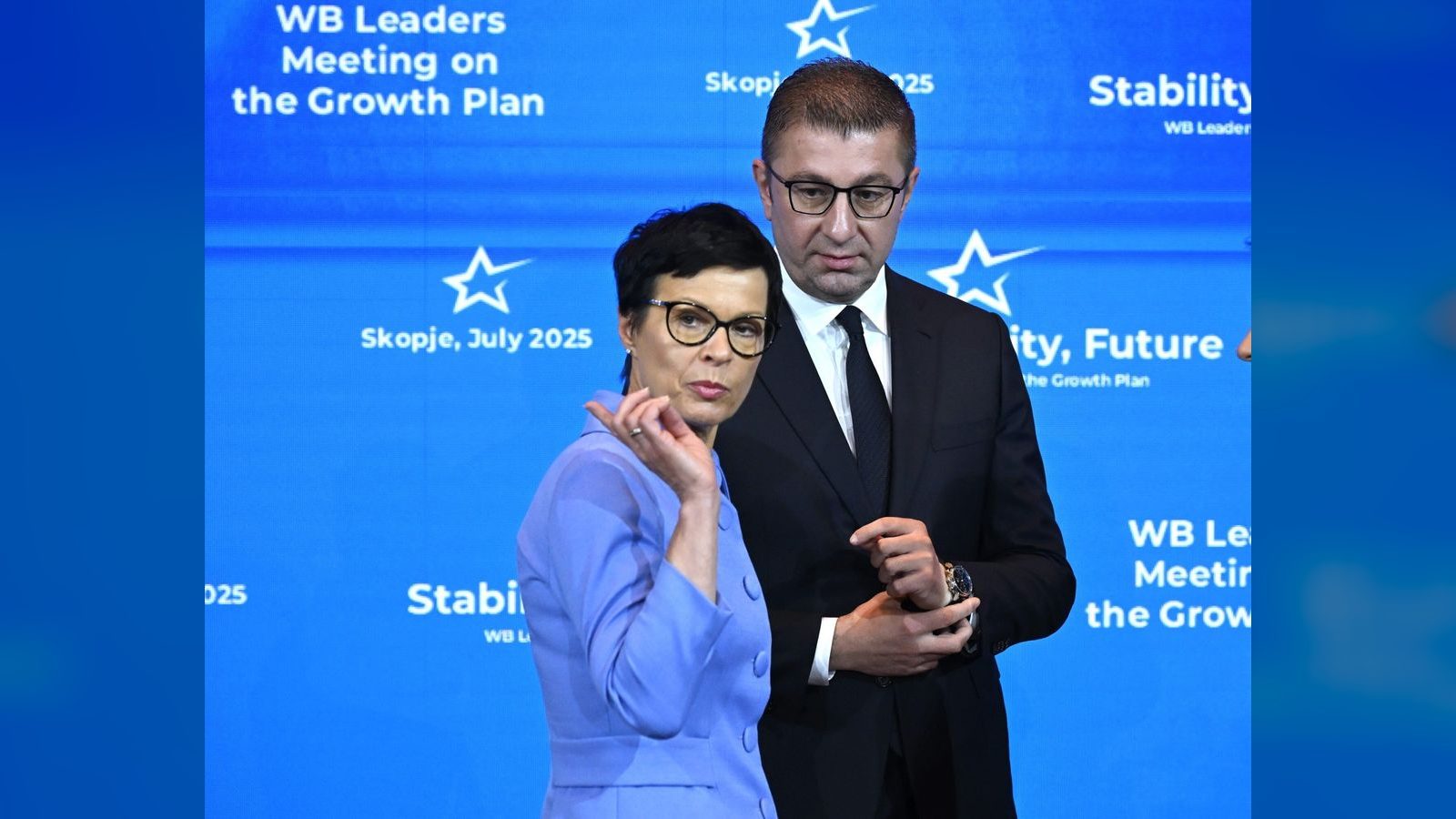
Brussels is debating changes to how the European Union would treat new members, and officials and analysts in Skopje warn that any reduction of rights for freshly admitted states must be tied to a faster path to full membership.
Petar Arsovski, a political analyst, framed the dilemma sharply: "It is not the same for Macedonia to wait 10 years inside the European Union to obtain full rights and to wait 10 years outside just to start the process." He said proposals under consideration in Brussels — including temporarily limiting a newcomer’s veto on unanimity decisions, restricting access to EU funds, or reducing the number of commissioners — could only be politically defensible if they came with a clear acceleration of accession.
Faster accession, but with fewer rights — and only if the trade is real
Arsovski warned the main risk is turning transitional arrangements into an extra layer of obstacles without a concrete payoff for candidate countries. "Candidates would be told: you will have fewer rights, but you will join more quickly, and the period before obtaining full rights will be spent inside. But if that turns into a double loss — waiting longer and getting fewer rights in the end — then the credibility of accession will be seriously damaged," he said.
He argued the motivation for the proposals is pragmatic: there is fear that a Union of more than 30 members might become less effective, especially on matters that currently require unanimity. "The system in which individual member states can block decisions on the defence budget, sanctions on Russia and other important issues creates a problem for the functioning of the Union," Arsovski noted, adding that bilateral disputes introduced into the accession process are another source of concern.
At the same time, other voices call some of the Brussels signals "trial balloons." Sinisa Pekevski said the EU is wrestling with internal challenges now — restructuring, the rise of radical-right forces in some member states, and the economic fallout from the war in Ukraine — and is not focused primarily on enlargement. "Realistically, the EU faces large internal problems and at the moment the focus is not on admitting new members, but on restructuring the EU itself, reducing the strength of the radical right, especially in Germany, as well as the war in Ukraine, which causes serious economic problems in the EU," he said.
Pekevski warned that vetos remain a potent instrument and that he does not expect any state to voluntarily give it up: "The veto is a strong tool to achieve certain goals and I believe no country will want to renounce that tool."
For Western Balkans candidates the stakes are concrete. North Macedonia has held candidate status since 2005, opened its first intergovernmental conference in July 2022, and completed screening in December 2023. The final impact of new EU rules will depend on whether transitional mechanisms are accompanied by a faster and predictable timetable to full membership or whether they simply add complexity to a process already measured in years.
Photo: Sloboden pechat / Dragan Mitreski