Report "Kakva ti e srekata": North Macedonia urged to move from 'recording' to 'responding' on gender-based violence
Experts and partners present testimony-based findings and call for coordinated, sustained institutional reaction to end gender-based and domestic violence.
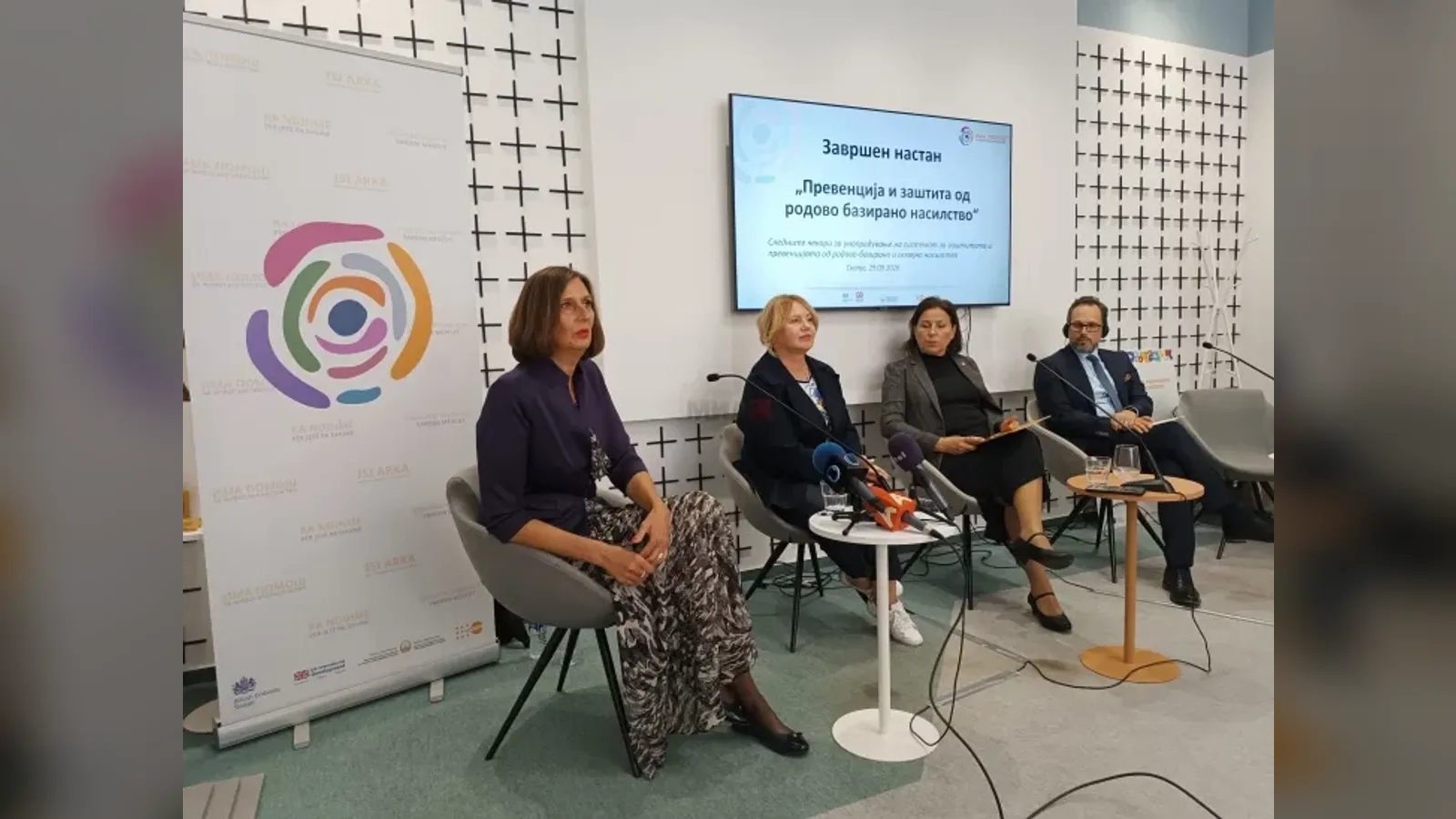
A new report titled "Kakva ti e srekata" summarized testimonies from women who survived domestic violence and was presented as part of the project "Protection and Prevention of Gender-Based Violence in North Macedonia," implemented between 2021 and 2026 by the Ministry of Social Policy, Demography and Youth and UNFPA with financial support from the British Embassy in Skopje.
Experts and partners call for a shift from registering cases to coordinated, effective responses
Stojanka Mircheva, a professor at the Faculty of Security, said the report's symbolic title reflects research findings about the obstacles women face when they seek institutional protection.
“The report is called ‘Kakva ti e srekata’. That is precisely the reality of many women in Macedonia in seeking support and protection from professionals in institutions,” Mircheva said, urging institutions to treat the collected testimonies as a call to change the system's practice.
Mircheva emphasized that the prevailing impression from victims' accounts is systemic indifference and called for a clear change in approach: the system must move from a phase of "I record" to a phase of "I respond", and responses must be coordinated between agencies. “These experiences are presented to reach institutions, to change the reality of many women who live with violence and seek protection and support from institutions,” she said.
She also stressed the preventive role of an assertive institutional reaction when offenders face the power of the state, noting that police responses to complaints are widely visible in the Ministry of Interior's daily bulletins. “When we confront perpetrators with the reaction of the state and society, an effective reaction… We counterpose the power of the state and intolerance toward the power that the perpetrator manifests toward a given woman,” Mircheva added.
Daniel Fayler, Deputy British Ambassador, said the United Kingdom, through its embassy, worked closely with UNFPA over the past five years to strengthen North Macedonia's prevention and response systems for gender-based violence.
“Together we contributed to better coordination among institutions, strengthening professional practice and greater accountability because legal framework alone is not sufficient,” Fayler said. He added that the partnership focused on strengthening the system so victim support would be coordinated, effective and sustainable, and that responsibility for sustaining these gains now rests with domestic institutions.
Jovanka Brajović-Grigorijević, acting head of the UNFPA office in the country, described the five-year programme as complex and important and said it brought European standards contained in the Istanbul Convention closer to national practice through implementation of the Law on Prevention, Suppression and Protection from Domestic Violence. “Today, after five years of partnership, I stand proudly on behalf of UNFPA together with our partners to show some of the collective progress made so far. The work does not stop here and we will focus next on steps that will take us toward ending gender-based violence,” she said.
Svetlana Cvetkovska, head of the Equal Opportunities Sector at the Ministry of Social Policy, Demography and Youth, said addressing gender-based and domestic violence is among the ministry's highest priorities and warned there are no quick fixes; the path must be systemic, persistent and sustainable. She underlined efforts to build capacity among professionals in social work centres, police, the health sector and the judiciary, expand specialised services across regions, and run communication campaigns to break stereotypes and encourage reporting.
Photo: press material from the event