How to fight forest fires when water runs short
Experts say water will remain essential but must be used smarter; faster aircraft support, D‑hoses and retardants can reduce consumption.
As summers become hotter and drier, water for fighting forest fires is increasingly scarce — and experts in Germany are urging a shift toward methods that use far less water, faster aerial support and improved equipment and training.
On 27 August 2026, emergency services in the Main-Kinzig area appealed to the public to conserve water as reservoirs were needed to fight a forest fire in the Hesse–Bavaria border region. Firefighting specialists say extinguishing wildfires will still require water, but that it must be used more purposefully and supplemented by alternative tactics.
California wildfire veteran Lyndon Pronto, who has long worked in arid regions, told German crews that current German practices need rethinking. “It really hits me that citizens have to give up personal hygiene because we don't have enough water for firefighting. And then I see how, sometimes kilometres away from the real fires, the landscape is just watered preventively. We cannot continue like that,” he said, arguing for more emphasis on creating firebreaks and other non-water measures to suffocate burning embers.
Techniques to limit water use
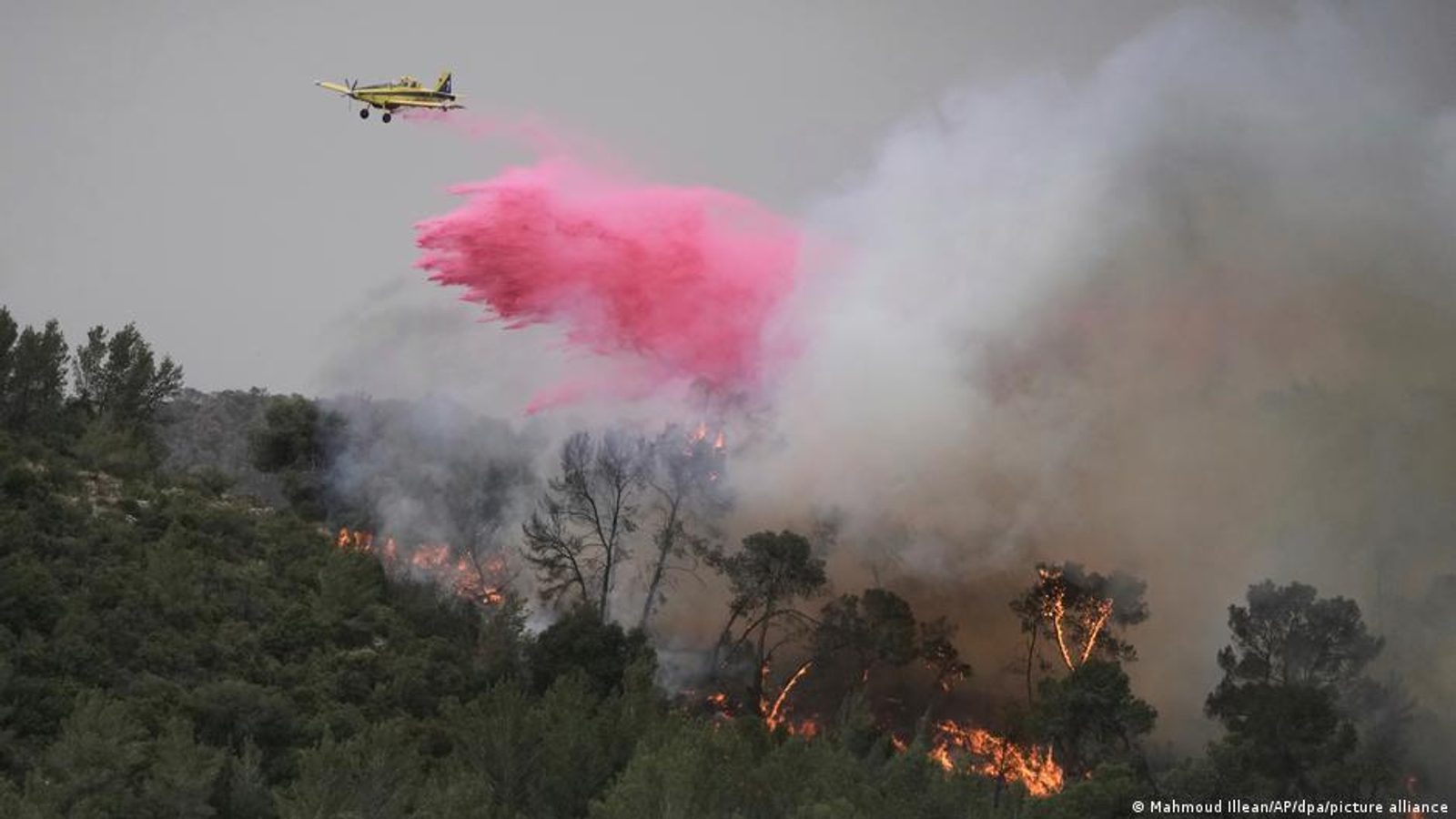
Experts point to several proven approaches that reduce water consumption: targeted suppression with smaller, high-precision hoses (so-called D-hoses), burying smouldering hotspots in moist or mineral-rich soil rather than dousing surrounding areas, and the use of fire retardants that form a protective layer even after the water evaporates. The German Firefighters Association is expanding training on low-water firefighting techniques and continuing education for crews.
Ulrich Chimolino, head of the forest-fire working group at the German Firefighters Association, warns that water shortages are no longer confined to a few dry spots: central, western and southern Germany are increasingly affected. He and others link the trend to human-driven climate change, which raises both the frequency of wildfires and the incidence of droughts.
Faster deployment of aircraft and helicopters is another critical element. Chimolino says lengthy administrative procedures and the need to repurpose and outfit police helicopters often delay aerial assets by hours. There are local examples of alternative solutions: the Harz region acquired its own firefighting aircraft after the large Brocken wildfire in 2022. Kai-Uwe Lohse, head of the Harz fire service, says: “Our system relies on acting as quickly as possible once a fire is detected and localising it accordingly.” The plane, operated by a Polish company including its pilots, costs about €260,000 per season and can begin operations on scene in as little as 20 minutes.
While a dedicated aircraft is not a universal remedy, the Harz experience shows how rapid, local air support and more precise, water‑saving equipment can curb fires before they grow. For Germany, experts recommend combining earlier detection, expedited access to aerial resources, improved individual firefighting kit for hot outdoor work, and wider use of retardants to adapt to ever drier summers.
Photo: press material from the event