Hungarian Duna Aszfalt joins consortium for Bukojčani–Kičevo motorway
A Hungarian firm linked to oligarch Laslo Sij is part of the consortium awarded the 11.5 km Bukojčani–Kičevo section; Budapest probes related financing
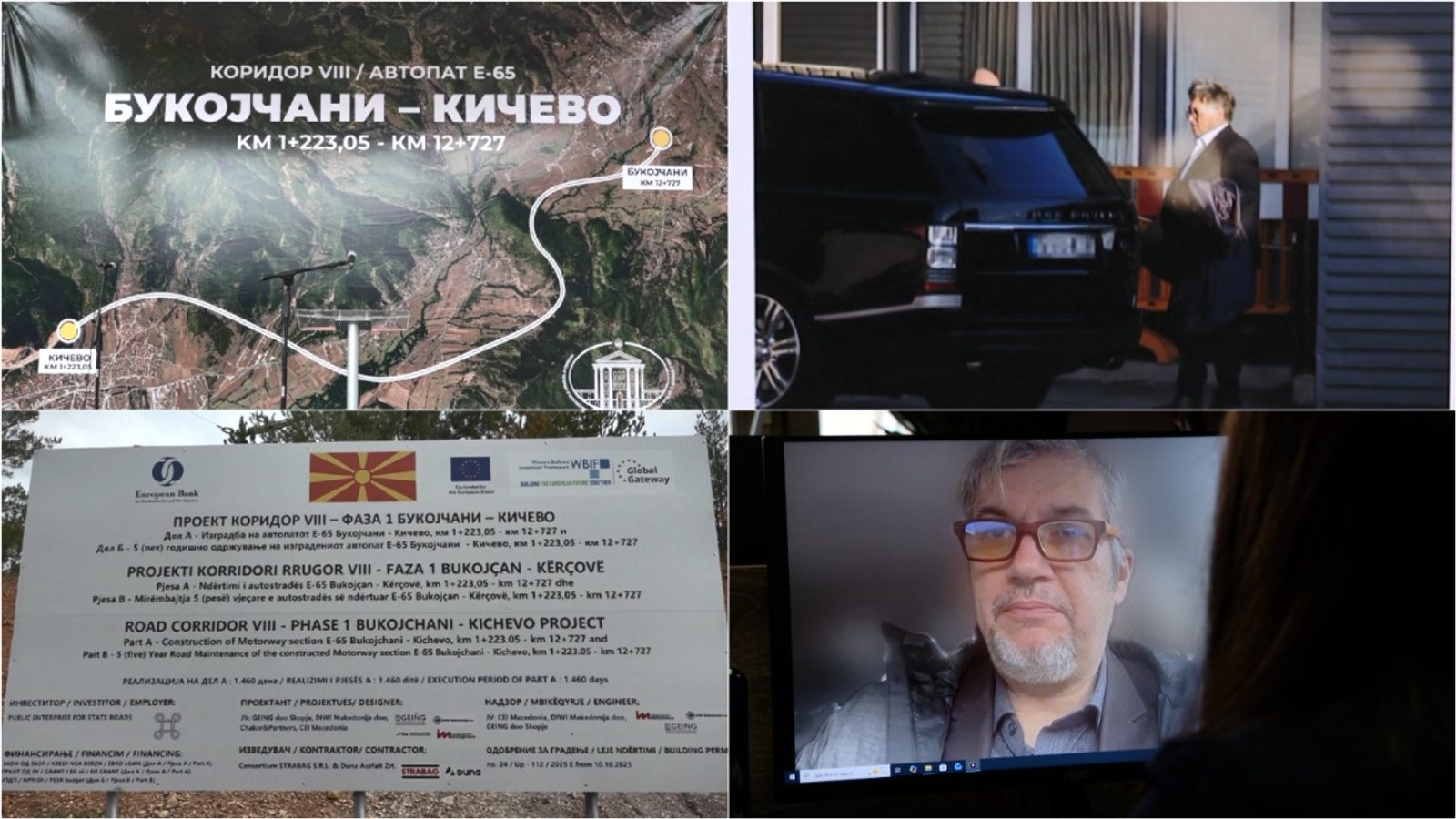
A Hungarian company owned by businessman Laslo Sij has joined the consortium contracted to build the Bukojčani–Kičevo motorway section, a project that has drawn scrutiny after Hungary’s new government opened a probe into state-backed financing linked to the same firm.
Controversy in Budapest, construction in Skopje
Photographs of former prime minister Nikola Gruevski taken in a Budapest restaurant went viral after they were posted on Facebook on October 22 by former Hungarian MP and anti‑corruption activist Akos Hadhazi. In his post Hadhazi wrote: "Orban's oligarch, Laslo Sij, is still at large, and by the way, is currently building a highway in North Macedonia."
The motorway section Bukojčani–Kičevo was officially marked as under construction on October 12 by a government delegation led by the prime minister and attended by the EU ambassador and representatives of the European Bank for Reconstruction and Development (EBRD). The stretch is 11.5 kilometres — the last unbuilt segment on the corridor from Skopje to Ohrid — and will feature two traffic lanes plus an emergency lane in each direction, five bridges, two interchanges, two viaducts, a tunnel and associated works.
Transport Minister Aleksandar Nikoloski said at the start event: "All this means an extremely hard task and job that the contractors who will receive it will have full support from the Government, from the Ministry of Transport, from the Public Enterprise for State Roads." The work was awarded to a consortium led by Strabag Romania together with the Hungarian firm Duna Aszfalt — the latter’s first project in North Macedonia.
The construction contract is reported at EUR 219 million. Financing for the Macedonian part includes a EUR 119 million loan from the EBRD, a EUR 20 million grant from the European Union and EUR 300,000 from the WBIF for tender preparation, the director of the Public Enterprise for State Roads, Koce Trajanovski, said.
In Hungary, the political context has shifted: after parliamentary elections in April 2026 the new government led by Peter Magyar reported this summer that the Economy Ministry filed a criminal complaint over certain financial transactions at Eximbank, including financing tied to a Duna Aszfalt project in Africa. Shortly after that filing Duna Aszfalt began a voluntary buyback of bonds, and Magyar declared: "Yesterday, new public money amounting to over 100 billion forints returned to the budget, and thus to the Hungarian people. 'Duna Aszfalt', linked to the business partner of Lerinc Mesaros, the oligarch Laslo Sij, announced, not long after the complaint from the Ministry of Economy and Energy, that it would return $400 million, i.e., more than 100 billion forints, to the state banks."
The Public Enterprise for State Roads says the procurement for the Bukojčani–Kičevo contractor began on January 30, 2025 and concluded in early July 2026 under EBRD procedures. On the contract and access to documents the enterprise provided a written statement: "The signed contracts comply with EBRD rules and procedures in the form of a FIDIC contract (red book). Namely, all details which relate and are connected to the concluded Contract for execution Kičevo–Bukojčani are subject to the EBRD 'Access to Information Policy' of October, 2024, adopted by the Board of Directors of the EBRD. In it and the documents that arise from it — the ways in which access to such information can be obtained and in what form are defined. In this concrete case extracts of relevant information will be publicly available on the Bank's website. We want to emphasize that this Contract stems from a Loan and Grant Agreement for execution and supervision from the EU (WBIF) where it is regulated that it is subject to the rules and procedures of the EBRD."
Akos Hadhazi told Macedonian media he was surprised by the award: "What we now hear, that Laslo Sij is getting an opportunity in Macedonia, is a bit strange, comical for Hungarians, and even in Macedonia it should be considered whether it is the best idea to cooperate with such a company or not." Both the procurement timeline and the EBRD supervision, however, are cited by local authorities as the basis for the selection of the consortium that will build and maintain the road for five years after completion.
Photo: atlatszo.hu