Restoration planned for WWI dirt road to connect Pelister’s Big Lake with Brajčino
National Park plans to restore a World War I-era earth road so the high-mountain Big Lake will be linked by a roughly 40 km hiking and cycling route to Brajčino in Prespa.
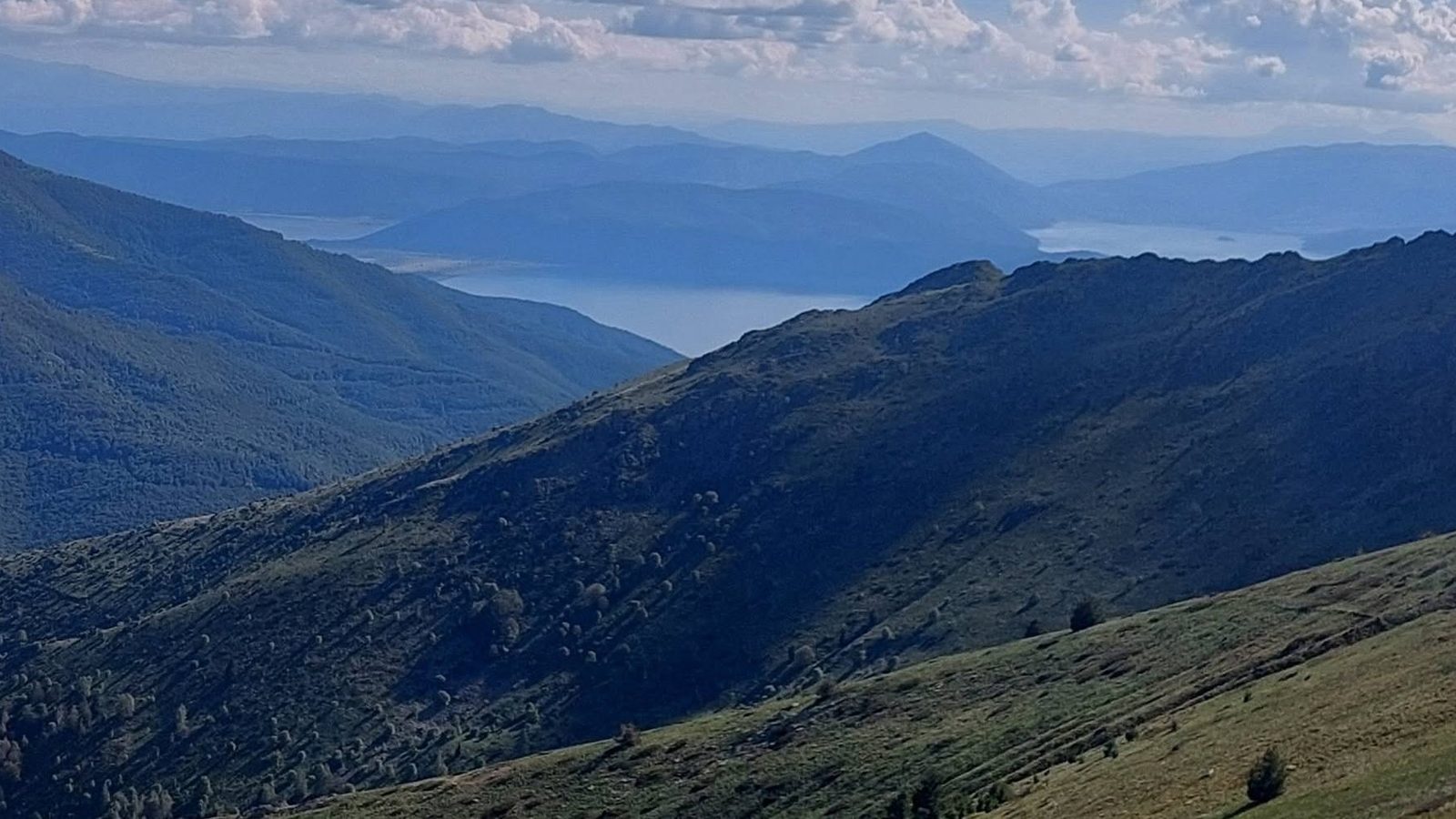
At 2,218 meters above sea level, Pelister’s Big Lake has lately drawn visitors from across Europe who test their courage against the water temperature rather than beach heat. Instead of hot sand there is mountain rock, and instead of warm water the glacier-fed lake rarely climbs above 12 degrees Celsius even in August.
New trail to link Big Lake with Brajčino
Access to the high-altitude basin is still by a rough earth road left from the First World War; because of the granite and rocky talus, the route remains challenging for vehicles and for many visitors the easiest way up is on foot. The national park plans to restore that historic French-style dirt road so the Big Lake will be connected with Brajčino in Prespa, creating a continuous route from the park information centre to Prespa of roughly 40 kilometres.
“Although the road will primarily be used for firefighting protection, we are creating multifunctional solutions. The dream of many generations to connect Brajčino with the Big Lake will be realised. It will be a hiking and cycling trail. It should be taken into account that in 2028 the Markova Noga border crossing will be opened, which will enable a regional tourist offer. All arrangement activities are aimed at eco-active tourism that enables nature protection,” said Ivancho Toshevski, director of the National Park.
Tourists we met at the lake came from France, the Netherlands, Italy and North Macedonia. For many it was a discovery: sunbathing and even swimming in the glacial water, which is replenished by mountain snowmelt. “They told us different rules apply here. At the Big Lake the sun should not be underestimated. Although the air is fresh, because of the altitude UV radiation is stronger, and the glare from the water further increases exposure. You don’t enter the Big Lake like a summer pool. The cold mountain water requires gradual acclimatisation, and those who dare to swim usually wet their feet and bodies first before going deeper,” said Ana van Dijk from the Netherlands.
Some visitors choose to reach Pelister by jeep over the steep and uneven track with hairpins and stone obstacles; others arrive on motorcycles or on foot and prefer the panoramic views that open toward Prespa on one side and the Pelagonia basin on the other. “This is a beautiful experience. I had never heard of Pelister before. We followed a route that brought us here from Galichica, Macedonia is beautiful,” said Lorenzo from Italy.
Locals also work as guides and drivers on the mountain. Gabriela Panajotova, who had worked in England and has returned to her home region, helps tourists reach harder-to-access parts of Pelister and recently celebrated her 30th birthday at the Big Lake by opening a bottle of champagne there. “Pelister means a lot to my family; my sister was proposed to at Antenna for New Year. As a hobby I drive jeeps across Pelister. I love nature and I like to be close to home, and from above you can see all of Bitola. I recommend young people first come up here to experience the mountain in summer and winter, to see the starry sky at night,” Panajotova said.
The mountain hut at Big Lake serves traditional dishes such as beans, sausages, Shopska salad, Pelister cheese, watermelon and fig jam. Overnight guests can stay in the hut, which has capacity for 40 people. The road restoration is part of a 10-year fire protection programme for Pelister. The project will also revive another attraction, Lake Rupa, which existed during the First World War and was drained for military needs; plans are under way for its conservation.
Photo: SDK.MK)