Criminal complaint against AAVMU director Zoran Trajchevski is in the Public Prosecutor's Office for Organized Crime and Corruption
The complaint accusing AAVMU director Zoran Trajchevski of abuse of office and competition restrictions is now with the Public Prosecutor's Office for Organized Crime and Corruption.
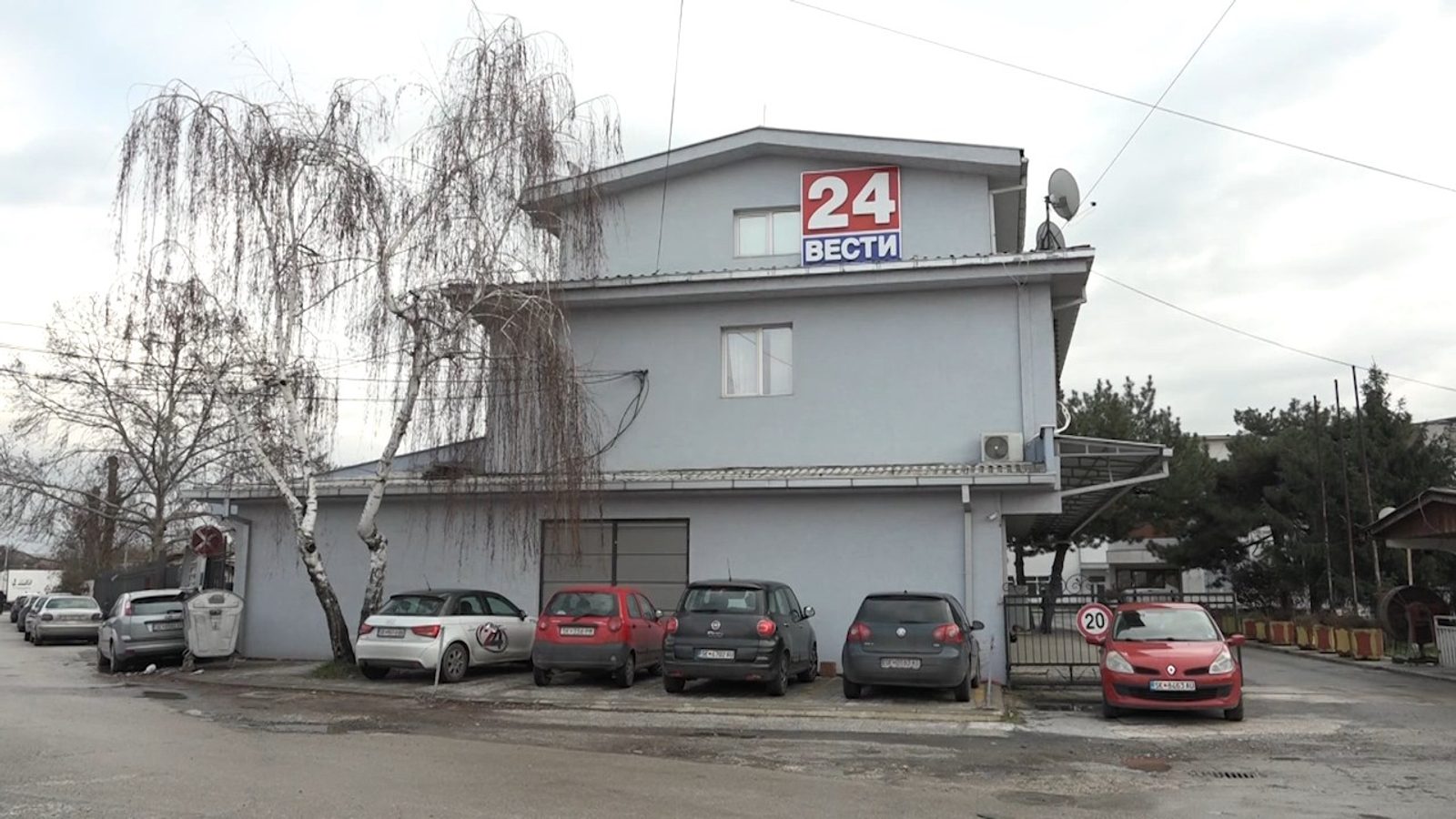
A criminal complaint filed by TV 24 against the director of the Agency for Audio and Audiovisual Media Services (AAVMU), Zoran Trajchevski, has been assigned to a prosecutor at the Public Prosecutor's Office for Organized Crime and Corruption and is currently under procedure, the prosecution confirmed.
The complaint accuses Trajchevski and several of his associates of, among other things, the existence of grounds for suspicion of a continued criminal offence, "Abuse of official position and authority", abuses in public call procedures, distortion and restriction of competition, and requests an investigation into the possible commission of the crime "Criminal association".
The Public Prosecutor's Office for Organized Crime and Corruption said: "Within the proceedings, the public prosecutor is reviewing the allegations in the complaint and the legal qualification of the reported actions, including circumstances relevant to determining jurisdiction for further action. After the prosecutorial assessment, an appropriate decision will be made in accordance with the legal competences."
TV 24 has also sought expert opinions about a long-running dispute with the regulator. Former journalism lecturer Ljubomir Gajdov told the broadcaster that AAVMU's decisions not to publish a call to which TV 24 would have applied—seeking a change in the way its programme is delivered to citizens via a digital terrestrial multiplex—effectively protect and encourage a monopolistic position held by the five private national television stations.
The broadcaster asked the Commission for Protection of Competition (CPC) to examine whether studies prepared or commissioned by AAVMU in the period 2018–2026 applied pre-established, objective, measurable and comparable criteria when assessing the justification for announcing a public call for national digital terrestrial multiplex broadcasting. The CPC declared itself not competent to evaluate the studies and said it was also not competent to review changes to criteria and methodologies that, TV 24 alleges in its complaint, led to the non-publication of a public call intended to protect the market position of incumbent national stations.
Findings, expert views and court history
- Experts consulted by the broadcaster emphasised that a media regulator's primary goal must be to promote pluralism and variety of services and content. An economic analysis in a 2022 study estimated that a new entrant would need to capture roughly 9–14% of the market to reach a threshold of viability.
- The 2022 study warned that such a redistribution of revenues could threaten the sustainability of some existing broadcasters — a conclusion that, experts say, conflicts with free-market principles because it would amount to protecting certain companies at the expense of others.
- In 2024 the Higher Administrative Court annulled AAVMU's decision and returned the case for re‑examination; the court did not order that TV 24 automatically be granted a licence, only that the regulator's procedure or reasoning had been insufficient. AAVMU produced a new study in September 2024 but again concluded there was no justification for a call and once more rejected TV 24's request.
- The 2024 study states that the five national terrestrial television stations hold a significant economic position; their revenues in 2023 were below 2019 levels; the television market faces advertising decline and growth of digital platforms; yet there is simultaneously a lack of diversity in programme offerings.
TV 24 argues that by denying a fair opportunity to change the transmission method that would allow nationwide digital terrestrial broadcasting, both the outlet and its audience suffer: the station loses reach and potential revenue, while viewers in parts of the country cannot access its programming.
Photo: press material from the event