North Macedonia produces more with less land — yields rise while farmland shrinks
Total agricultural area declined between 2015 and 2025, but yield gains for major crops more than compensated for smaller sown areas.
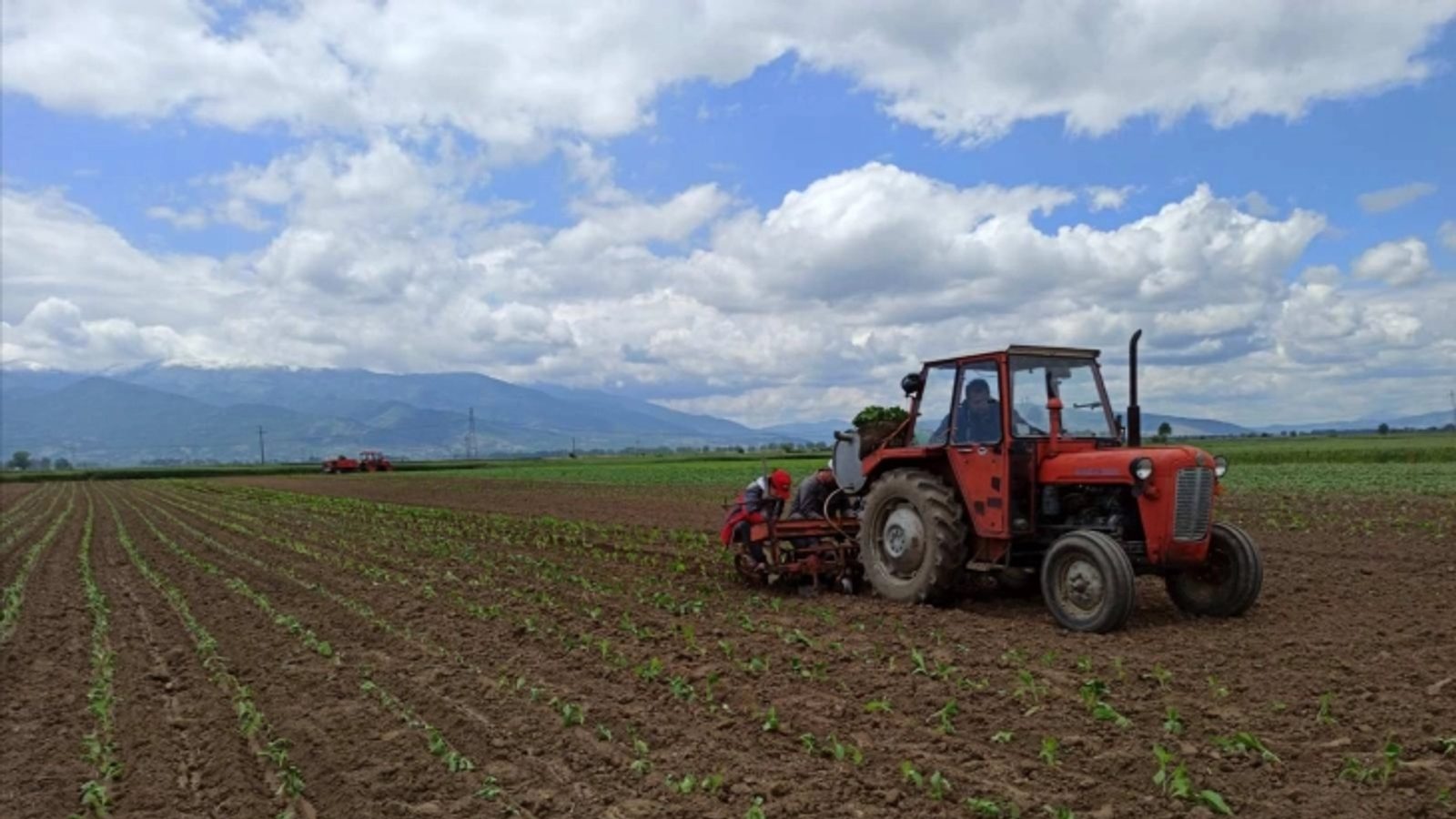
North Macedonia produced more agricultural output in 2025 while using slightly less land than a decade earlier: total agricultural area fell from 1,264,408 hectares in 2015 to 1,233,099 hectares in 2025, even as yields for key crops increased.
The State Statistical Office’s data show that about 48% of the country’s territory is agricultural land, of which roughly 40% is arable and 60% is pasture. Within arable land, arable fields and gardens account for about 80%, meadows about 12%, vineyards 4% and orchards 3–4%.
Shifts in area and productivity, 2015–2025
Between 2015 and 2025 there were no major structural changes in the composition of arable land — orchards increased marginally (+0.3 percentage points) while vineyards decreased slightly (-0.2 percentage points). At the same time, many crops saw smaller cultivated areas but higher yields per hectare.
Wheat remains the most widely sown crop at 24.6% of sown area (65,648 hectares in the latest year reported). Together, wheat, barley and maize make up 51.1% of all sown area. Despite an 11% reduction in wheat area (from 73,979 ha in 2015 to 65,925 ha in 2025), wheat production rose by 27% — from 201,218 tonnes in 2015 to 256,199 tonnes in 2025 — because of higher yields.
Barley gained on both area and production: planted area rose by 5.4% and production and yields increased by over 50%. Rice experienced steep declines in both area (-39%) and production (-37%). Among vegetables, potatoes and peppers stood out: potato area fell by 14% but production rose to 203,758 tonnes in 2025 (a 7.6% yield increase vs 2015), while pepper area grew by 4.5% (from 8,622 ha to 9,033 ha) and output climbed from 189,443 tonnes in 2015 to 244,043 tonnes in 2025 (nearly 30% higher).
Not all crops improved: cucumbers’ production dropped from 66,830 tonnes in 2015 to 32,536 tonnes in 2025 (with sown area down about 11%), and tomato production fell from 173,434 tonnes in 2015 to 112,645 tonnes in 2025. Lentils saw the largest relative fall, from 84 hectares in 2015 to 24 hectares in 2025 (a decrease of over 70%).
The figures also point to rising demand for animal feed: clover recorded a relative increase of more than 50%, and sunflower area rose by 8.7%. Tobacco remains a notable industrial crop at 5.9% of sown area.
Photo: press material from the event