Milcho Manchevski’s 'Sister, Brother and the Shaft' wins Tokyo Grand Prix
Sister, Brother and the Shaft took TIFF’s top prize; jury praised its blend of humour, tragedy and compassion
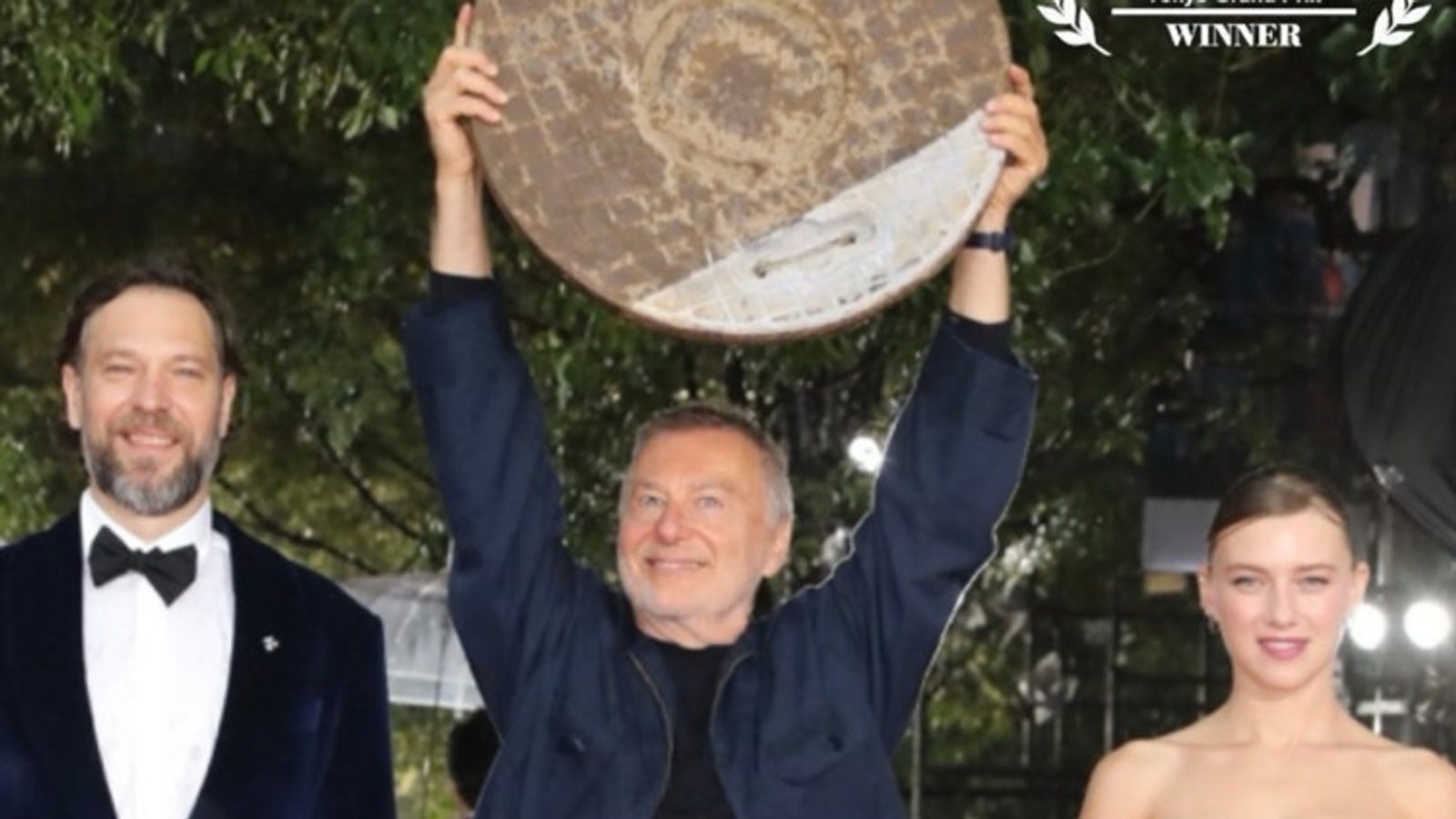
Milcho Manchevski’s new feature, Sister, Brother and the Shaft, won the Tokyo Grand Prix at the Tokyo International Film Festival (TIFF), taking the festival’s top prize in an A‑category event. It is the first time a Macedonian film has taken the top award at an A‑category festival since Manchevski’s Before the Rain in Venice in 1994.
Jury praise and festival scale
Rolf de Heer, president of the jury, read the official citation when presenting the prize: “For its flawless blending of humour, tragedy and drama, for the humanity and compassion it shows toward its characters, for a complex yet coherent film which manages at once to be both moving and playful, the Tokyo Grand Prize — the Tokyo Governor’s Award for Best Film — is awarded to 'SISTER, BROTHER AND THE SHAFT'.
Manchevski celebrated the win and thanked everyone who believed in the project: “I’m very glad the world likes our shaft. Thanks to the phenomenal crew, the actors, the financiers, the sponsors — for the trust in a strange film. It is an example that perseverance and justice prevail. Forward, shaft!”
At the festival’s closing ceremony the prize was collected on stage by the film’s lead actors Sara Klimoska and Filip Trajkovik, accompanied by producer Jane Ćortoshev. Producer Ćortoshev addressed the audience and the Macedonian team, expressing gratitude to supporters and festival organisers: “We came to Tokyo with a shaft, and we return to Macedonia with this beautiful prize. I think this is a very good deal! From the uncertainty about whether we would even be able to make the film, to this evening, when we stand here in Tokyo — we have truly come a long way. Great thanks to everyone who believed in us and supported us on that path. Galina Toneva, Yu‑Fai Suen, Svetlana Levicheva… — here we are. Thanks to the Tokyo International Film Festival for believing in our film and to the jury that gave this wonderful award. Arigato gozaimas!”
The 2026 Tokyo International Film Festival received 1,892 entries from 112 countries and regions. After a rigorous selection process, 15 films were chosen for the competition programme. The competition jury, chaired by Rolf de Heer, included film professionals from Australia, the United States, South Korea, Japan and France.
Sister, Brother and the Shaft is an eccentric comedy about those who have and those who do not — at once a caustic satire and a subtle poem about a brother and sister living on society’s margins. Shot around Skopje with an international crew, it is Manchevski’s ninth narrative feature. In 2026 he also released the feature documentary Good People about the tragedy in Kočani, presenting two films to international audiences in the same year.
The film’s principal cast includes Sara Klimoska, Filip Trajkovik, Sonja Mihajlova, Petar Mirchevski, Yordan Simonov, Dejan Lilić, Jasmina Vasileva, Stefan Nikolovski, as well as Ana Kostovska, Ivan Gjoshevski, Viktor Arsov, Marina Pop Pankova, Aleksandar Stepanuleski and Marin Gavrilovski. Production design was by David Mance (UK), cinematography by Stefano Falivene (Italy). Casting was led by Milka Anchevska; costumes were designed by Jaklina Krstevska and makeup by Bistra Kechidzieva (Bulgaria). The film’s producer is Jane Ćortoshev.
Funding and support came from the national film agency (after an earlier three‑year blockade), film funds and private investors in Bulgaria, Serbia, Albania, Italy and the UK. Macedonian companies and cultural institutions that supported the project include Diners Club, Tikvesh, Vitaminka and Okta, as well as Pelisterka, Special, Taxi Global, Hotel Arka, Samanta, My Print, the Macedonian National Theatre and Vidi Vaka. Coproducers include Gala Film (Bulgaria), Sens Production (Serbia), Amarcord Production and Augustus Color (Italy), Berkley Media Group (UK) and Tirana Film Institute (Albania).
Photo: privatna arhiva