Serbia's pre-election media offensive tightens control over independent outlets
Journalists and media experts say coordinated pro-government coverage and ownership moves are squeezing independent outlets ahead of the October 25, 2026 election.
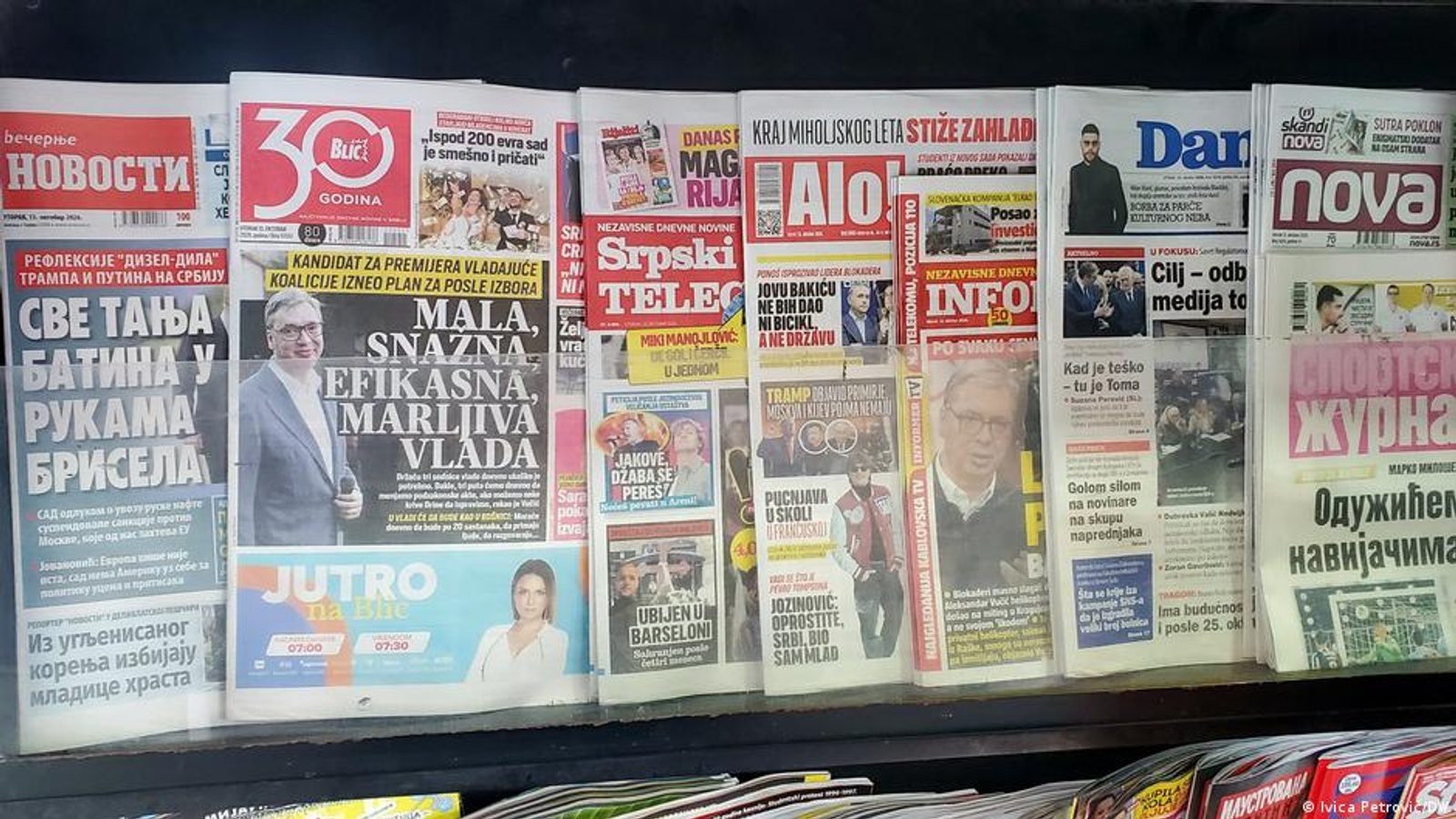
Weeks before the October 25, 2026 parliamentary vote in Serbia, critics and journalists warn that a coordinated pro-government media offensive has overwhelmed independent outlets and intensified pressure on professional newsrooms.
Željko Bodrožić, president of the Independent Association of Journalists of Serbia (NUNS), says the pattern of coverage is unprecedented in scope. "According to all media monitoring, we can say that this is one of the most drastic campaigns when it comes to violating electoral rules in the media," he says. "We have enormous government control over the media and see how they are synchronised in that propaganda. It is new that now even the few professional media have come under the attack of their owners, and there are suspicions that this is being done in cooperation with the authorities in Serbia. Unfortunately, we have already become used to generally unequal conditions before elections, and the media sector is getting worse for journalism and freedom of expression year by year."
Signals of tightening control
Former media-law expert and retired political-science professor Rade Veljanovski warns that the current campaign is particularly crude. "We did not have normal media campaigns before either, but this one is probably the dirtiest of all," he says. "Above all I mean the conduct of media loyal to the regime, and over the past two years the number of outlets that absolutely support the governing party and its coalition has culminated. Words are no longer chosen and now it is a completely vulgar campaign. We face rhetoric that does not belong even to street or tavern language. The worst of all is that such abnormality is slowly normalised in society."
Newsrooms that used to offer more balanced coverage, Bodrožić adds, have shifted further toward the pro-government line. "There is a movement toward even worse behaviour across all media. Those that were, say, the softer wing of the propaganda machine have now taken another step. Here I primarily mean Blic and Radio-television of Serbia (RTS), which are already drastically departing from the law on the public service and from journalistic codes," he says.
The campaign also includes what many describe as commercial manoeuvres to discipline critical broadcasters. N1 and Nova S have faced takeover moves and editorial shake-ups: Nova S staff were reportedly given 48 hours to decide whether to stay after the new owner named a chief editor. Veljanovski says the aim appears to be to preserve outlet brands while replacing their editorial policies with pro-government coverage. "The authorities are fighting either to keep such media alive or to make them disappear," he adds. "But to remain as TV B92 remained: the same name, but a completely different editorial policy. For them it is important that there is no normal window on the media scene through which the objective state of society can be seen."
Bodrožić argues the heavy-handed media landscape may have backfired to some degree. "I have the impression that those captured media have in some way harmed the authorities too," he says, "because people sought alternatives. The propaganda machine that spends huge resources obviously no longer has the effect necessary for the ruling party to be unafraid before this October 25."
Photo: press material from the event