Hristijan Mickoski at the Atlantic Council: EU accession must rest on reforms and merits
Mickoski told the Atlantic Council North Macedonia will deepen US partnership, pursue energy interconnectors and insist EU accession be merit-based.
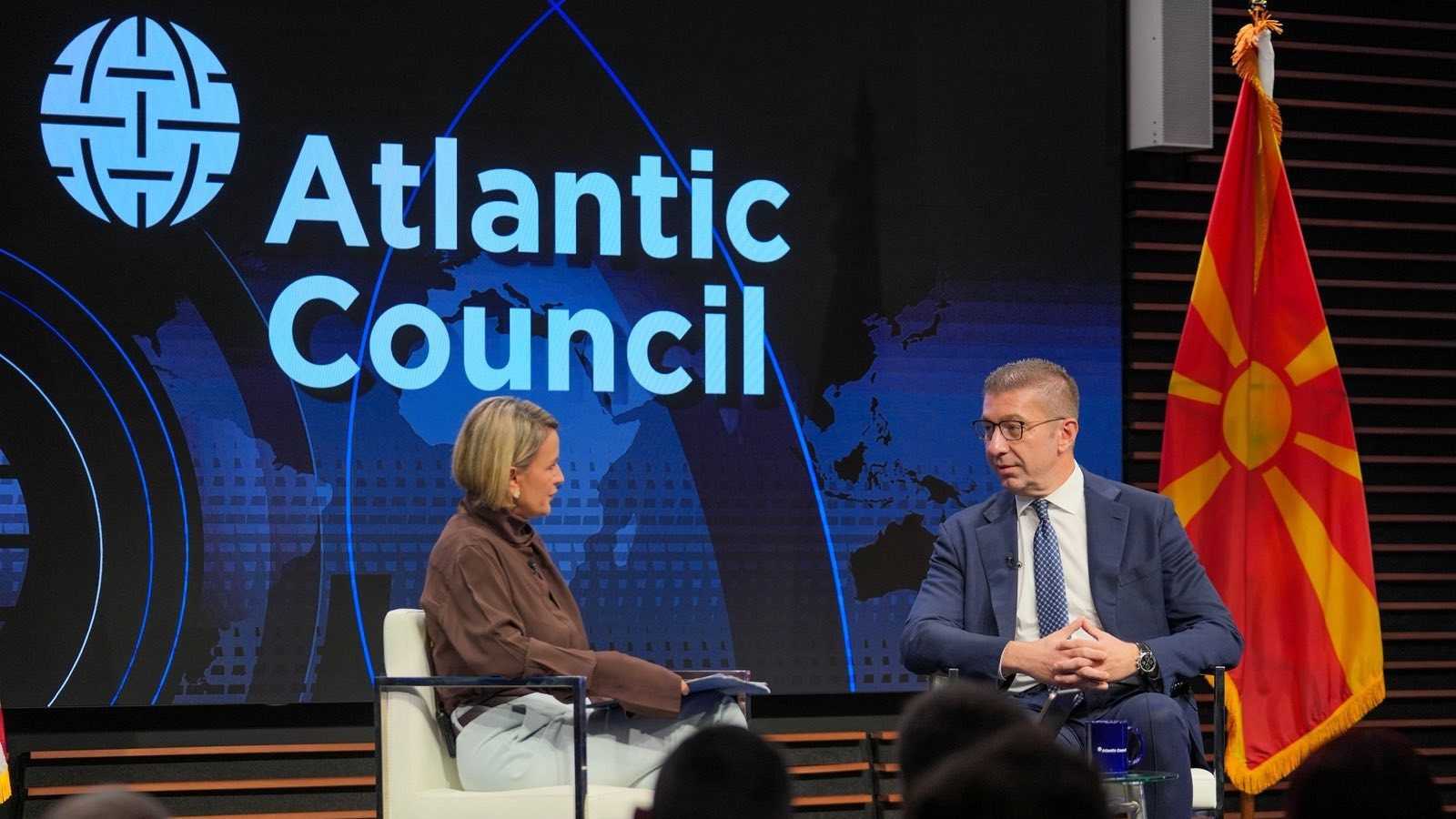
Prime Minister Hristijan Mickoski spoke at the Atlantic Council in Washington, presenting his government's strategic priorities, the country's regional position, the partnership with the United States, and plans for European integration alongside economic, infrastructure, energy and technology development.
Strategic pillars and transatlantic ties
Mickoski emphasized that the partnership between North Macedonia and the United States has been built over decades and that his government is committed to deepening that relationship. He described North Macedonia as a small state with a significant geostrategic location in the heart of the Balkans, a natural crossroads for important European transport and energy corridors.
On defence, Mickoski said the government follows a policy of predictability and fulfilment of commitments, including a planned, gradual increase in defence spending as a NATO member. He also highlighted targeted investments in strategic infrastructure—highways, railways and energy transmission systems.
Cybersecurity is one of the administration's priorities: the government intends, as part of its EU reform agenda, to develop a primary data centre to connect public institutions, link it with the existing secondary disaster-recovery centre and secure it further through cloud infrastructure, with the stated aim of building a more resilient system against modern cyber threats.
Energy and connectivity form one of the three pillars of the government's development strategy, alongside infrastructure and artificial intelligence/high technology. Mickoski said the ambition is for North Macedonia to become an important regional energy and transit hub. The planned interconnector to Greece should enable connection to the Alexandroupolis LNG terminal, while an interconnector to Serbia would open a route toward Central Europe.
According to Mickoski, completion of those two projects would substantially raise North Macedonia's regional significance and create the opportunity to become a transit country for natural gas supplies to Central Europe. He also linked gas-network development to future investments in power generation, data centres, artificial intelligence and high-tech industry.
While reiterating North Macedonia's full commitment to EU membership, Mickoski argued the accession process should be based on reforms and merits rather than the continual addition of new bilateral conditions. He added that, even as the government seeks a solution for the EU path, the country will not wait in place: it will continue growing the economy, implement reforms, strengthen the rule of law, attract foreign direct investment and invest in high-tech industry—pointing out economic growth of 4.3 percent in the second quarter.
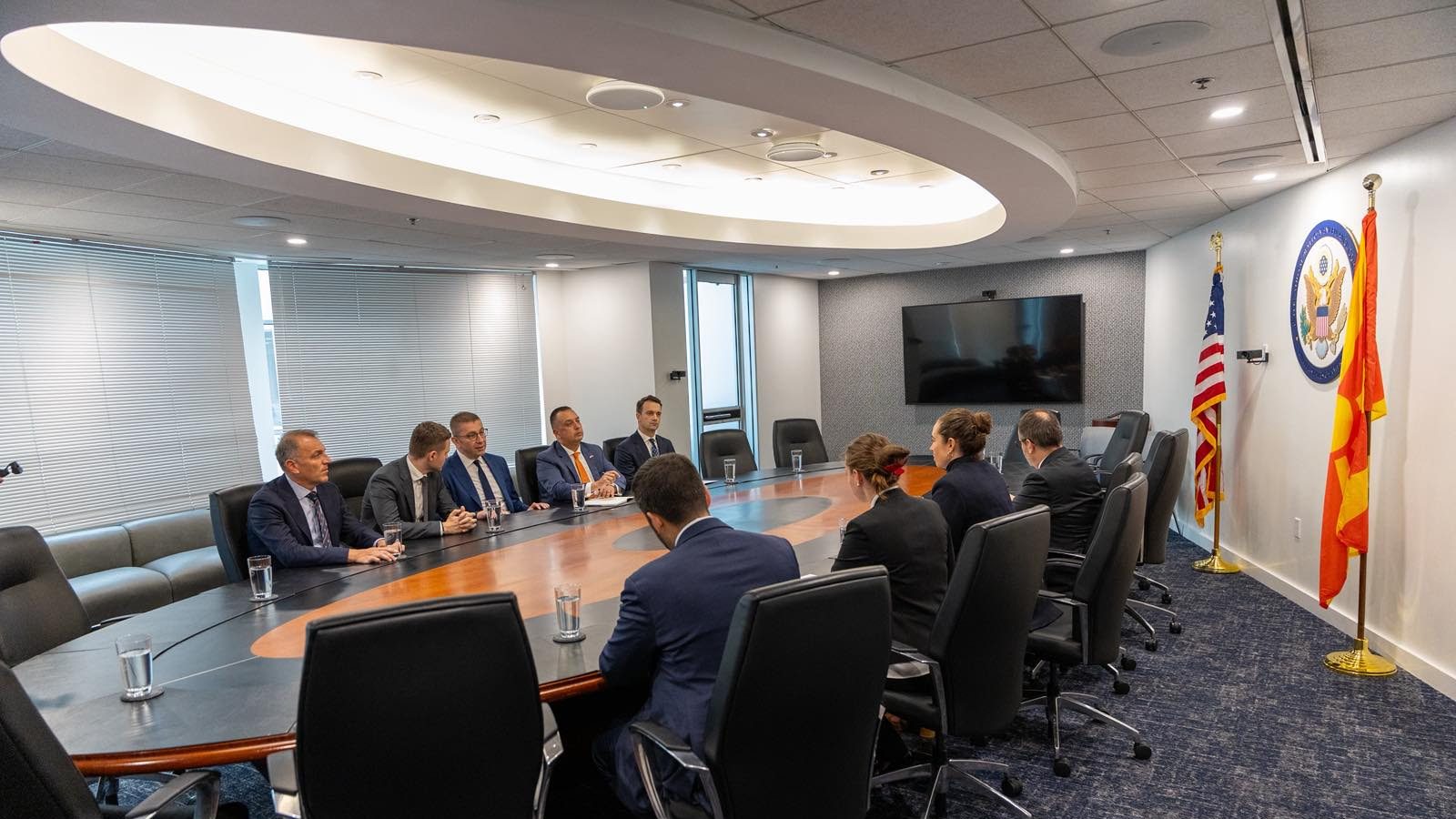
Mickoski concluded that his government will continue talks with European partners and the United States and will not withdraw from dialogue, with a strategic determination to deepen alliances with the United States and pursue full EU membership while pursuing concrete projects in infrastructure, energy links, digital and cyber resilience and technological investment.
Photo: press material from the event