Mickoski at UN calls for a rules-based path for North Macedonia’s EU membership
At the UN General Assembly Mickoski called on the EU to apply its rules consistently and outlined domestic reforms needed for EU membership.
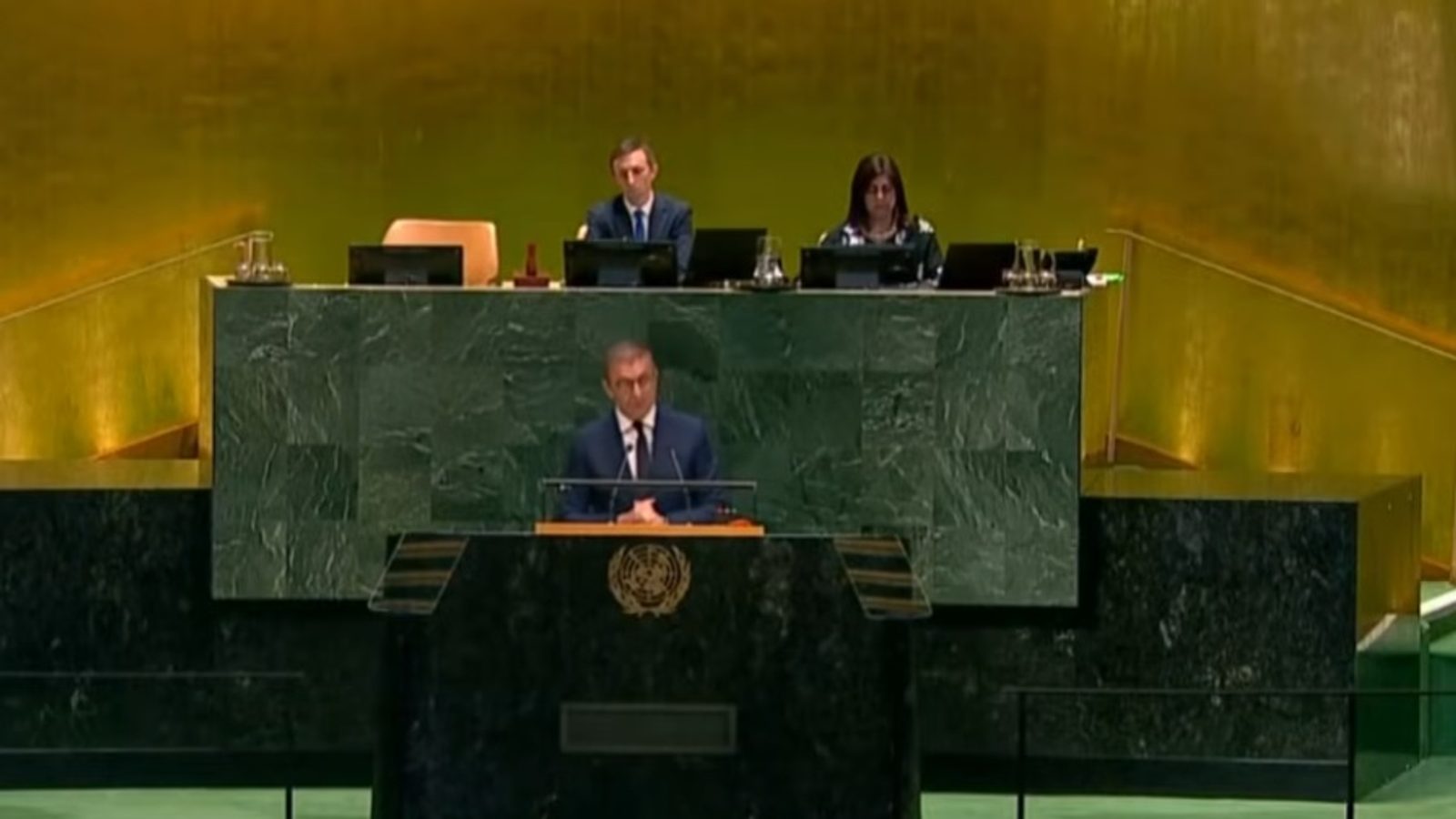
Prime Minister Hristijan Mickoski used his address to the United Nations General Assembly in New York to demand a predictable, rules-based path for North Macedonia’s EU accession and urged the European Union to respect the procedures it sets for candidate countries.
Speaking before the General Assembly, Mickoski argued that the eurointegration process has extended “beyond any reasonable time frame” and that smaller candidate states must see consistent application of rules if they are expected to trust and comply with them.
Calls for predictability and equal treatment
“If anyone wants to see an example of a country that repeatedly renounced something that naturally belongs to it as a basic right — something many take for granted — it is enough to look at the recent history of my country. We made truly difficult decisions. We moved forward even when the processes lasted longer than one generation of citizens could reasonably expect. But precisely for that reason, looking at those decisions with the distance of time and with a clear awareness of reality, today I can responsibly say that trust cannot be an endlessly one-sided obligation,” Mickoski said.
He added that when the EU demands that smaller candidate countries follow its rules, the Union itself must honour the rules it has established: “If small states are expected to respect the rules, then the rules must also provide them with predictability. A rule that applies today cannot be different tomorrow simply because the balance of power has shifted. And a undertaken obligation cannot be a temporary political convenience. It must be a foundation on which people can plan their future.”
Mickoski stressed that citizens must see consistent enforcement and must believe that compromises will not simply invite new demands: “We ask our citizens to believe in cooperation, in good-neighbourly relations, in compromise and in mutual respect. We cannot tell people ‘Believe in the rules’ when they see that the rules do not apply equally. We cannot persuade them that compromise is a virtue if every compromise brings a new demand. And we cannot expect trust in international institutions if citizens begin to believe that their fate is more often determined by the political weight of their state than by the force of a commonly accepted principle.”
The prime minister argued that the EU remains North Macedonia’s natural political, economic and institutional home, while acknowledging domestic tasks: strengthening the rule of law, building more effective institutions, improving competitiveness and restoring citizens’ trust in the state. He presented three strategic commitments of the country in his speech: “We are an ally in NATO. The United States is our strategic partner. Full membership in the EU is our strategic commitment. These are not three separate policies. This is one geopolitical orientation, rooted in democracy, collective security, the rule of law and an open economy.”
Mickoski also invoked United Nations Secretary-General António Guterres’ emphasis on peoples over power: “This year, Secretary-General António Guterres reminded us that the Charter begins with the words: ‘We the peoples.’ And he added: ‘Not we the powerful. Not we the victors.’ In those few words lies the reason why a small European country continues to believe in this Organization, even when it is disappointed by it. Because the alternative to a world governed by rules is not a world in which everyone is free. It is a world in which the strongest are the freest. And all the others depend on their goodwill. Such a world may for a moment look effective. But it is never stable.”
Before his address to the General Assembly, Mickoski and the government delegation held meetings in New York with other heads of state and government, members of the United States Congress and officials from the U.S. administration.
Photo: Printskrin