Monika Stojkovska: First board of North Macedonia’s women’s team on career and challenges
First board and multiple national champion on concentration, equality and the need for stronger domestic support.
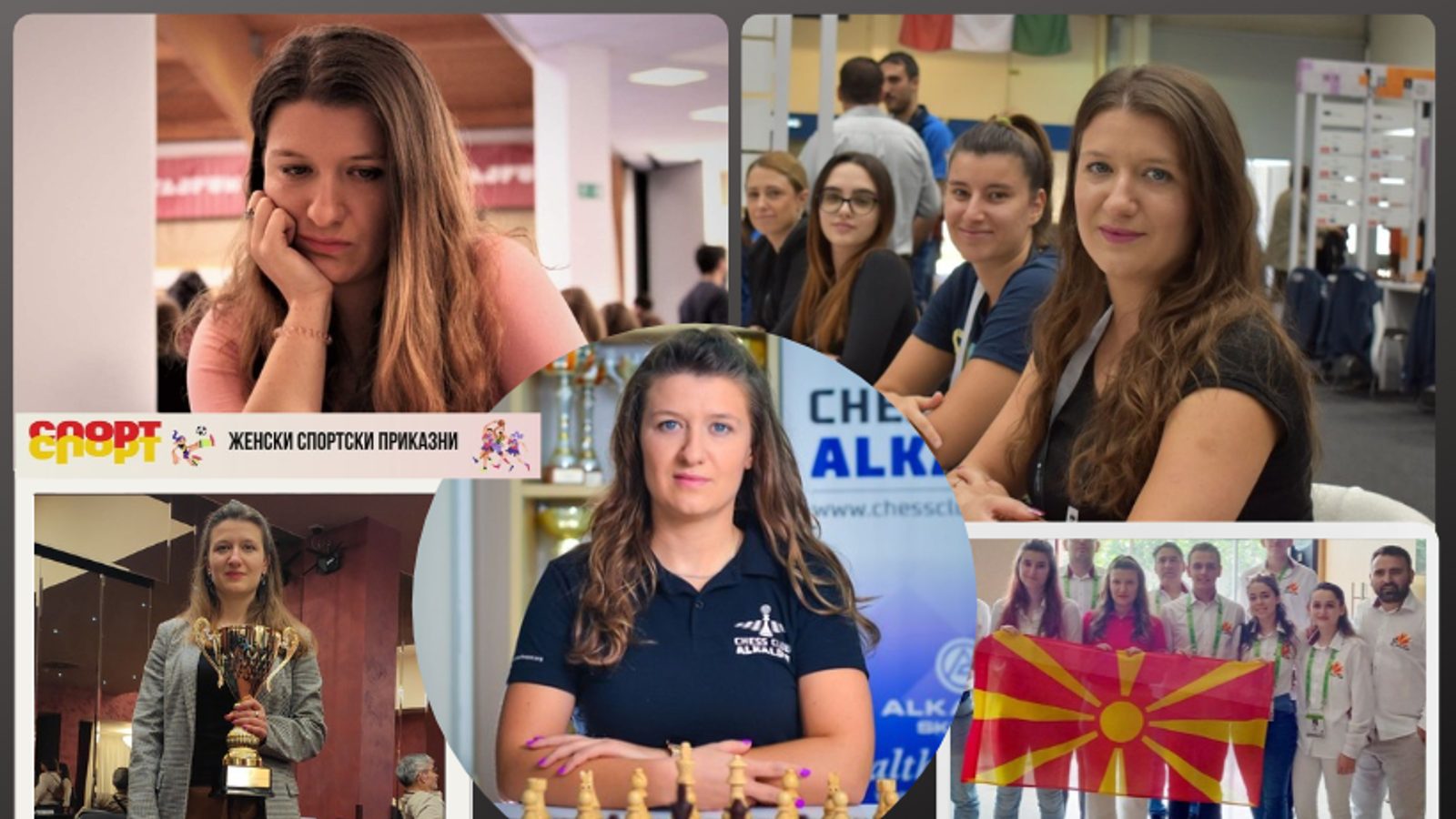
Monika Stojkovska is the long-standing leader of North Macedonia’s women’s chess team, a multiple national champion and a player who has carried the country’s flag on the first board for a decade. A member of Chess Club Alkaloid since 2008, she combined club support with international appearances that included earning the Woman International Master norms on high-profile team stages.
From a family chess set to the international arena
Reflecting on how she started, Stojkovska says her family introduced chess early. "In my family, sport has always had a special place. When we were four years old my parents asked my sister and me which sport we wanted to do. At that age, of course, we did not have a clear idea what we wanted, but we knew very well what we did not want. None of the offered sports, like swimming or handball, attracted us.
My father had a professional chess set at home, and he himself had played chess while serving in the military. So in the end he remembered to show us chess. It immediately caught my attention and I agreed to be taken to lessons. The group lessons were very interesting; we learned new things, solved problems and played games. That is how my love for chess was born, a love that lasts to this day."
Stojkovska highlights the physical and mental demands of tournament chess: "Tournament games require enormous focus, energy, patience, fighting spirit and endurance, because they can last several hours. Maintaining concentration throughout an entire game, even after so many years of active play, perhaps remains the biggest challenge for me. To stay maximally focused for about five hours, which a chess game can last, is not simple at all. It requires good psycho-physical preparation. Although chess looks at first glance like a sport where we sit for hours, behind that endurance there are regular physical activities. For the mind to withstand five hours of maximum strain, the body must also be prepared."
She is frank about gender gaps in sport: "Unfortunately, despite living in the 21st century, women in sport still fight for equal recognition, equal prize funds, equal media space and equal respect. Chess is unfortunately no exception. I believe that the path for women to reach top sports results is often harder, especially when a sporting career must be reconciled with various life and family obligations. Therefore I hope that in the future we will see greater equality, not only declaratively, but through concrete conditions, opportunities and appreciation of results."
Career highlights include achieving a double norm for the Woman International Master (WIM) title at the 2016 Chess Olympiad in Baku — where she first played on the team’s top board — and completing the third norm at the European Team Championship in Greece. "One of the dearest moments in my career I remember winning a double norm for the Woman International Master title at the Chess Olympiad in Baku in 2016," she says. "There I played for the first time on the leading, first board for the women's team and managed at one tournament to win two of the three norms needed for the WIM title. That result had special meaning for me because it came on my first appearance on the first representative board. Later, at the European Team Championship in Greece, again playing on the first board for the women's team, I won the third required norm for the WIM title. Those are moments that remain forever in memory, because behind them stand years of work, preparation and many played games."
On the state of chess in North Macedonia, Stojkovska notes persistent structural problems: "The last years have been hard for Macedonian chess. We still face financial difficulties related to the national teams' participation, and an additional problem is that senior national championships were not held in some years. Players are forced to travel abroad to take part in open tournaments because such events are almost non-existent at home. I hope that in the coming years the situation will improve, that there will be greater support for representatives, and more domestic and international tournaments in North Macedonia."
Photo: Privatna arhiva na Monika Stojkovska