99.8% of municipal waste in North Macedonia sent to landfill in 2025; one in six lacks collection
State data show 998 kg per tonne landed in dumps; about one in six residents had no organised collection in 2022.
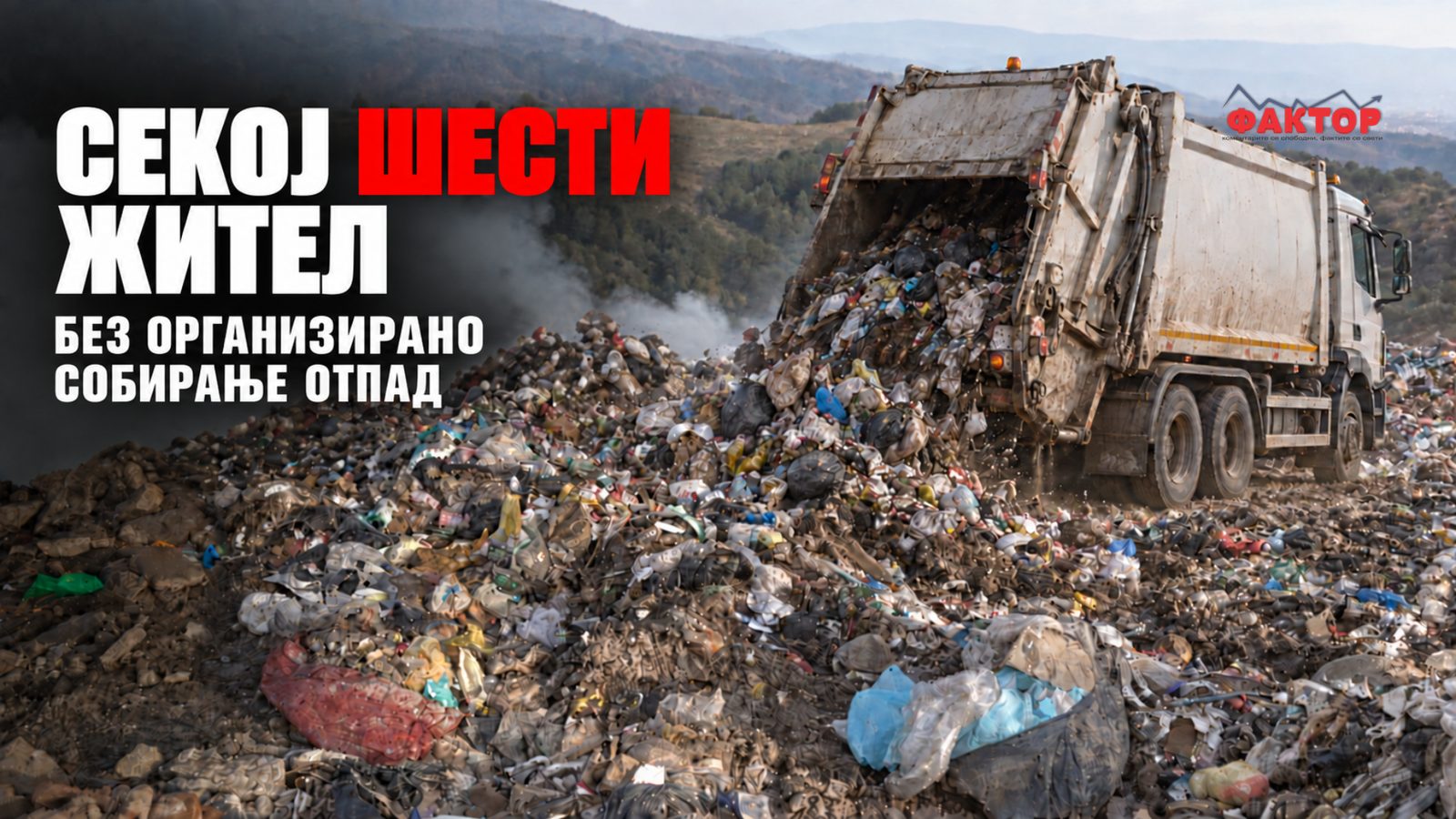
Nearly all municipal waste collected in North Macedonia ended up in landfills in 2025: about 998 kilograms from every tonne of waste, according to data published by the State Statistical Office. The official figures show that 99.8 percent of collected waste was disposed of in landfills that year.
Recycling and composting remain minimal nationwide. The Ministry of Environment and Spatial Planning reports weak waste separation at source and a shortage of processing capacity, which means reusable materials are lost instead of being recovered.
What the data say about services and reporting
The situation contrasts sharply with Slovenia, where separate collection streams for paper, plastic, glass and organics are well developed and many households receive collection services for sorted waste. The European Environment Agency reported that less than 10 percent of municipal waste in Slovenia went to landfills in 2023.
In North Macedonia a portion of the population lacks access to organised waste collection. An OECD analysis for 2022 found that collection services covered 83 percent of the population — meaning roughly one in six residents did not have organised collection.
The lack of service is especially pronounced in rural areas, where waste is often dumped beside roads or burned openly, contributing to illegal dumping sites. Municipal reporting is also limited: the Ministry says that in its data review up to 2023, on average only three out of ten municipalities submitted annual reports on municipal waste management.
Experts and officials warn that without expanded collection coverage, more processing capacity and better reporting from local authorities, the country will continue to rely overwhelmingly on landfilling while losing recyclable and compostable resources.
Photo: press material from the event