Monumental Roman pool with heating system found at Isar–Marvinci near Valandovo
A large Roman pool with marble lining and an underground heating installation has been uncovered at Isar–Marvinci near Valandovo.
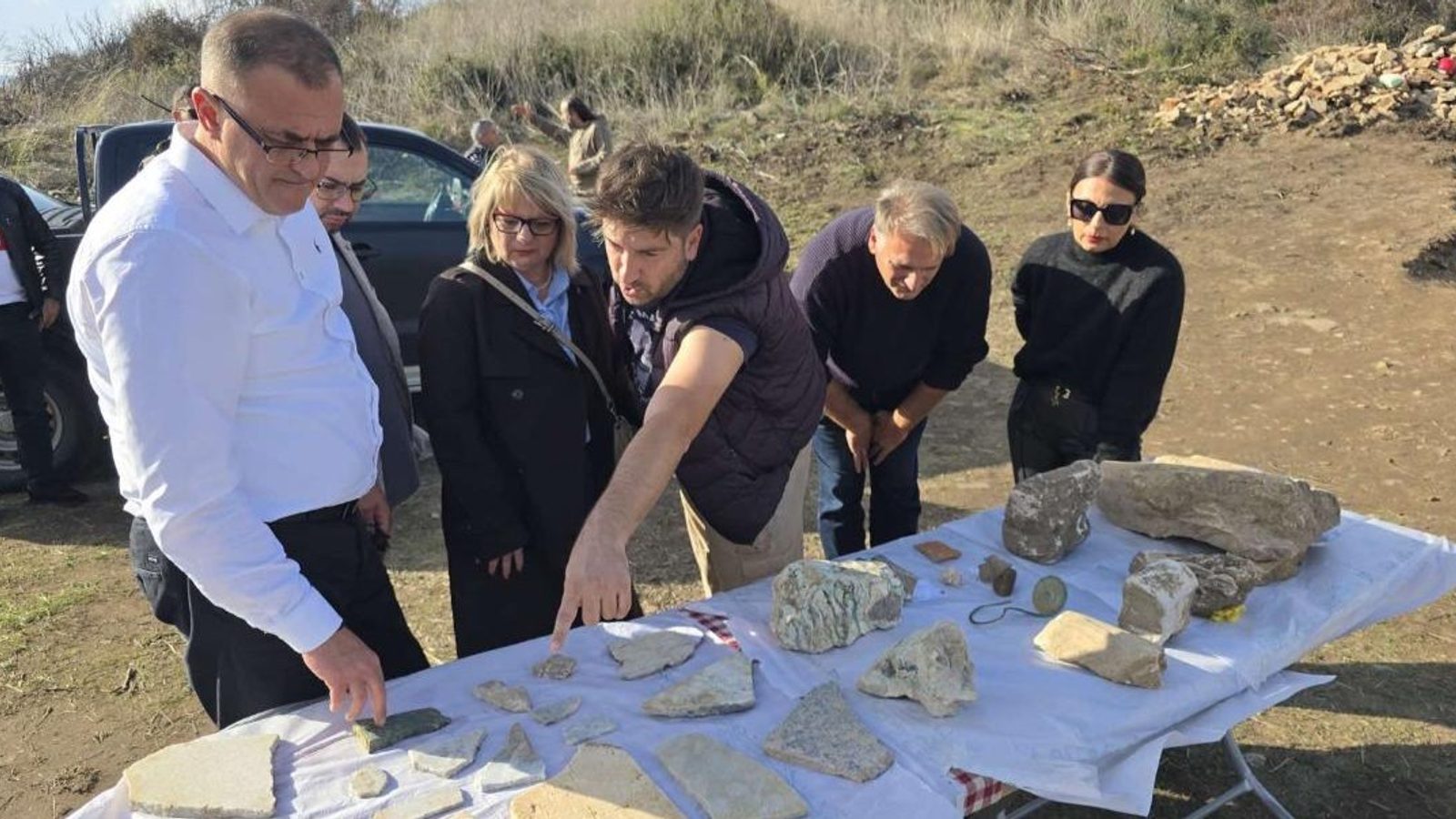
A monumental Roman bathing pool has been uncovered at the Isar–Marvinci archaeological site near Valandovo, archaeologists report. The rectangular pool measures more than 4.5 × 2.5 meters and reaches a depth exceeding 1.5 meters. Its base was laid with a special waterproof mortar and finished with a marble lining made from more than eight different types of marble.
Technical complexity and urban connections
This season’s excavations by a team from the Archaeological Museum focused on the public bath complex of the Roman period. Earlier finds had indicated the presence of a cold-water bathing area, but the recent work revealed additional facilities.
“However, the latest discoveries confirm that after the 2nd century AD the complex also had a space for bathing with hot water, equipped with a developed heating system. Of particular interest is the glazing of the marble surfaces, which is an additional indicator of the attention paid to finishing and the aesthetic appearance of the space. It is significant that the extremely well-preserved heating system under the pool was discovered, which operated through a special furnace and a system for circulating hot air. This find enables direct study of the technical and engineering solutions applied in Roman bath architecture. The discovered complex is directly connected to the city cistern, which opens new possibilities for researching the water supply and infrastructural organization of the ancient city,” said the Archaeological Museum.
Archaeologists emphasize that the preserved hypocaust-like heating installation beneath the pool offers rare material evidence for studying Roman engineering in the region. The direct connection to the urban cistern also creates opportunities to investigate how water was stored and distributed to public amenities in the ancient town.
Fieldwork will continue in the coming weeks with targeted excavation and conservation of the pool’s marble lining and the subsurface heating structures. Researchers say the find will allow more precise dating and a better understanding of the public bath’s role in the settlement’s urban infrastructure.
Photo: Arheoloshki muzej)