North Macedonia needs 52 years to reach EU average at current pace, ZMAI says
Report finds infrastructure, environment and the economy lag most while health, digitalisation and governance are closest to EU levels.
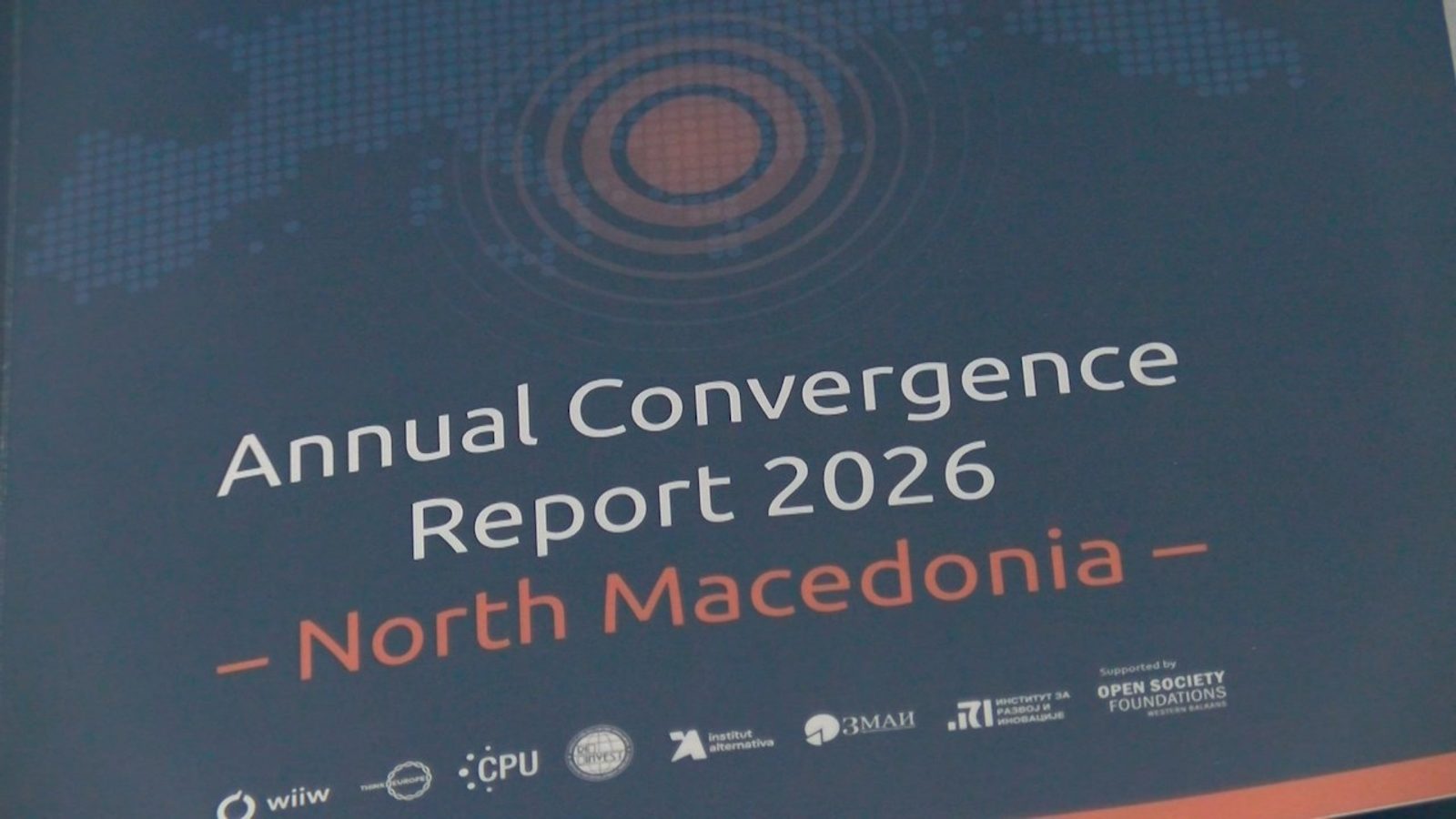
North Macedonia would need another 52 years to reach the European Union average if it continues growing at the current pace, according to an annual convergence report by the Association for Research and Analysis (ZMAI).
Gaps and strengths across eight sectors
The report measures progress in eight areas and finds the largest gaps in infrastructure (43.4% of the EU average), environment (54.2%) and the economy (55.9%). The sectors closest to the EU mean are health (80.3%), digitalisation (77.3%) and institutional governance (72%).
On specific indicators the study shows gross wages adjusted for purchasing power are at 64% of the EU average, labour productivity at 54%, while electronic public services reach only 36%. Citizens cover 39.6% of health spending out of pocket.
“We have a setback of 0.1 percentage point, we do not have any large general progress, in certain areas we even have regression. In digitalisation it is important to say that the private sector has progress, what we lack and where we lag is the state sector, i.e. state digital services. And here health, which is the closest as an average to the EU, has one part where we are indeed falling behind the EU, and that is the costs that citizens pay out of their own pockets for health services,” said Viktor Mitevski, executive director of ZMAI.
EU Ambassador Michalis Rokas said that economic convergence and accession must go together and that formally opening EU accession negotiations would change the dynamic.
“I think the speech would be incomplete if I did not say what will truly change the game — that will be the opening of accession negotiations. We cannot underestimate that. European laws are important to serve as the basis to move forward, but of key importance is to restore the confidence that the country is moving toward the EU,” Rokas said.
Irish Ambassador Brendan Ward described the accession path as an anchor and compared North Macedonia’s challenges with the experience of Ireland after EU membership.
“Since its independence North Macedonia has had several difficulties with its neighbours. Most of them are significantly solved, some are still open. But for Ireland, since it became a member of the EU, the most important thing was to improve the relationship with the United Kingdom, our largest neighbour,” Ward said.
The presenters stressed that reforms should deliver benefits for citizens now, not only satisfy Brussels: higher productivity, functional public services and institutions that produce results are necessary to narrow the gap before full membership.
Photo: press material from the event