Shortage of textile conservators threatens the collection of the Museum of Macedonia
The museum has 8,623 textile items and 87 complete costumes, but no textile conservator; institutions and the Ministry announce analysis and reforms.
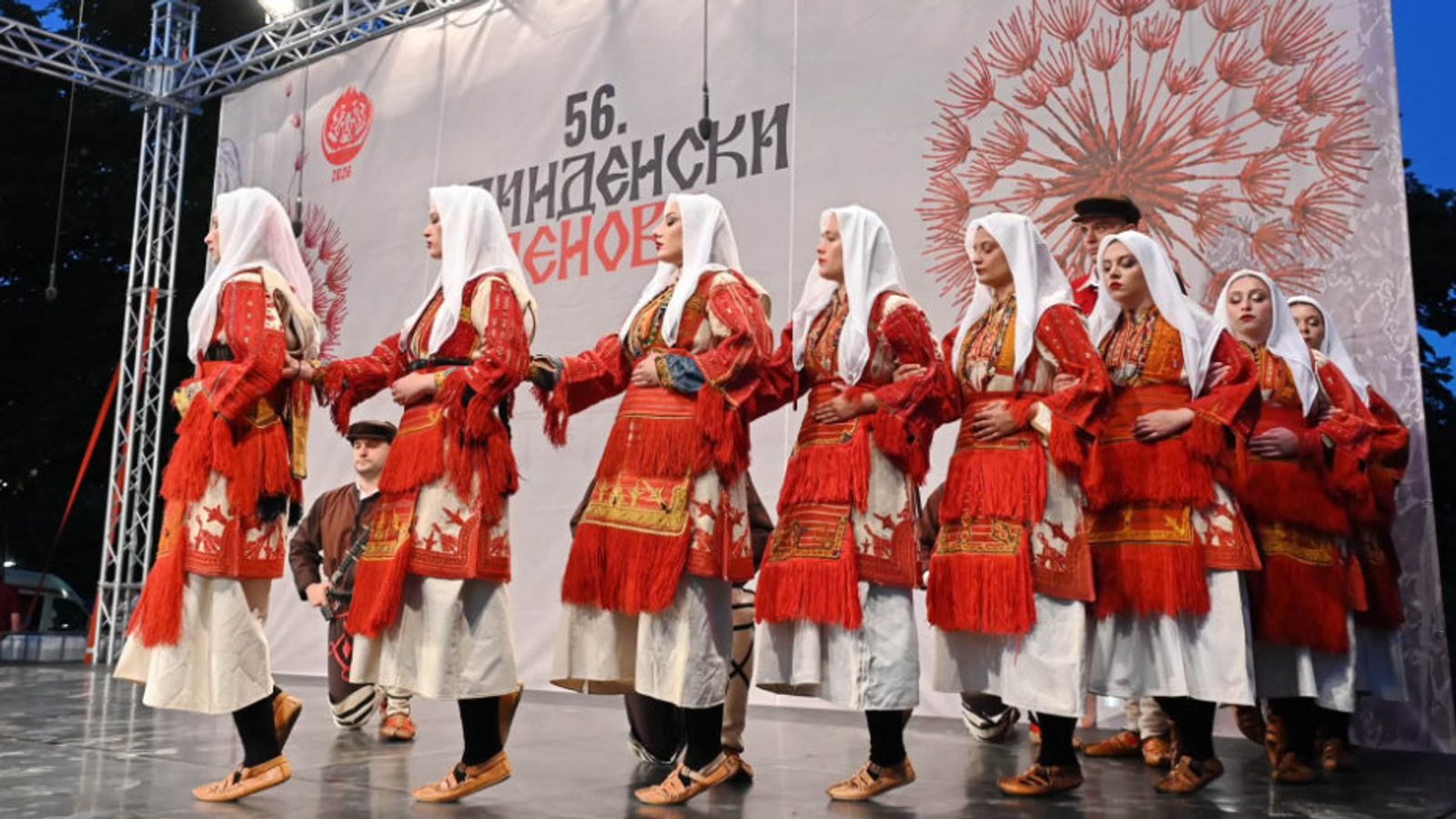
The Museum of Macedonia holds the largest museum collection of folk costumes in the country — 8,623 textile items and 87 complete costumes in the permanent ethnological display — but currently it does not have a textile conservator, said director Aleksandar Ristevski at the promotion in Bitola.
Ristevski warned that the lack of trained conservators puts the entire cultural heritage at risk. He explained that the institution has a central conservation laboratory and individual conservators, but that they lack a textile conservator; the conservator for wood is close to retirement, and only recently a senior conservator for icons was hired.
Gaps in staffing, unserious attitude and objects taken abroad
"Unfortunately, over the years, the Museum of Macedonia has not been in a very bright condition, this is something that has been dragging on for a long time," said Ristevski at the promotion of the reprint of the "Album of Macedonian Folk Costumes" as part of the "Ilinden Days" festival in Bitola. He pointed out that certain positions should not simply be filled, but must be filled with quality people: "Not just anyone, but with quality people so that we don't end up in a situation like in the film when Mr. Bean was the curator, went to America and smeared the painting and drew a nose on it with his hand."
The director also emphasized an unserious attitude of individuals toward the costumes as cultural heritage. "We often also face a lack of seriousness among people regarding the costumes. We have a costume that is 130 years old and people take it upon themselves to ask whether we can lend it for Trajanka to wear at a fashion show. And we preserve it so that it is not torn and not damaged," said Ristevski.
These staffing problems reflect a broader problem in the country. Prof. Dr. Vladimir Janevski, ethnologist and coordinator of the Seminar for Traditional Music and Dance at the festival, recalled that valuable samples were taken from these areas in the past: Stefan Verkovic took samples to Saint Petersburg in 1865, and in 1903 Jelka Mish exported more than 70 items to Croatia. Janevski said that institutions in Croatia are open to cooperation and to correcting incorrectly stated provenance — citing Dubrovnik as an example, where items that were previously listed as Kosovar were corrected.
The reprint that was promoted is from the "Album of Macedonian Folk Costumes" from 1963, with drawings by Olga Malakhova and Olga Benson, and edited by Vera Klichkova; the new edition was produced by Blagojche Tasevski from the Museum of Macedonia. Tasevski called the album "the bible for ethnology" and said it should be present in every Macedonian embassy.
The Ministry of Culture and Tourism confirmed the problem of the shortage of conservators and announced that it is working on a functional analysis of cultural institutions to assess real needs and to prepare reforms in education and employment. The Ministry evaluated that hiring conservators is a strategic investment, but concrete results from potential reforms are not yet visible in museums across the country.
Photo: SDK.MK)