Aleksandar Nikoloski urges EU to find solution for carriers blocked by Schengen rules
At the 23rd Vienna Economic Forum Nikoloski warned that new electronic rules and Schengen limits are choking cross-border carriers and that CBAM is blocking renewable electricity exports.
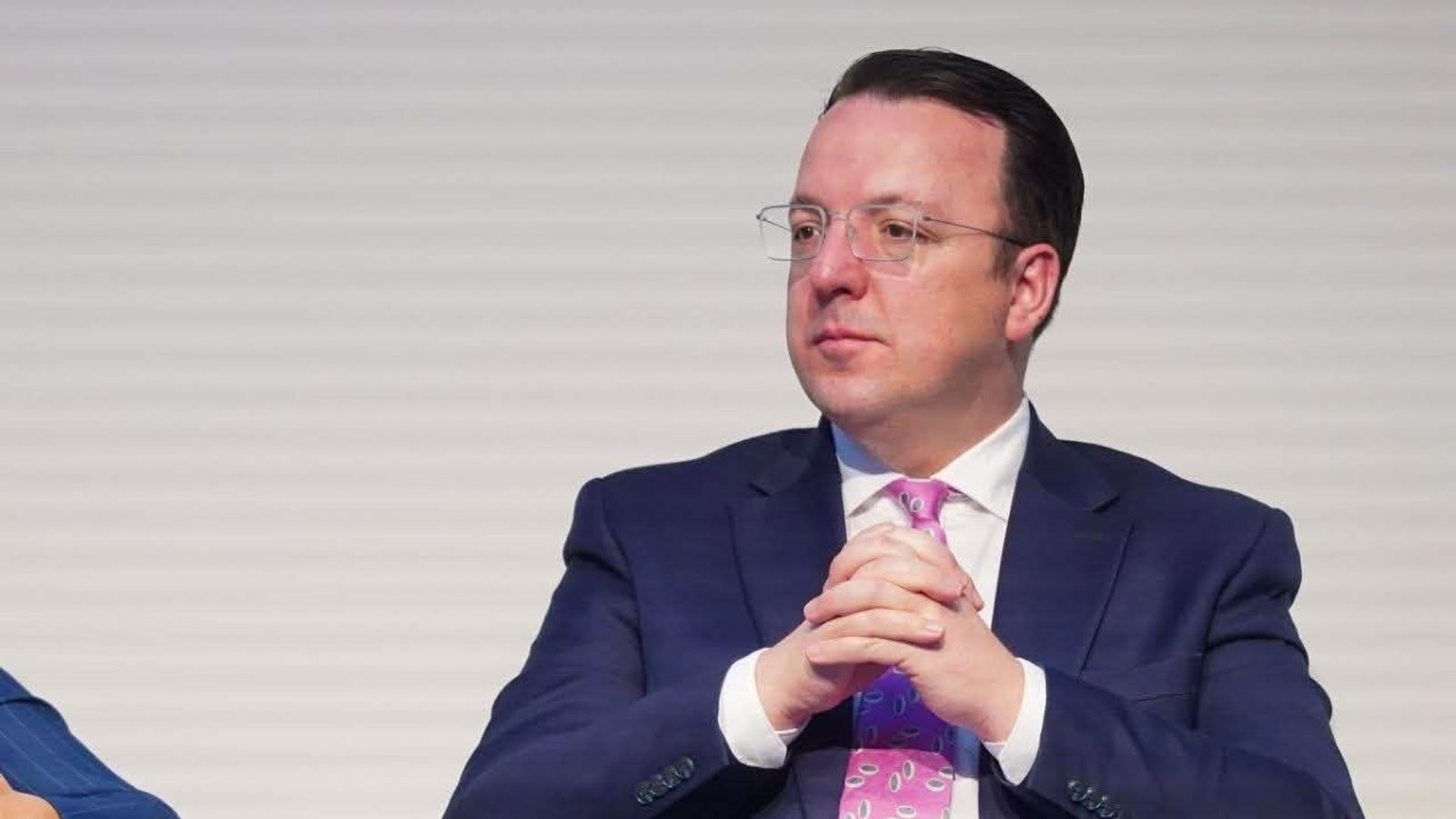
Deputy Prime Minister and Minister of Transport Aleksandar Nikoloski used his appearance at the 23rd Vienna Economic Forum to urge the European Union to find a political solution to a year-long problem that is paralysing road carriers from North Macedonia and the wider Western Balkans.
Drivers limited by Schengen rules, green energy faces market barriers
Speaking on the forum panel, Nikoloski said the region has been raising the issue for almost a year but so far has met only bureaucratic responses rather than binding political decisions. He warned that restrictions tied to a new electronic system are treating truck drivers like tourists and are choking trade.
"At this moment we have that big, huge problem. For a year we've been talking, I don't know how it's possible to have only bureaucratic discussions and no political decision on this. The answers we have been getting for a year are that 'it used to be the same before.' It is not the same!" Nikoloski said.
He explained that, under the current rules, drivers cannot spend more than 90 days within a 180-day period in the Schengen area, and that every day is now counted under the new electronic regime — a situation he says is collapsing businesses that depend on cross-border transport. Authorities in North Macedonia have tried to ease the problem by signing bilateral agreements with several EU member states, but Nikoloski stressed those pacts do not cover all Schengen countries.
"We are seeking a solution that certainly must be offered by the Schengen area and the EU to overcome this problem," he added, calling on Brussels to act.
Nikoloski also raised a second concern: obstacles to exporting electricity generated from renewable sources to the European market. He said the Carbon Border Adjustment Mechanism (CBAM) has introduced extra costs across electricity from the region regardless of its origin, causing economic losses for investors. He estimated that in North Macedonia alone more than 500 million euros in loans at local banks are tied to companies that now cannot export their renewable electricity.
"Even green energy produced in the region cannot be exported. How then are we supposed to invest in wind farms, solar panels, hydro power?" Nikoloski asked, urging the EU to adopt different measures for renewables.
On regional cooperation, Nikoloski argued that Western Balkan economies are too small individually to be globally competitive and therefore must coordinate their economic policies. He presented infrastructure projects intended to strengthen North Macedonia as a transit hub — notably an express rail on Corridor 10, which he said is expected to start construction in spring and would be the largest single infrastructure project in Southeast Europe with an investment of approximately two billion euros.
He also referred to the country’s work on Corridor 8: a rail agreement with Bulgaria is already under implementation and about 810 million euros are being invested in the Macedonian side of the rail link, while both sides are advancing highway connections. Together, he said, the Corridor 8 and 10 programmes represent roughly five to six billion euros in total investment aimed at boosting business growth and security.
Representatives from the Vienna Economic Forum board, ministers from Western Balkan states, EU officials and senior members of international financial institutions attended the forum, which is recognised by the European Commission as part of the EU Enlargement Forum 2026.
Photo: Ministerstvo za transport