NGOs in North Macedonia: Institutions failed to act, demand urgent legal changes to protect women
Civil society networks call for review of institutional responses, precise deadlines from the Assembly and state funding for services.
Three civil society coalitions accused public institutions of failing to respond properly to recent femicides and urged lawmakers to adopt a package of legal changes they say are necessary to protect women and prevent further killings.
NGOs demand accountability and faster action
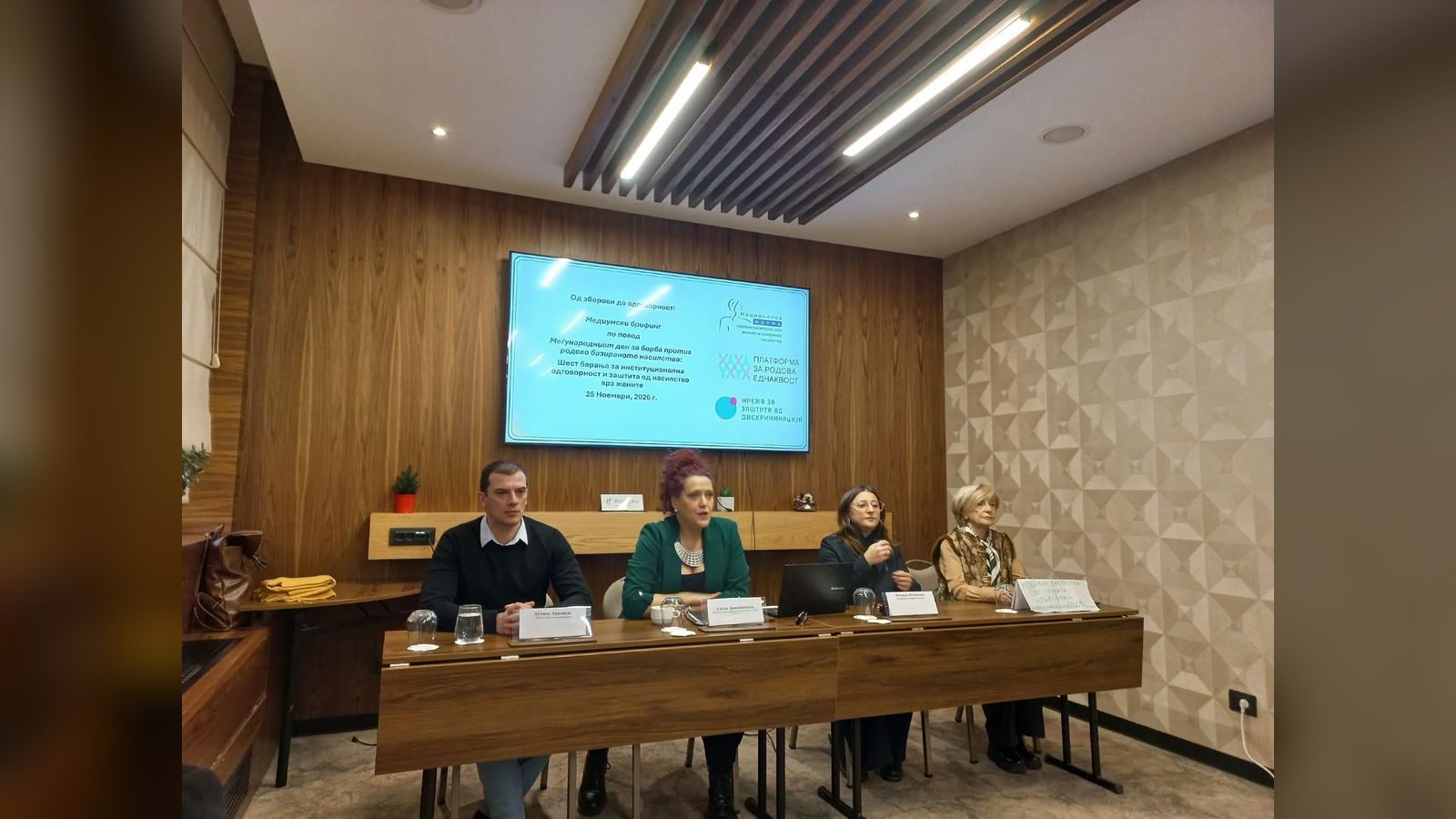
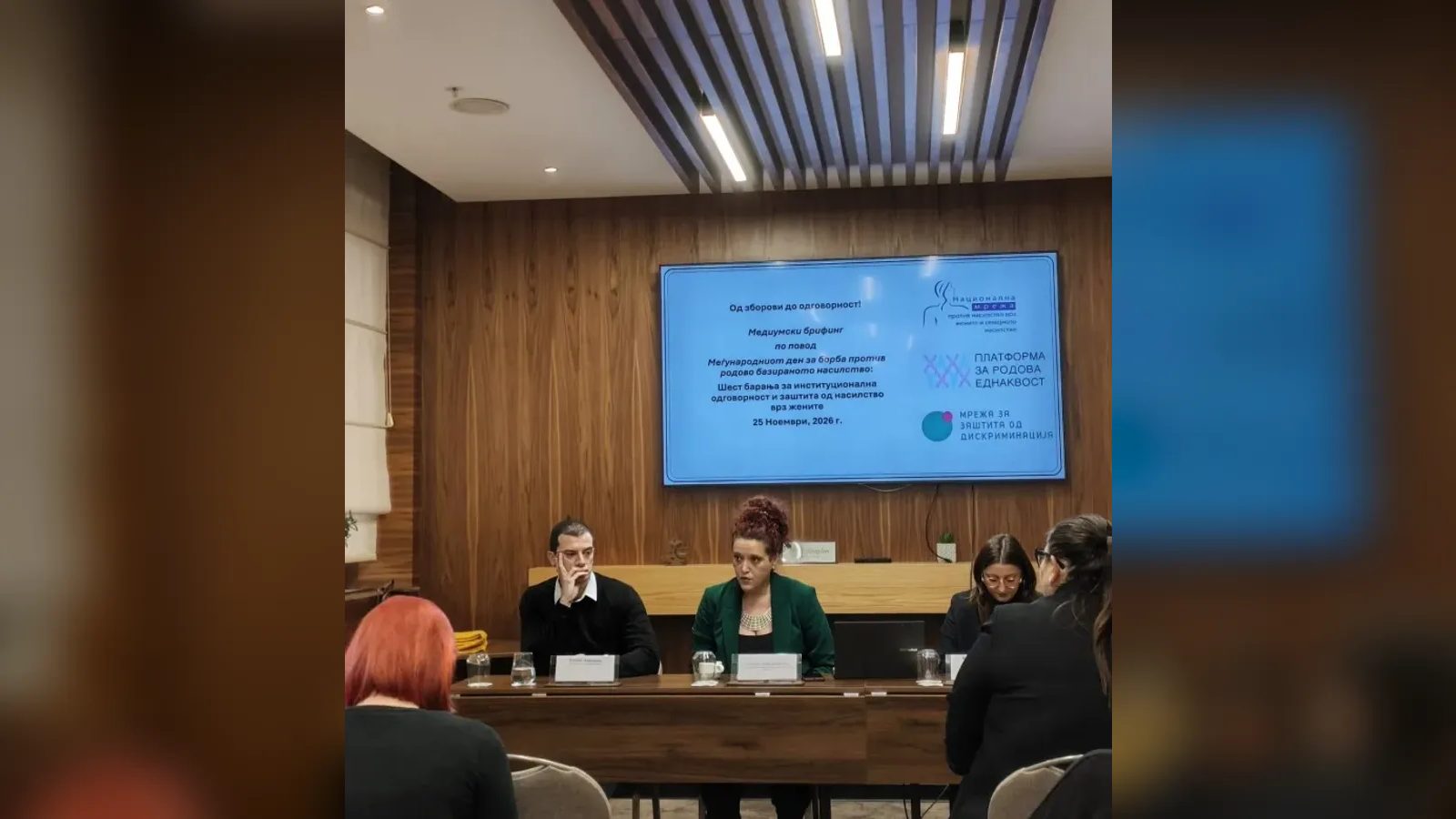
At a media briefing and press conference the National Network against Violence against Women and Domestic Violence, the Network for Protection from Discrimination and the Platform for Gender Equality called for a review of how institutions handled the latest femicide cases, for accountability for procedural lapses, and for the immediate adoption of the proposed amendments.
The groups said the existing Law on Prevention and Protection from Violence against Women and Domestic Violence provides a solid legal basis, and that the draft amendments were developed by a working group initiated by competent institutions that included civil society organisations and legal experts.
“If institutions had acted in time and made appropriate risk assessments, we would not be facing such a number of murders of women. With the proposed amendments police powers are expanded in cases of immediate danger, while retaining judicial control, additional measures for the protection of children are introduced and a legal basis is created for establishing an electronic monitoring system. We appeal to the female MPs to show responsibility and unite around the adoption of the legal amendments,” said Elena Dimushevska, executive director of the National Network against Violence against Women and Domestic Violence.
The NGOs warned that anti‑gender movements are using manipulative arguments to challenge the amendments and to try to remove gender and gender‑based violence from the legal framework. They argued that such positions reinterpret constitutional guarantees — including the right to life and the inviolability of the home — in ways that shield perpetrators rather than victims.
“The proposed amendments, with the exception of a few new measures, largely refine existing legal provisions. When we speak only of domestic, and not gender‑based violence, we recognise the relationship between victim and perpetrator, but not the motive for the violence. Instead of calling into question existing protection mechanisms, we demand transparency from institutions about how they act in these cases,” said Natasha Petkovska of the Platform for Gender Equality.
The NGOs also pointed to legislative backsliding in education, where the withdrawal of the comprehensive sexual education programme has weakened schools' role in violence prevention. They urged that prevention cannot improve if prevention mechanisms are rolled back.
While the Assembly held an oversight debate after the latest killings, the groups noted no concrete conclusions have yet been adopted. “We demand that the conclusions from the oversight hearing contain precise deadlines for the actions of each competent institution. Conclusions without deadlines will remain only on paper, without the possibility to monitor their implementation and to demand accountability. This is not only about amendments to one law, but about a package of eight laws whose improvement is necessary to establish a functional system for prevention and protection from violence,” said Atanas Avramov of the Network for Protection from Discrimination.
The organisations put a price tag on a fully fledged nationwide system of specialised services: seven million euros annually. They stressed that counselling centres, shelters, SOS hotlines and referral centres for victims of sexual violence must not depend on donor funds but need programmatic state financing.
Because of what they described as continued institutional inaction and a lack of political will, the three coalitions announced a moratorium on all ceremonial events connected to the 16 Days of Activism campaign and called on authorities to turn rhetorical declarations of zero tolerance into concrete decisions, actions, funding and accountability.
Photo: press material from the event