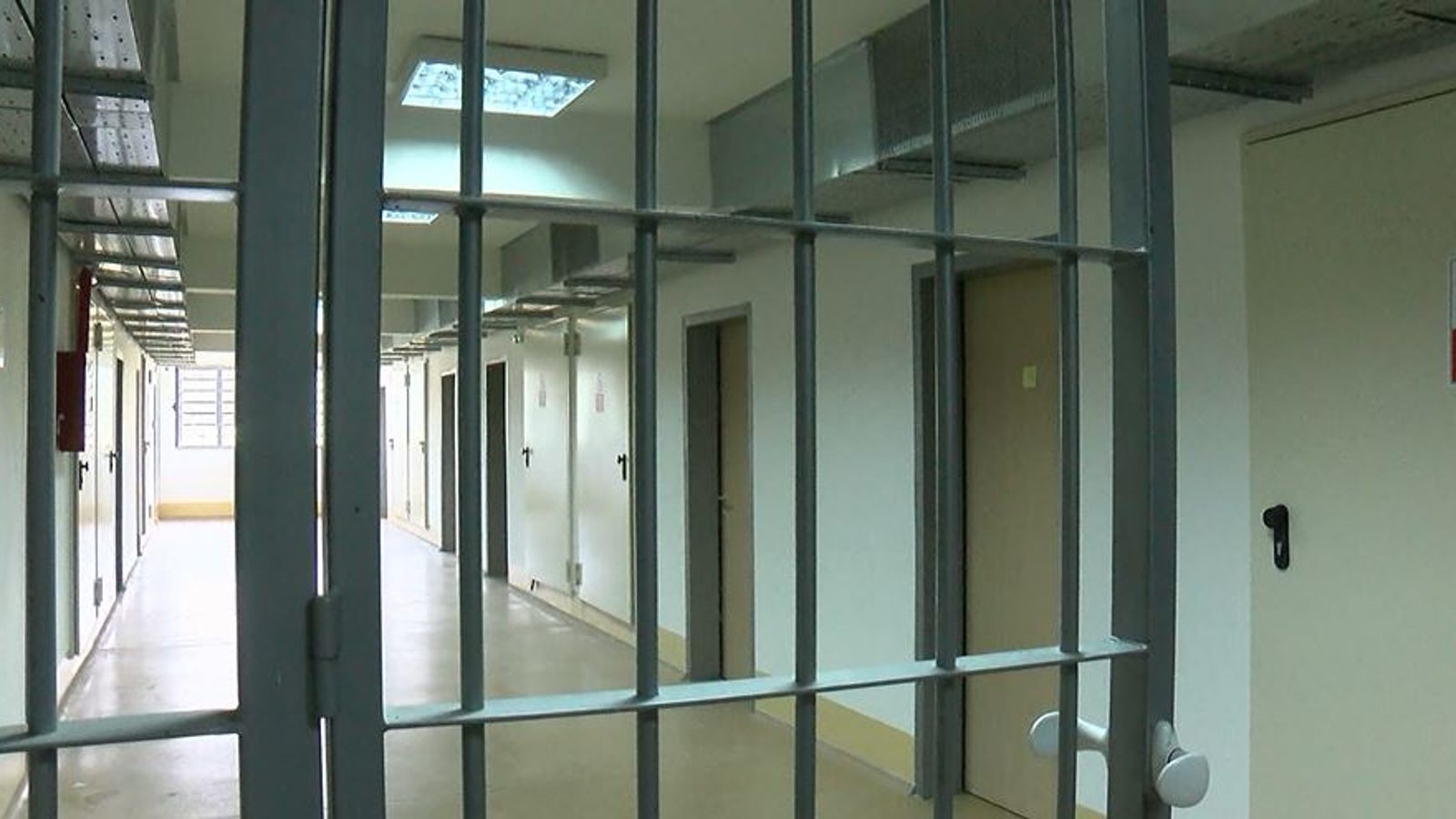
About 1,200 on probation as Idrizovo remains over capacity
Idrizovo houses more inmates than its capacity and officials say probation keeps re-offending low, while prisons seek political decisions on amnesty and alternatives.

About 1,200 people in North Macedonia are currently serving sentences under probation measures instead of prison, while Idrizovo Prison remains over capacity and prison managers are publicly urging political leaders to consider another amnesty, prison officials say.
There are roughly 1,200 active probation files in the country and only 0.5% of people who go through the programme re-offend, according to the Administration for Execution of Sanctions. Most probation cases are conditional sentences with protective supervision — a form of punishment that allows the convicted person to remain at liberty while meeting obligations monitored by probation officers in 11 offices across the country.
Prison overcrowding and numbers
Idrizovo Prison currently houses 1,296 inmates in a facility planned for 1,187 — and would reach 1,467 residents (25% above planned capacity) if those now absent returned. Prison director Zoran Jovanovski said some of the increase happened over the past three years.
"For the last three years, the number for me has increased by about 200 convicted persons. Those are 200 more on the list for food, accommodation, electricity, water. So the cost increases. Prices rise, and our budget decreases," said Zoran Jovanovski, director of the Idrizovo Correctional Facility.
Other prisons face similar pressure: Shtip holds 211 inmates in a facility with capacity for 139 (52% over capacity), and Prilep holds 134 in a building for 108 (24% over capacity). Across the prison system there are only 54 free places left, the institutions' figures show.
Prison managers point out that short-term relief can come from a new amnesty — as happened in 2018 and 2023 — but argue that long-term solutions require reducing crime and expanding alternatives to imprisonment, including community service and conditional sentences with protective supervision.
A court perspective and a probationer's experience underline the trade-offs: Daniela Dimovska, president of the Basic Criminal Court — Skopje, says judges weigh risks carefully and do not follow probation as a trend. An individual who served probation after a theft conviction described the programme as a "new beginning" that helped her get a job, care for her children and avoid returning to previous behaviour.
Photo: press material from the event