Assembly holds 122nd plenary session; opposition to question prime minister and ministers
After the agenda is adopted opposition deputies will have two hours to question the prime minister and government ministers; several appointments and law changes are scheduled.

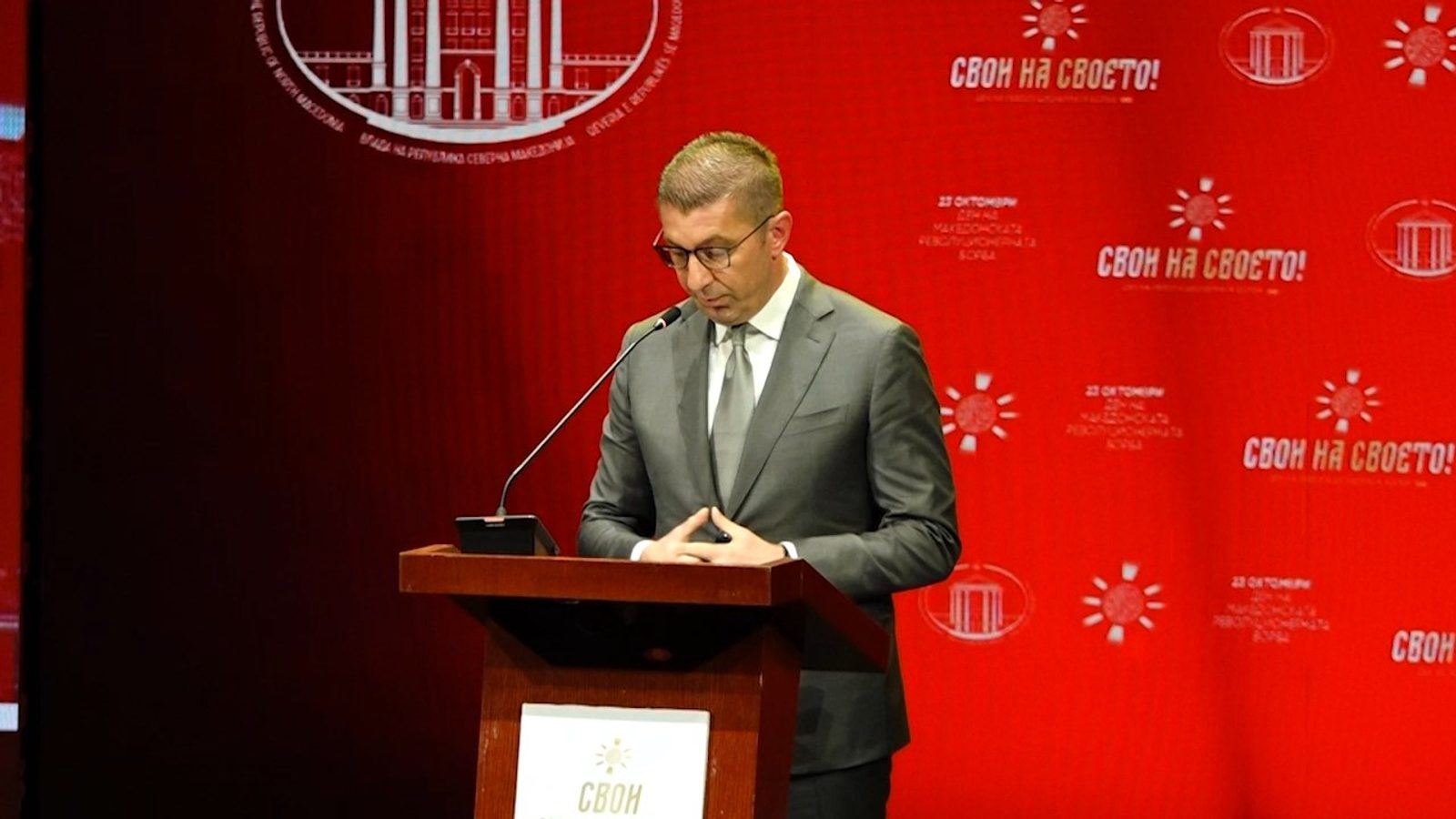
The Assembly of the Republic will hold its 122nd plenary session today. After members vote to adopt the agenda, opposition deputies will have two hours to put questions to the prime minister and cabinet ministers.
On the agenda for the 122nd session are proposals to appoint a member of the Commission for Protection of Competition and a series of decisions to dismiss and appoint presidents and members of the boards that award state prizes: the state award "Mito Hadzi Vasilev - Jasmin", the state award "22 November", the state award "Mother Teresa" and the state award "St. Kliment Ohridski". The Draft Law on State Audit is listed for first reading.
Under the shortened procedure, legislators propose changes to several laws: the Law on Representation of the Republic of Macedonia before the European Court of Human Rights, the Law on Communal Activities, the Law on Construction, amendments to the Law on Road Transport, the Law on Sanitary and Health Inspection, and amendments to the Law on Restrictive Measures.
Selection procedures and VAT clarification
The agenda also includes draft decisions on how interviews will be conducted, how candidates will be assessed and scored for membership of the Council of Public Prosecutors of the Republic of North Macedonia, and equivalent rules for candidates for the Judicial Council of the Republic of North Macedonia. Lawmakers will also consider a proposal for an authentic interpretation of Article 23, paragraph 1, point 18 of the Value Added Tax Law.
The opposition's two-hour question time will take place immediately after the Assembly adopts the day's agenda, according to the schedule circulated to deputies. Several items are flagged for accelerated parliamentary procedure, meaning they may be voted on without extended committee debate.
Parliamentary sessions of this type typically combine routine appointments and legal amendments with the opportunity for opposition scrutiny; the Assembly may also add other items or move items between regular and shortened procedure during the sitting.
Photo: press material from the event