Opposition skeptical after European Commission speech; government pledges to continue EU dialogue
SDSM accuses the government of sidelining the country after EU remarks; officials say dialogue with Bulgaria, the EU and the US will continue.
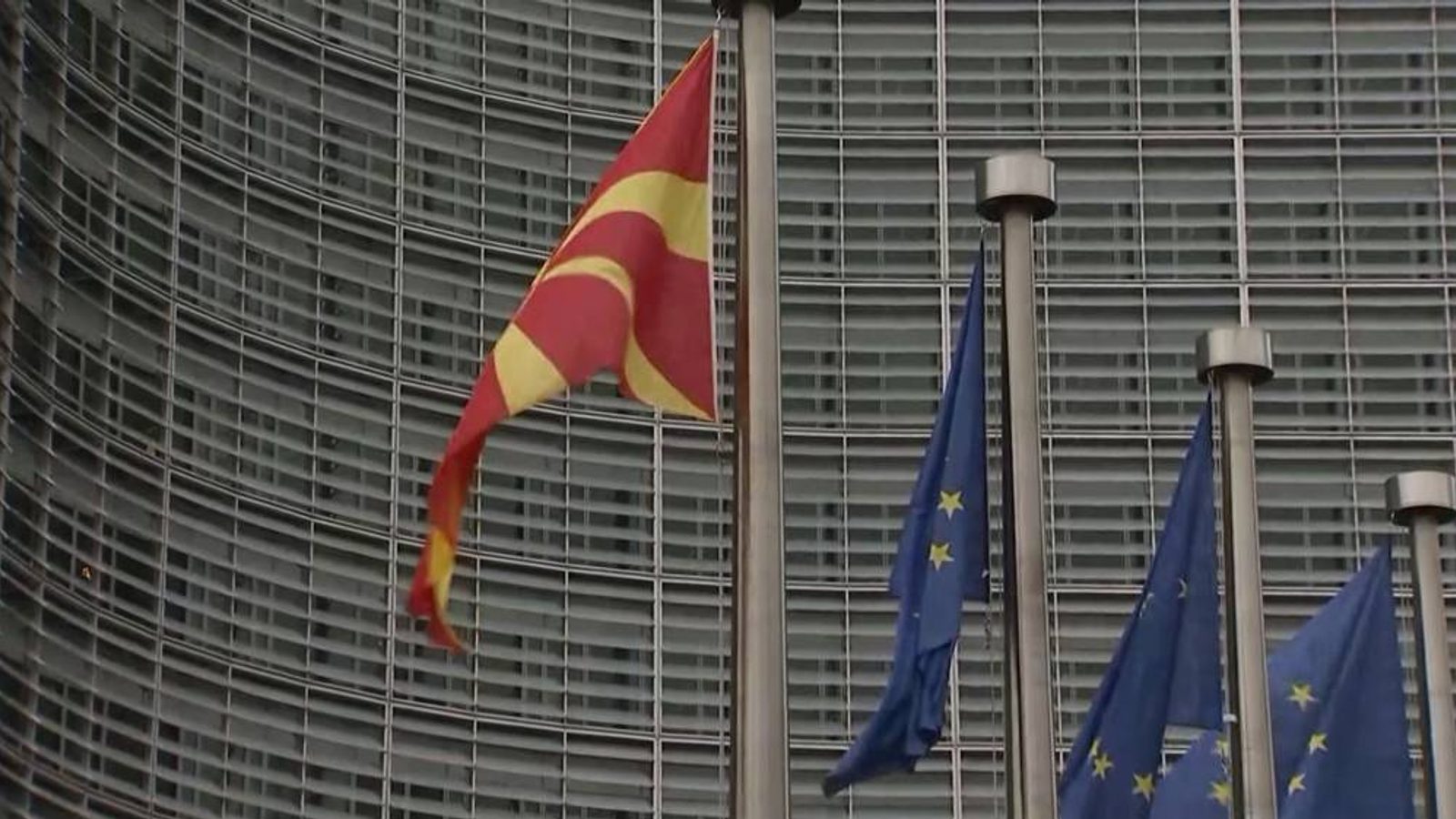
Opposition parties in North Macedonia voiced skepticism about the country’s EU prospects after a recent speech by the president of the European Commission omitted North Macedonia from the list of states expected to receive new roadmaps, and following Marta Kos’s remark that the obligation to carry out constitutional changes must be met.
SDSM’s leader publicly blamed the current government for the setback, saying the country is no longer among those moving forward and adding that, in his view, U.S. military aid has also been reduced because of the authorities’ actions. He singled out the four states that were mentioned: Montenegro, Albania, Moldova and Ukraine, and contrasted them with North Macedonia’s position.
“Those four countries in the group are Montenegro, Albania, Moldova and Ukraine. We are not there. They are telling us clearly and loudly that because of this government we are in the group with Kosovo and Bosnia and Herzegovina. We are the blind end in the region. Mickoski tells tales and lies,” said Venko Filipche, president of SDSM.
Levica expressed its own unease about the European Union’s signals. Amar Metcinovic, a Levica MP, warned that while new opportunities have opened for countries such as Ukraine and Moldova in the last “4–5 years” — and more recently for Canada — North Macedonia, which for two decades raised whole generations with the idea of EU accession, no longer feels it is treated as an equal partner in talks.
At a forum in Sofia, Deputy Foreign Minister Zoran Dimitrovski said he expects dialogue with Bulgaria to continue as authorities try to resolve outstanding bilateral issues. The audience reportedly greeted him in Bulgarian during his appearance. Dimitrovski stressed the country’s European orientation and downplayed constitutional change as an obstacle, pointing to the Action Plan for minorities and urging mutual respect for European standards and the rulings of the European Court of Human Rights.
“I want to greet those present in Bulgarian, which I speak. I can also speak in my mother tongue Macedonian, but what matters is that we understand each other and what I will say. The future of the country we see in the European Union. The inclusion of Bulgarians in the Constitution does not represent a problem, as confirmed by the Action Plan for minorities, which applies to all ethnic communities in the country, including the Bulgarian community. But at the same time mutual respect for European standards, including the rulings of the European Court of Human Rights, is needed,” Dimitrovski said.
From the United States, Prime Minister Hristijan Mickoski insisted that North Macedonia remains committed to EU membership while arguing the accession process should rest on reforms and merits rather than on the continuous opening of new bilateral disputes. Speaking at the Atlantic Council in Washington, Mickoski said he does not expect isolation but rather a geostrategic positioning of the country in the region.
“North Macedonia remains fully committed to membership of the European Union, but the process should be based on reforms and merits, instead of constantly opening new bilateral issues,” Mickoski said. He also announced that talks with European partners and with the United States will continue.
The statements have deepened the political divide at home: the opposition says the government’s approach cost the country tangible ground in EU talks, while officials counter that diplomacy and bilateral dialogue remain the path forward.
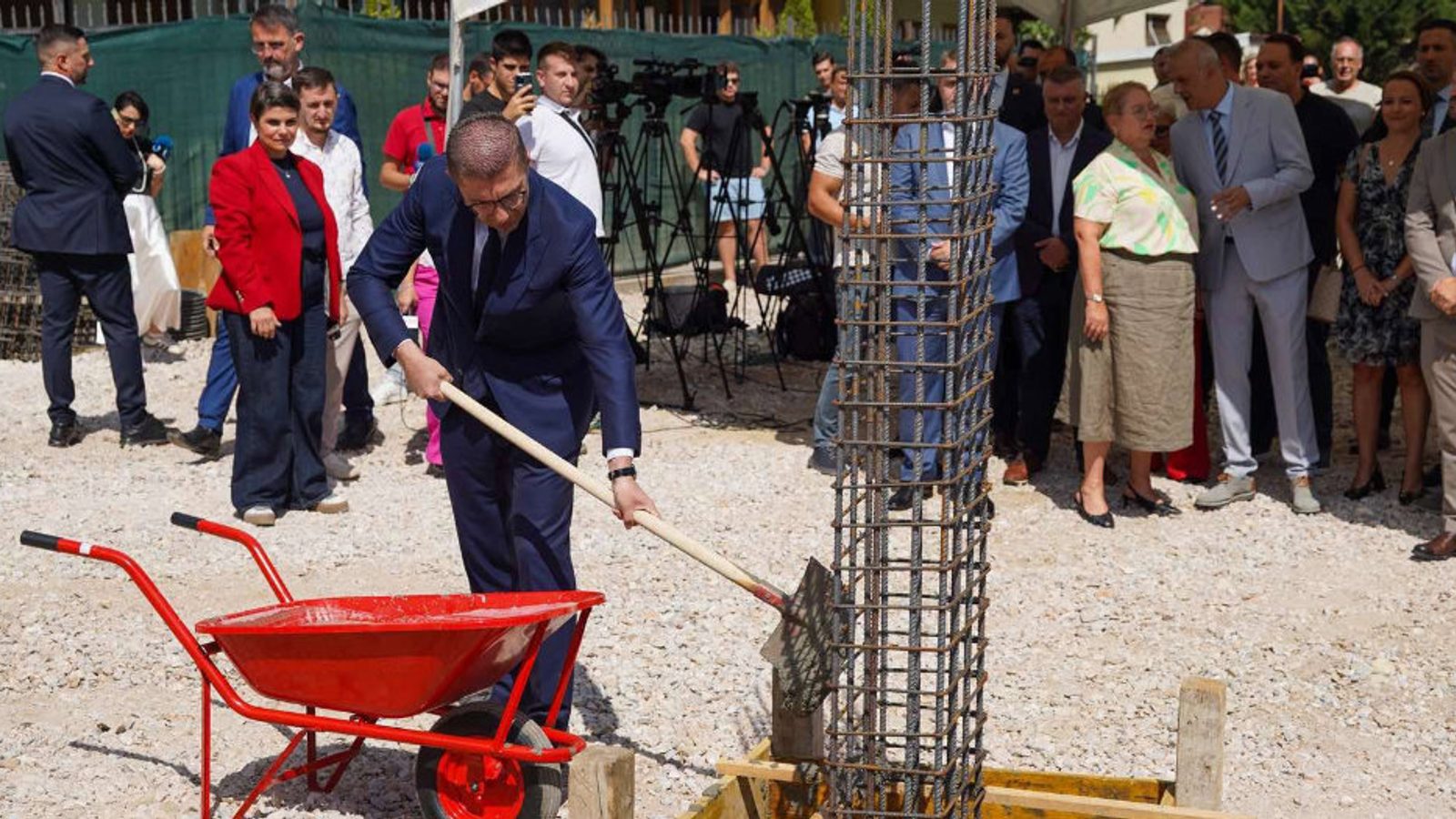
Photo: press material from the event