Paradoxical, but real: supermarkets sell fruit and vegetables cheaper than the markets
A price comparison in Skopje shows that for some seasonal products supermarkets are cheaper than the stalls.
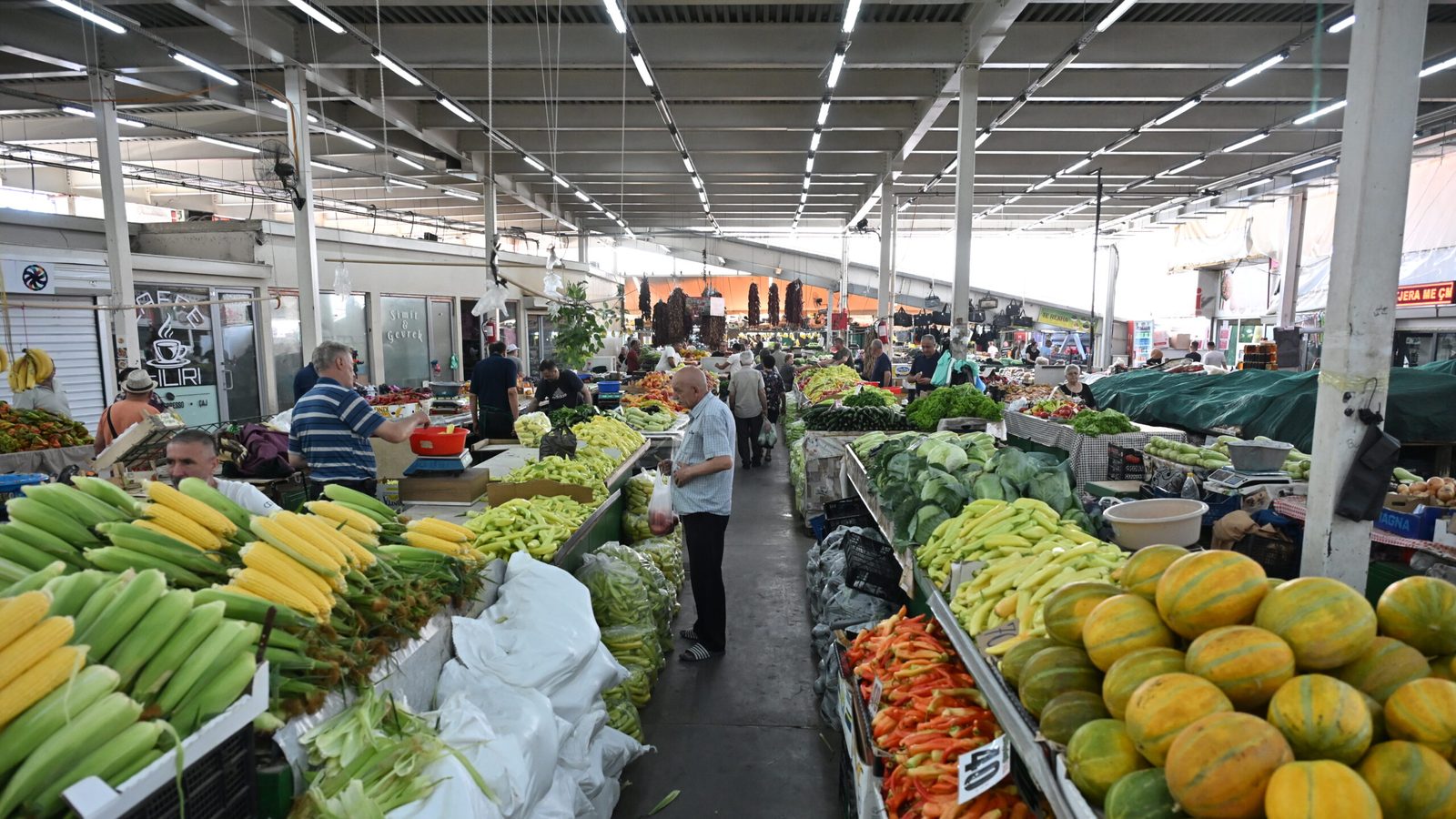
The unwritten rule that markets are always cheaper than supermarkets this summer has increasingly proved subject to change. According to a comparison of prices at several Skopje markets and retail chains, for many in-demand seasonal fruits and vegetables supermarkets are currently offering lower prices.
Of the markets included in the comparison, the Green Market in Skopje most often turns out to be the cheapest, prices at Bit Pazar are somewhat higher, while Bunjakovec market records the highest amounts in the overview, with Aerodrom just behind it.
From what can be seen on the stalls, fruit prices are: peaches 60–70 denars per kilogram, nectarines 70 denars, plums 60–70 denars, apricots 70 to 100 denars depending on quality, and grapes 70–80 denars per kilogram.
Among vegetables, the more popular “yabuchar” tomato is sold for 100–120 denars per kilogram, while ordinary tomatoes on some stalls are on promotion – three kilograms for 100 denars. Cucumbers cost around 40 denars, sweet peppers 100 denars, hot peppers 60 denars, and watermelon is sold for 20 denars per kilogram.
Promotions and bulk purchasing change the game
In supermarkets, some of these products are offered at significantly lower prices: peaches and nectarines 60 denars/kg, plums 55 denars/kg, tomatoes 50 denars/kg, sweet peppers 65 denars/kg, hot peppers 50 denars/kg, zucchini 20 denars/kg and melons 50 denars/kg.
The biggest difference is in tomatoes: while the “yabuchar” tomato at the markets sells for up to 120 denars/kg, in supermarkets tomatoes can be found for as little as 50 denars/kg. There is also a significant difference for sweet peppers — about 35 denars — as well as for peaches and nectarines.
Economic analysts say this is not surprising: “In recent years retail chains have often offered lower prices for some products. Large quantities, organized logistics and frequent promotions allow them to be more competitive,” they say.
Farmers, however, warn that they cannot reduce prices endlessly: “Fertilizers, fuel, labor, irrigation water — everything is more expensive. People think that the farmer sets the price as he wishes, but behind every kilogram of fruit and vegetables there are months of work and large investments,” says a farmer from Stajkovci. Representatives of supermarkets point out that during the summer period they regularly run promotions: “We work every day to provide competitive prices and quality products. In the summer season we often organize promotional offers for fruit and vegetables, which further reduce prices,” say representatives of a Skopje supermarket.
Market sellers remind that price is not the only criterion: “At our stalls people buy because they know who they are getting the product from. They look at it, touch it, taste the fruit, talk to the seller. Domestic produce and freshness cannot always be compared solely by price,” say vendors at the Aerodrom market. For many, the connection with a trusted producer and immediate freshness still make the market the first choice, even though the automatic assumption that the market is the cheapest place is slowly breaking down.
Photo: Sloboden Pechat / Dragan Mitreski