The First Five‑Year Plan that reshaped Yugoslavia
The 1947 First Five‑Year Plan pushed rapid industrialisation and reconstruction but brought shortages and social costs, and was reshaped after the 1948 Tito–Stalin split.
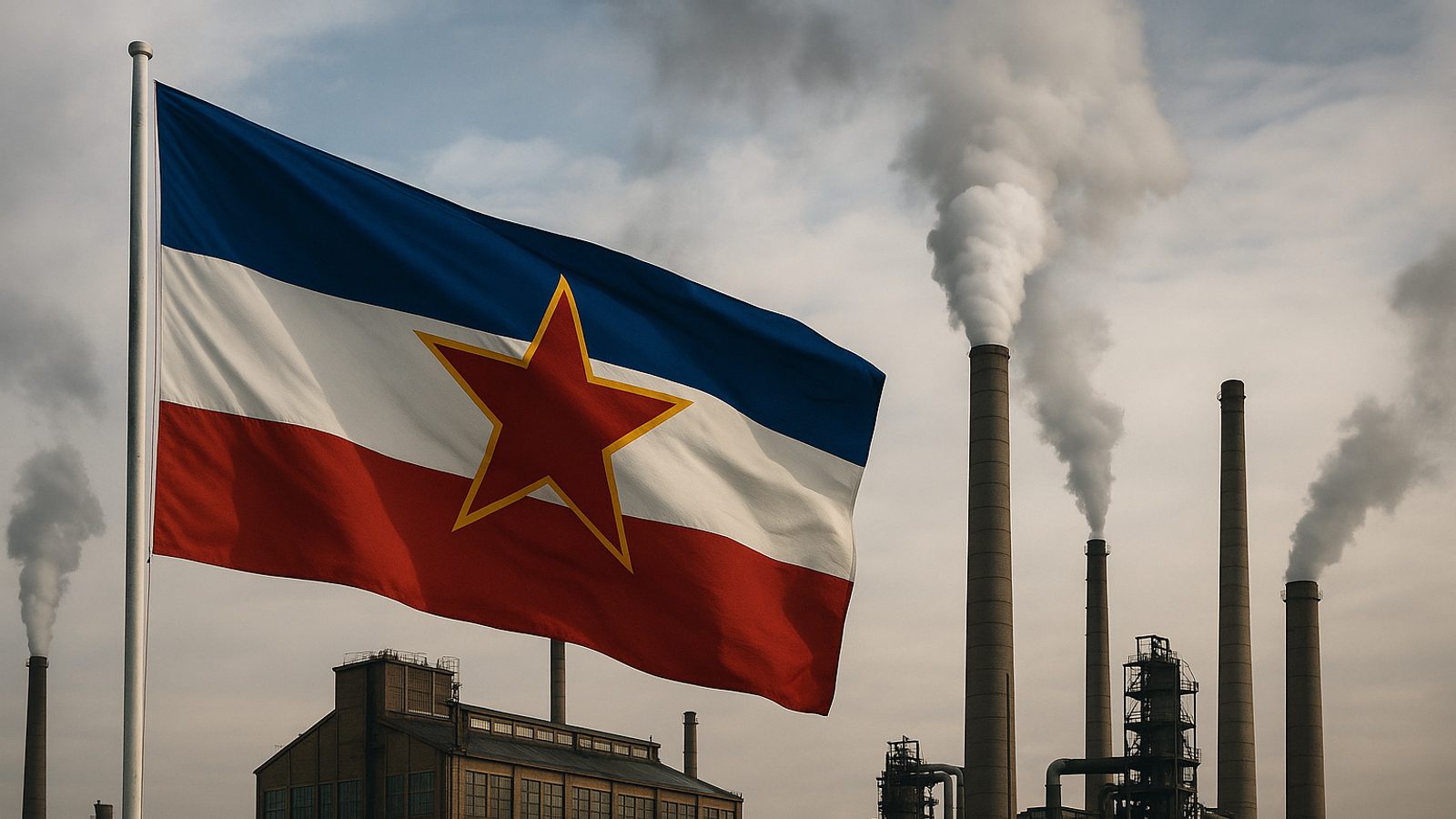
In 1947 the Federal People’s Republic of Yugoslavia adopted its First Five‑Year Plan, an ambitious program to rebuild a country devastated by World War II and to hasten its transformation from a predominantly agrarian society into an industrial state. The plan drew heavily on the Soviet model of central planning and set targets across industry, infrastructure and agriculture.
Key priorities included rapid development of heavy industry — mining, energy and metallurgy — reconstruction of railways, roads, bridges, factories and mines, and an acceleration of agricultural mechanization. Electrification and construction of new hydroelectric and thermal power plants were central pillars of the program. Planners set an explicit target for a fivefold increase in industrial output compared with the prewar level, while agricultural growth was expected to proceed more slowly.
State control and mass mobilisation
The state assumed a dominant role: factories, mines, banks and large tracts of land fell under government control and production and investment decisions were driven by a centralized plan. The implementation relied heavily on intensive labour mobilization, including youth labour actions that enlisted tens of thousands to build railways, roads and embankments. One of the most cited early projects was the Brčko–Banovići railway, completed in 1946.
The five‑year effort did produce tangible results: renewed industrial capacity and infrastructure, new industrial plants and power stations, and increased employment with the rapid creation of an industrial workforce. Yet the campaign exacted a high social price. Chronic shortages of consumer goods, food scarcities and a generally low standard of living accompanied the industrial push, while agriculture lagged behind industry.
The turning point came with the Tito–Stalin conflict in 1948. After the break with the Soviet bloc, Yugoslavia gradually abandoned the pure Soviet model and moved toward its own socialist system that emphasized workers’ self‑management and greater decentralization of economic decision‑making.
Historically, the First Five‑Year Plan remains a major state undertaking: it accelerated industrialisation and built important infrastructure, but many of its ambitions were only partly realised and were accompanied by significant social and implementation challenges.
Photo: press material from the event