North Macedonia launches first national genetic census of the brown bear
MED and the Ministry aim to gather about 900 samples by the end of 2026 to map numbers, distribution and genetic diversity.
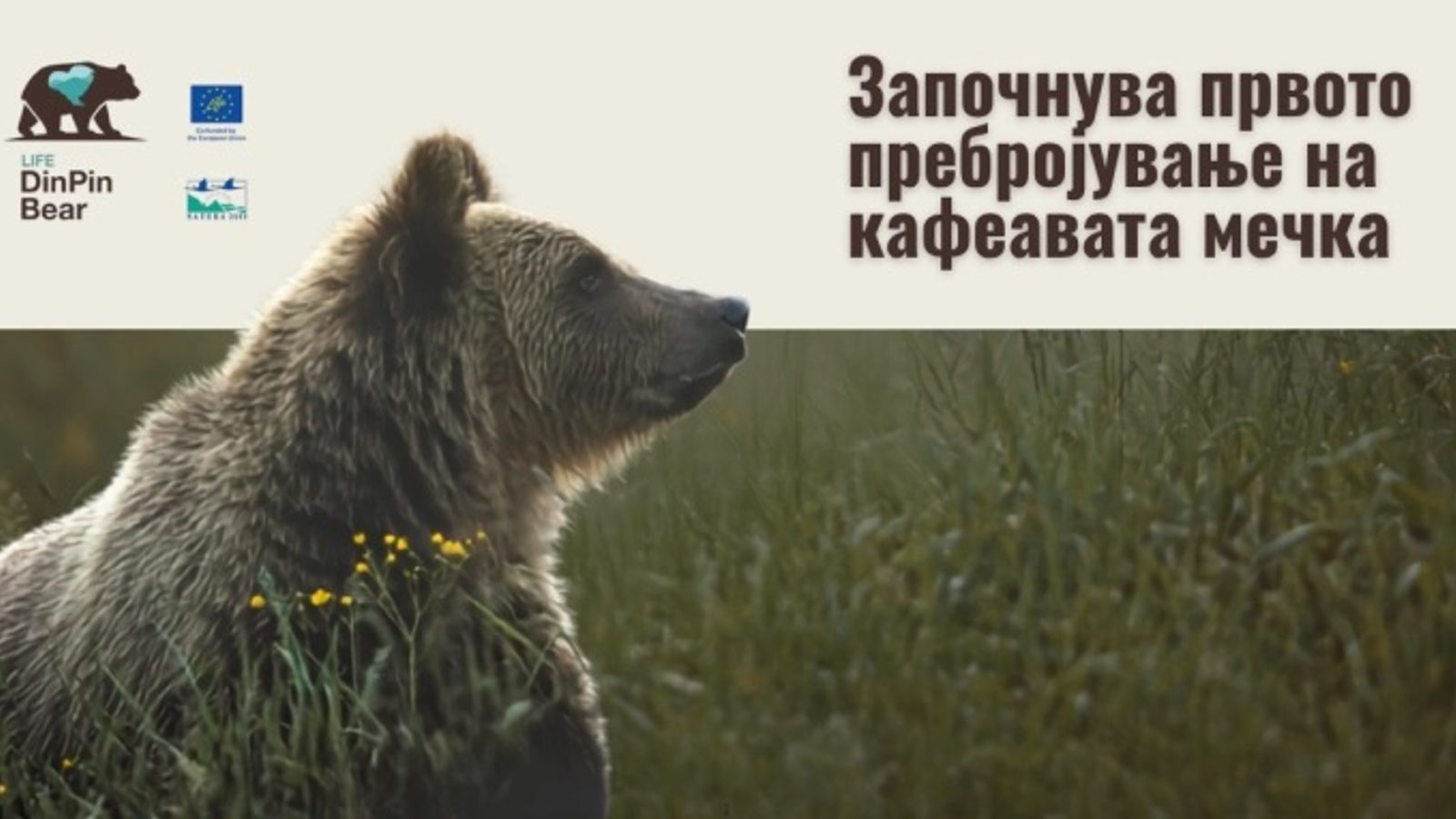
North Macedonia has launched its first nationwide genetic census of the brown bear, a joint initiative by the Macedonian Ecological Society (MED) and the Ministry of Environment and Spatial Planning. The campaign is designed to produce more accurate data on population size, distribution and genetic diversity for this strictly protected species.
Scope and methodology
The monitoring will target the Dinaric–Pindos bear population, which stretches from the Alps to the Aegean Sea and numbers roughly 4,000 individuals, making it the largest brown-bear population in Europe. Within North Macedonia the survey will focus on the western part of the country: Skopska Crna Gora and the Shar Mountain in the north down to Pelister, Nidže and Kozhuf in the south.
The project aims to collect about 900 genetic samples by the end of 2026. Fieldwork will rely on non-invasive sampling: DNA will be obtained from material left by the animals in the environment, allowing each individual to be identified and followed over time.
"Genetic monitoring involves non-invasive collection of genetic samples from material that animals leave in the environment. For the bear, samples of faeces will be collected, from which the genotype of each individual will then be determined, like a kind of genetic fingerprint," explains Aleksandar Stojanov, coordinator of the project at the Macedonian Ecological Society.
Collection and surveillance will actively include foresters, gamekeepers, rangers in protected areas, hunters, gatherers of forest fruits and medicinal plants, as well as mountaineers, cyclists and other nature enthusiasts.
The Ministry of Environment and Spatial Planning says the genetic monitoring will form the basis for future planning and implementation of protection and management measures for the brown-bear population. Beyond counting animals, the study will map distribution and genetic diversity to improve understanding of bear ecology and prepare a comprehensive conservation strategy for the Dinaric–Pindos region.
The project is co-financed by the EU LIFE programme and brings together 21 partners from nine European countries. In addition to scientific research, activities will focus on developing legal and management tools to protect bear habitats and on measures to reduce human–wildlife conflicts, a major threat to the species’ survival.
Photo: press material from the event