Prespa at a crossroads — agrometeorological data and sustainable agriculture to protect the lake
Agrometeorological sensors, targeted spraying and organic initiatives aim to lower farming’s pressure on Prespa Lake without sacrificing local livelihoods.
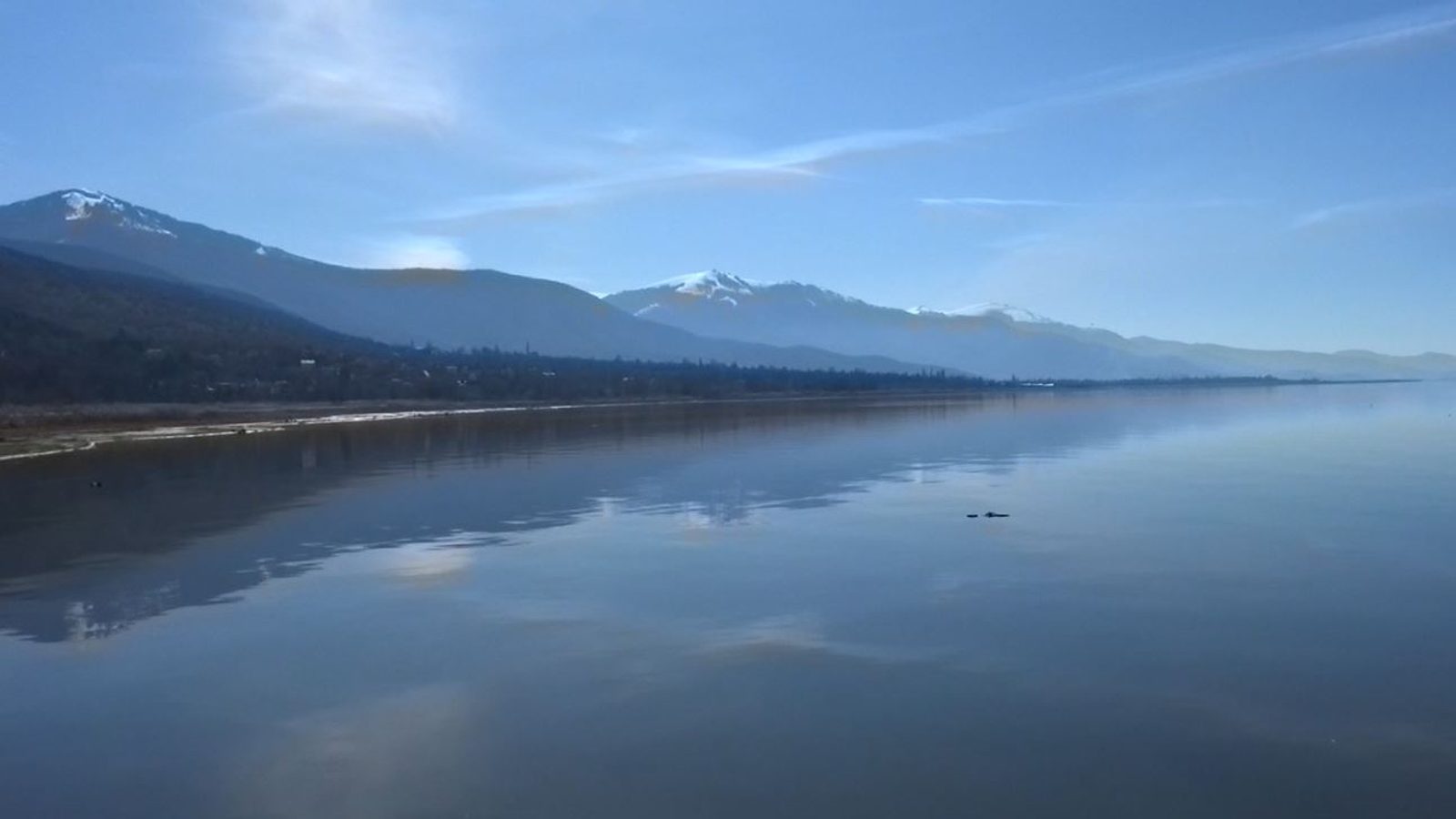
Prespa Lake and its surrounding natural landscape face growing stress from climate change and intensive human activity: especially intensified farming, excessive water extraction and heavy use of pesticides and chemical fertilizers. Finding ways to keep agricultural production while reducing environmental impact is becoming a priority for communities around the lake.
Technology and local initiatives
Ten agrometeorological stations have been installed across the Prespa region, with data available to producers who manage some 4,500 hectares of orchards. The sensors monitor soil and air moisture as well as temperature, enabling more precise protection of plantings and more rational irrigation.
Farmers in the area point to concrete benefits. "The agrometeorological station helps us a lot, mainly for measuring temperature differences, because in Prespa they are pronounced. We can see when the temperature drops and when we need to protect the orchard, mostly from frost," said Lazar Georgievski, an orchardist from Pokrvenik.
Producers who use the station data report fewer pesticide applications because treatments are now scheduled based on real conditions rather than fixed calendars. "The stations are already installed; those farmers who use the data have already seen a reduction in the number of sprayings. Spraying for protection is done when it is needed," said Gligor Todorov.
Local rural women’s groups are expanding traditional tourism offers to include organic products, adding economic alternatives that place less pressure on natural resources. "Besides catering, we are now focused on cultivating Galičica mountain tea, which is a protected species. We also have raspberry plots and prepare jam that we sell through the Association 'Rural Women'," said Violeta Prculovska of the Association 'Rural Women'.
Sustainable farming practices — combining better weather data, targeted protection, and organic cultivation — are presented by locals as ways to reduce the pressure on Prespa Lake while preserving yields and livelihoods that the region depends on.
Photo: press material from the event