Parents angry: free school uniforms contain synthetics
Parents in Centar, Aerodrom and Gazi Baba complain the free uniforms have high polyester content; municipalities say the composition has been improved and that procurements were legal.
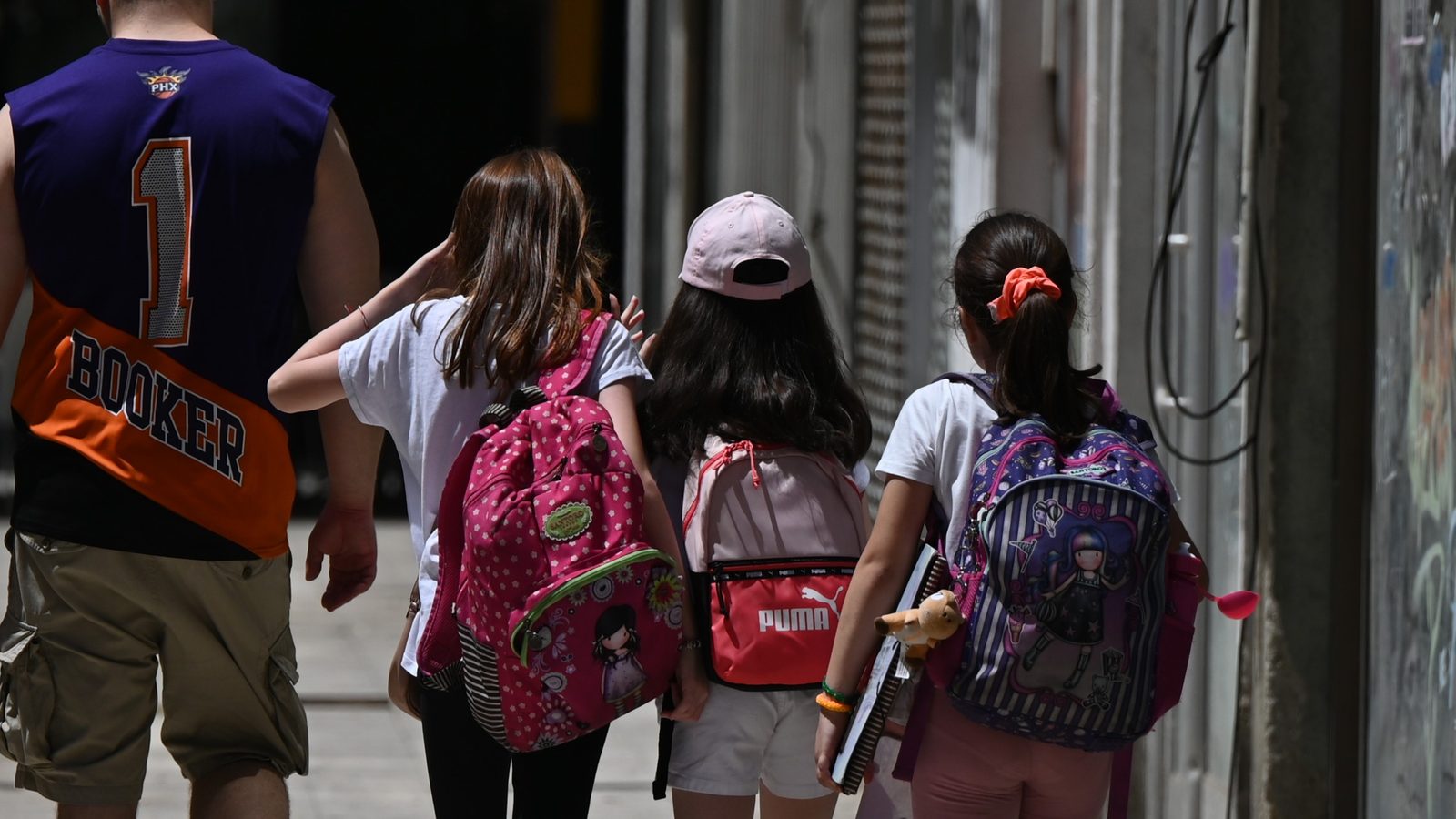
Parents in several Skopje municipalities are complaining that the free school uniforms distributed to them last year are made with a significant synthetic content and deteriorate quickly, after which they sought explanations from the municipalities. The municipalities of Centar, Aerodrom and Gazi Baba defend their choices in the public procurements and announce improvements for the new school year.
Parents from Centar who contacted us say that the packaged sets that were promised to them as cotton in fact contained a large share of polyester. One mother was upset after discovering the material blend and demanded changes.
“I hope that this year the uniforms will truly be cotton as they promise us,” said a parent from Centar.
Another parent from the same municipality described the dissatisfaction in detail: “We as parents are not happy at all with what uniforms our children wear. The material is terrible. The shirts are 50 percent polyester, and that is not little, is this how our municipality cares for children? Not to mention the sweatshirt, 100 percent polyester. We will see if this year they understood and will give the children cotton clothes.”
A check showed that this year the same company from last year’s procurement, "Link Media Plus" DOOEL Skopje, was engaged to produce the uniforms for the municipal schools in Centar. The contract value is around 15 million denars (about 244,000 euros). The company also holds other public contracts in the country, including seasonal decoration and maintenance services.
Reactions in Aerodrom and Gazi Baba
In Aerodrom, mothers sent us photos and complained about rapid staining and poor behavior when washing. “My son, who is in first grade, wears the uniform; these models did not perform well in practice for us. I talked to other mothers and we share the opinion, first they turn white, then immediately got stains. Imagine small children, my son came home from school with food on his clothes. That is hard to wash out, the material is very bad,” said one mother.
The Municipality of Aerodrom responded that the cotton share was increased this year and explained the composition and the set: "The Municipality of Aerodrom, when procuring student uniforms, pays special attention to their quality, comfort and practicality. This year, the share of cotton has been increased from the previous 55 percent to 60 percent, thereby further improving the material composition. From past experience it has been shown that this material is comfortable, durable and easy to maintain. All pupils are provided with 5 items of clothing – 2 white polo shirts with short sleeves, 2 white polo shirts with long sleeves and a dark blue polar sweatshirt with a zipper. The polo shirts are made of 'single pique knit' with a composition of 60% cotton and 40% polyester."
The municipality also confirmed that the same firm, "Link Media Plus" DOOEL Skopje, has a contract for this year as well, with a total value of 19 million denars, and that the procurement was carried out in accordance with legal procedures.
In Gazi Baba parents complain that on some pieces they cannot even read the labels, and that the clothing tears during washing. “Although there is no label on our uniforms, I see that the material is terrible. The clothes tear when washing. For my child I order several more shirts that we pay for and from that I see they are not cheap. The polo shirts are 480 denars with short sleeves, with long sleeves 335 denars, and the sweatshirt is 820 denars, pure synthetic,” explained one parent. For Gazi Baba, the company named for producing the uniforms this year and last year is the Company for the Production of Other Outerwear "Armarium Group" DOO Skopje.
The Municipality of Kisela Voda provided a photo of a label showing the desired composition of 100% cotton for the uniforms issued there.
Fashion designer and education activist Maja Kikiritkova warned of health and environmental risks from children wearing polyester clothing. She described how polyester is produced and pointed out that wearing and washing it releases micro- and nanoplastic.
“Skin is the largest human organ. Imagine children who are dressed in polyester (plastic) for 6–8 hours a day. The skin does not breathe, pores close, and by wearing it under the influence of body temperature, polyester releases micro- and nanoplastic that directly enter the body. That microplastic causes hormonal imbalance. Unfortunately, we increasingly face hormonal disorders in children. Children in growth and development should wear clothing made of 100 percent natural materials, because polyester is truly harmful, especially at that age,” she said.
In her elaboration, Kikiritkova also pointed to studies that have found microplastic in the placenta and to research that showed a temporary drop in the number of detectable sperm after wearing polyester underwear in a small group of men, with full recovery after stopping wearing it. She assessed that the trend of synthetic blends in the textile industry is the result of choices that prioritize durability and color at the expense of cost and health.
Photo: Sloboden Pechat / Dragan Mitreski