Parents of Pulse victims deliver 10 conclusions to inquiry commission for Kochani
The proposals demand a full chronology of permits and inspections, identification of responsible officials and institutional accountability.
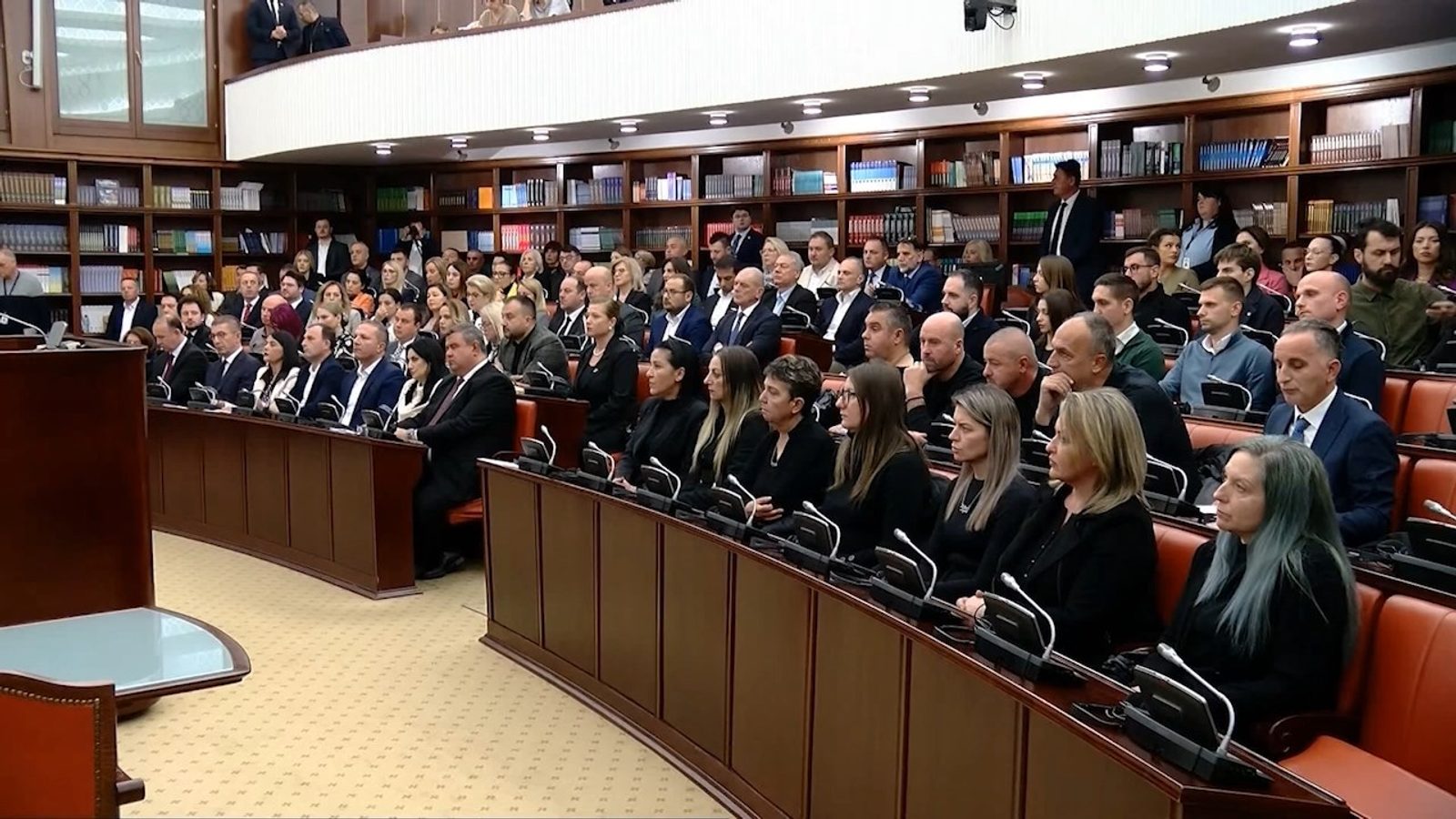
Will the stalled inquiry commission on the Kochani tragedy finally move? One year and eight months after the catastrophic fire, and almost a year after the parliamentary hearing on the disaster, the parents of the children who died at the Pulse venue have delivered a set of conclusions to the Permanent Inquiry Commission for the Protection of Freedoms and Rights of Citizens.
The proposals — ten conclusions in total — have already been sent to the commission chairman, Dimitar Apasiev, and were published exclusively. The parents present their demands as a pathway to unblock the commission, which has been unable to agree internally on which conclusions should pass.
Key demands and central questions
The document opens with a demand to determine whether the competent institutions were aware of violations, whether there were influences on inspection controls, and why measures to prohibit operation were not taken where legal grounds existed. The statement frames the central question bluntly: "Would Pulse have been open on 16 March 2025 if the responsible institutions had acted lawfully and in time?"
The parents, acting through Civic Association "16 March 2025 - Kochani", make clear that alongside any criminal liability established by the judiciary, Parliament must establish political, institutional and functional responsibility regardless of party affiliation or the period during which public functions were held. They explicitly summarize their political stance in a short, pointed sentence: "We do not seek a verdict on the street — we seek justice in the courtroom, but from Parliament we demand political and institutional responsibility."
Among the other requirements are the preparation of a complete chronology of issued permits, licenses and inspections, the identification of institutions and responsible officials to establish who had authority and who knew or should have known, and a full review of inspectorate and police procedures before and during the tragedy. The parents insist that all inquiries and court proceedings be conducted independently, impartially, thoroughly and without unjustified delays.
Beyond independent and efficient criminal proceedings, the proposals ask for legislative changes and stronger controls, a one-off financial aid and long-term support for affected families, and concrete measures with deadlines and accountability. The association warns that the tragedy must not be left as mere subject of political debate and declarative condemnations, adding that they do not seek political score-settling but a complete and non-selective establishment of political, institutional and functional responsibility — "justice for Kochani must not end on paper."
Photo: press material from the event