PISA 2025: Only a third of 15‑year‑olds in North Macedonia reach basic skills
PISA 2025 shows North Macedonian pupils scored below OECD averages in math, reading and science; technology distraction and an increasing performance gap are highlighted.
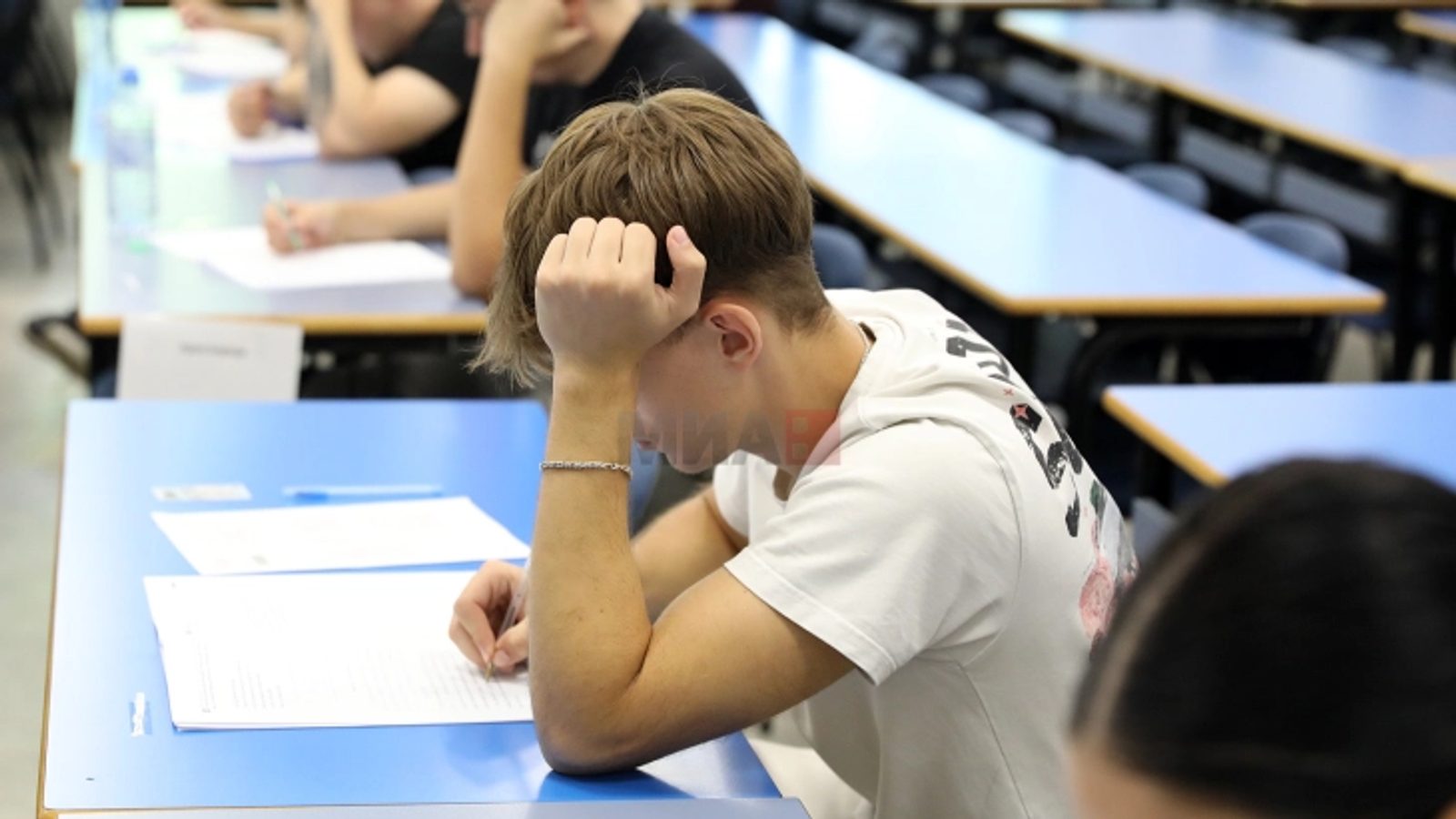
Results from PISA 2025 show that students in North Macedonia performed below the OECD average across mathematics, reading and science, and also scored lower on computer‑based problem solving that measures how pupils apply knowledge to real situations.
Key findings for North Macedonia
Only 32 percent of 15‑year‑olds in North Macedonia reached at least the basic level in mathematics, compared with an OECD average of 65 percent. Around 1 percent of students achieved the top mathematics levels (levels 5 or 6).
In science roughly 36 percent of students mastered basic scientific concepts; the assessment found that these students can identify correct explanations for familiar scientific phenomena and use that knowledge to judge simple conclusions from given data. However, no student in the country scored at levels 5 or 6 in science.
Reading performance was also weak: about 26 percent of students reached level 2 or higher in reading, and none of the tested pupils attained the highest proficiency levels. "At minimum, these students can identify the main idea in a moderately long text, locate information based on explicit, though sometimes complex, criteria, and consider the purpose and form of texts when explicitly directed to do so," the report states.
The report notes a widening gap between the highest and lowest performers: between 2022 and 2025 the difference increased between the top 10 percent and the bottom 10 percent of students in all three domains — mathematics, reading and science.
Technology and classroom environment emerged as important factors. Some 33 percent of students reported that classmates are often distracted by digital devices during science lessons; those who reported digital distraction scored on average 22 points lower. As a response, about 60 percent of schools in the country have introduced bans on mobile phones.
At the same time, artificial intelligence tools are already widely used: 44 percent of students said they use AI chatbots for school tasks at least once a week, mainly for preliminary research, text summarising and drafting written assignments. Socio‑economic status explains 7 percent of the variation in science performance in North Macedonia, below the OECD average of 12 percent. "Around 18 percent of students in disadvantaged circumstances in North Macedonia were able to achieve results in the highest quartile of science performance. These students can be considered academically resilient because, despite their socio‑economic disadvantage, they achieved educational excellence compared with students in their country," the report adds.
There are also positive signs: 80 percent of pupils report that teachers show interest in their learning and provide extra help. But the study records a fall in family support and household discussion about school matters since 2022, alongside increases in absenteeism and lateness.
Nationally, PISA 2025 was administered to a representative sample of 6,977 students from 124 schools, covering roughly 90 percent of the country’s 15‑year‑old population.
Photo: press material from the event