Gordana Siljanovska‑Davkova: Despite blockade, North Macedonia remains committed to EU integration
At a Skopje working meeting with "Friends of the Western Balkans" ambassadors she cited legal alignment, the Reform Agenda and hopes for support from Greece and Italy.
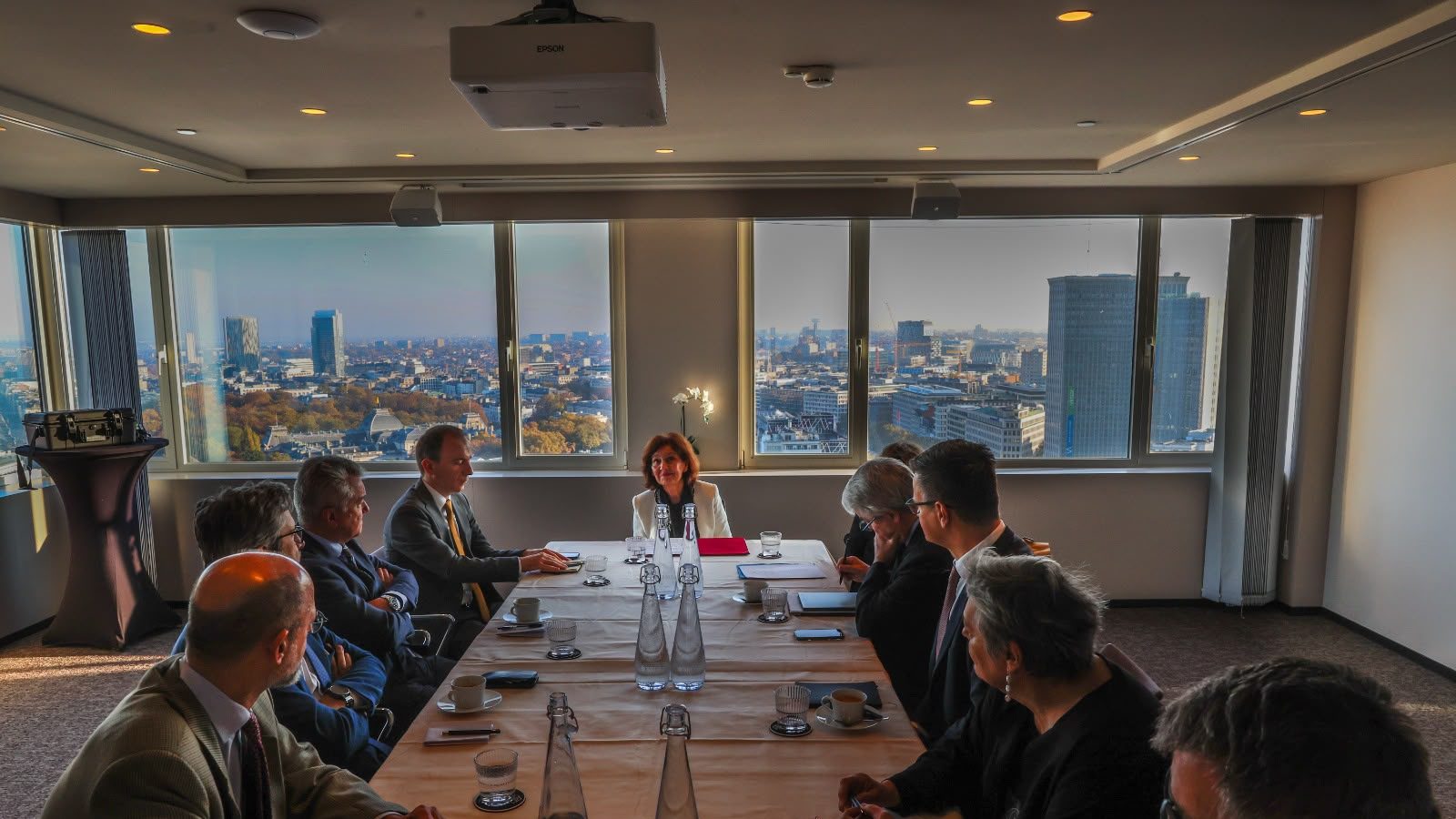
President Gordana Siljanovska-Davkova held a working meeting in Skopje with ambassadors from the group "Friends of the Western Balkans" to discuss regional cooperation and North Macedonia's European perspective.
Meeting focused on reforms, legal alignment and upcoming EU presidencies
At the session the president thanked the envoys of the participating states — Irena Andras (Croatia), Ioanis Vrailas (Greece), Balint Odor (Hungary), Vincenzo Celeste (Italy), Juraj Nociar (Slovakia) and Vladimir Bertl (Czechia) — for their continued support for the Western Balkans.
Siljanovska-Davkova underlined the country's progress on harmonising national legislation with European Union law and its full alignment with the EU's Common Foreign and Security Policy, and said this demonstrates North Macedonia's continued commitment to the European integration process.
"Despite the blockade in the accession process, the solid level of alignment of our legislation with European Union law and the one hundred percent alignment with the EU's Common Foreign and Security Policy confirm Macedonia's commitment to the European integration process," the president said.
She pointed to the accelerated implementation of the Reform Agenda as further evidence of progress, a development also noted in this year's European Commission report.
Siljanovska-Davkova expressed the expectation that intensifying North Macedonia's accession process and advancing regional integration will be priorities for upcoming presidencies of the Council of the European Union — in particular during the terms of Greece and Italy, which she singled out as friends of the Western Balkans.
Photo: Kabinet na pretsedatel na RSM