Skopje storm on 21 July 2026 toppled 190 trees — city and environmental groups trade blame
A storm with gusts up to 134 km/h felled 190 trees in Skopje; the city blames civic groups for delays, activists point to long‑term poor maintenance and missing green cadastre.
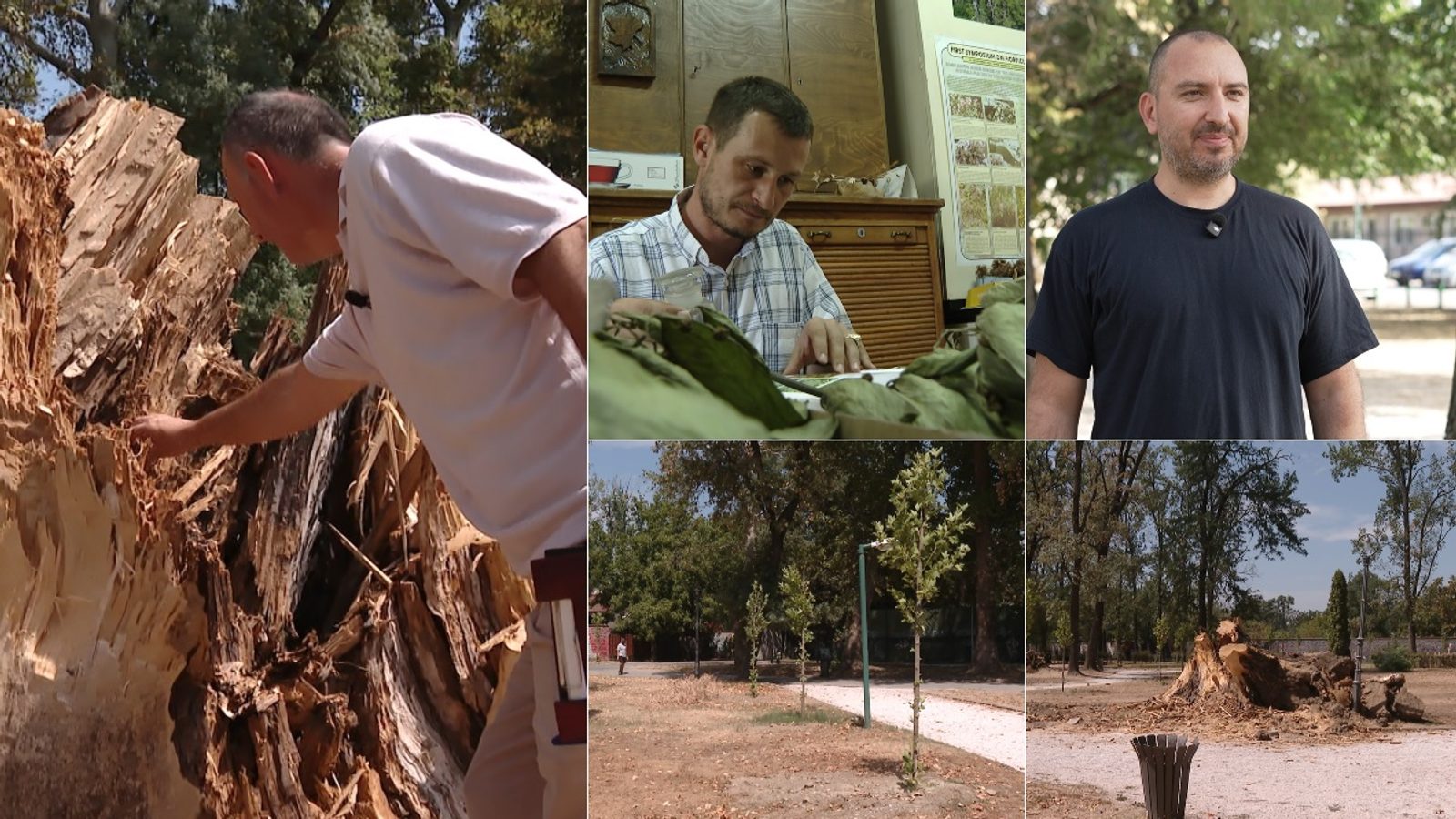
21 July 2026: A violent storm swept over Skopje and left the city counting damage — including 190 fallen trees — and searching for who is responsible for the condition of its urban canopy.
The authorities described the phenomenon as rare, with hurricane-strength gusts reaching up to 134 kilometres per hour. The episode lasted roughly 40 minutes, with the most intense period about 20 minutes long. Alongside structural damage, officials reported that 190 trees were uprooted or broken across the city.
Debate over maintenance and oversight
City technicians and environmental activists agree on one fact: many of the trees that fell were dry or decayed and should not have remained in place. Emil Durović, head of the Department for Parks and Greenery at the City of Skopje, said that many of the trees that failed were already brittle, but added that healthy specimens fell too.
“Before us is a tree that fell in the storm, it toppled over, a many‑year poplar of over 50–60 years. A decision had been prepared for its pruning, trimming, to reduce the woody mass. However, under the force of the wind it simply toppled. Poplars have widely branching roots but a shallow root system,” Durović said.
Durović also pointed to damage to the park’s irrigation infrastructure: “This is the supply hose for the hydrant network. Here is the pit. They were destroyed. Work is currently underway to repair the damage where the hydrant network in the City Park will be fully restored so that we can have quality irrigation in the coming period,” he said.
When asked why trees that had been assessed for cutting or pruning were not removed earlier, Durović replied that the sector had prepared field inspections and decisions — including a decision from April of the previous year to cut 113 and prune 303 trees in the second part of the park, marked with S for cutting and K for pruning — but that implementation had been blocked by some civic and non‑governmental organisations.
Environmental activists reject the city’s sole responsibility argument and point to years of poor and technically unsound maintenance. Marjan Kalevski of Zelen Human Grad said that crews often prune trees without adequate knowledge, sometimes removing more branches than advisable and leaving trees weakened and prone to drying out.
“Trees are not maintained properly. Far too often trees are pruned without knowledge: crews come, cut branches — those that should be cut and those that should not. Very often they prune more than necessary and later the trees get ill and simply die, dry out,” Kalevski said. He added that his organisation had sought oversight of the last cutting and pruning decision because of a lack of trust in past practice.
Professor Bojan Simovski from the Faculty of Forestry at Ss. Cyril and Methodius University — Skopje warned that care for urban trees must be continuous and elevated to a higher level because storms are expected to become more frequent.
“Care cannot be a matter of attention only after such events occur. It must be ongoing and constant so that this type of damage, and the danger for urban areas, does not happen,” Simovski said, and urged a wider approach to species selection, maintenance schedules and adaptation to local conditions.
Experts and activists both proposed the creation and proper maintenance of a so‑called green cadastre — a digital record for each tree — which exists on paper as a municipal obligation but often lacks basic, usable data in practice. A functioning cadastre, they say, would allow timely interventions and better long‑term planning for urban greenery.
Photo: press material from the event