Slaveski: Cross-border transfers alone are not evidence of wrongdoing
The central bank governor says transfers between countries are common and the National Bank monitors banks’ liquidity; the opposition demands answers over 'Alta Bank'.
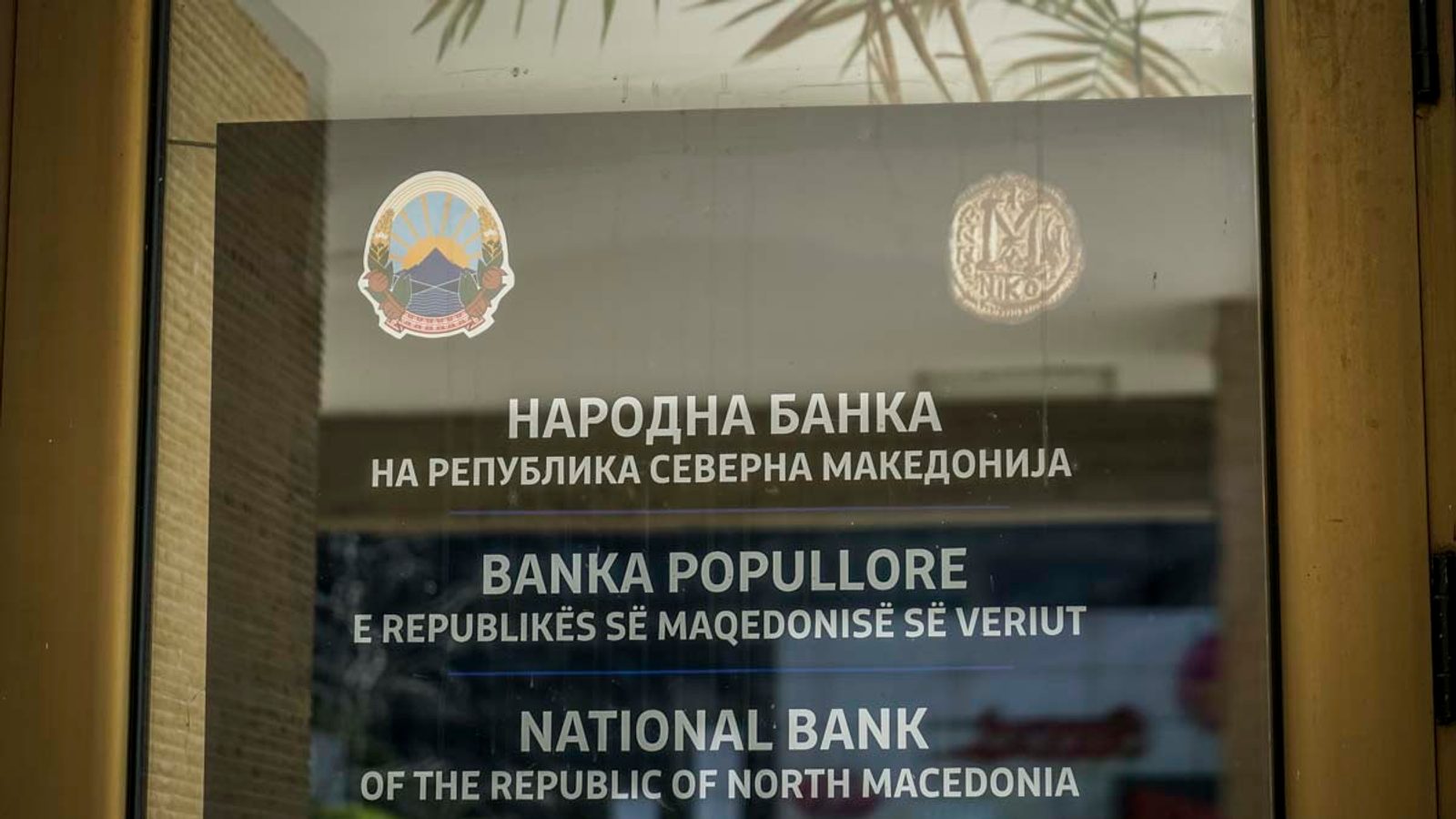
Trajko Slaveski, governor of the National Bank of the Republic of North Macedonia, said today that transfers of funds between countries are a normal feature of modern finance and do not by themselves indicate illicit activity. He emphasised that the domestic banking system is stable and that the central bank continuously monitors liquidity, capital positions and risk exposure at all banks.
Slaveski also noted that allegations about transfers originating in Serbia should be addressed by the competent authorities in that country, adding that the National Bank of Serbia has already issued an official statement and that unverified claims about other banking systems should not be repeated.
In his explanation Slaveski said: "In the modern economy, where countries and financial markets are closely connected, cross-border financial flows are a common part of economic activity. Companies make payments to foreign suppliers, banks execute transactions for their clients, and investors put funds into both domestic and foreign markets. Our country also has capital inflows and outflows, including through portfolio investments abroad."
Opposition calls for answers
The opposition SDSM accused Prime Minister Hristijan Mickoski, Governor Trajko Slaveski and the Public Prosecutor's Office of remaining silent over claims that large sums of money were moved into the country via "Alta Bank" following Aleksandar Vučić's electoral defeat in Serbia. Party officials said Mickoski and the governor are primarily responsible for explaining the circumstances, arguing that the entry of Alta Bank occurred with their knowledge and approval.
Slaveski urged citizens to base their confidence in the banking system on verified information and facts and reiterated that the central bank will continue to work to preserve financial stability, which he described as a cornerstone of the economy. He recalled that the supervisory framework of the central bank was recognised in 2021 when the European Commission assessed domestic regulation and supervision of banks as equivalent to EU standards.
Photo: press material from the event