Third phase of Kriva Palanka–Deve Bair section to start with EU grant and EIB/EBRD loans
EU grant of €149 million plus loans from EIB and EBRD will finance the third phase of the Kriva Palanka–Deve Bair railway section; route includes numerous tunnels and viaducts.
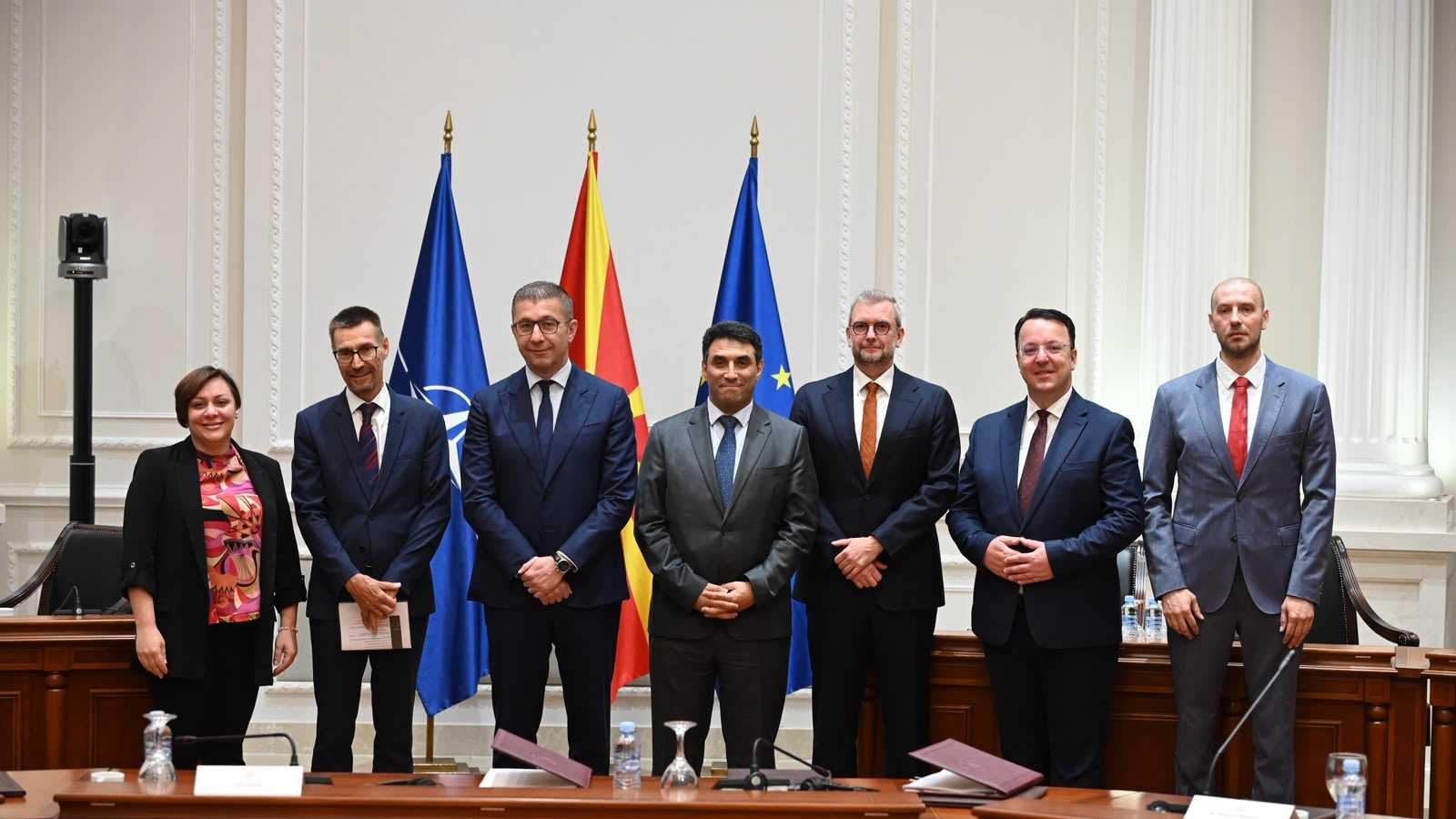
The third phase of the railway Corridor 8 section between Kriva Palanka and Deve Bair will start with a combination of EU grant money and loans, the government announced after signing financing agreements today. The package includes a €149 million grant from the European Union and €175 million loans from each of the European Investment Bank (EIB) and the European Bank for Reconstruction and Development (EBRD).
Contracts for the financing were signed at the Government building. The Transport and Communications Minister, Aleksandar Nikoloski, said the Corridor 8 project is among the government's top priorities and stressed the importance of cross-border cooperation with Bulgaria.
Cross-border tunnel makes the route meaningful, officials say
"It was not easy in these two years, it was quite challenging. It is particularly important that we managed to reach an agreement with Bulgaria on the construction of a cross-border railway tunnel that should connect the two countries and only in that way does this project make sense. Last year in November we signed the agreement, and already last week the first inter-ministerial and intergovernmental meeting was held in Sofia. We expect the second intergovernmental meeting to be held in Skopje at the end of this month. The message there is clear, that the two countries will send a joint letter to the European Union, the European Bank for Reconstruction and Development and the European Investment Bank to secure grant funds for the construction of the cross-border railway tunnel. Those are funds with which we can jointly implement this project," Nikoloski said.
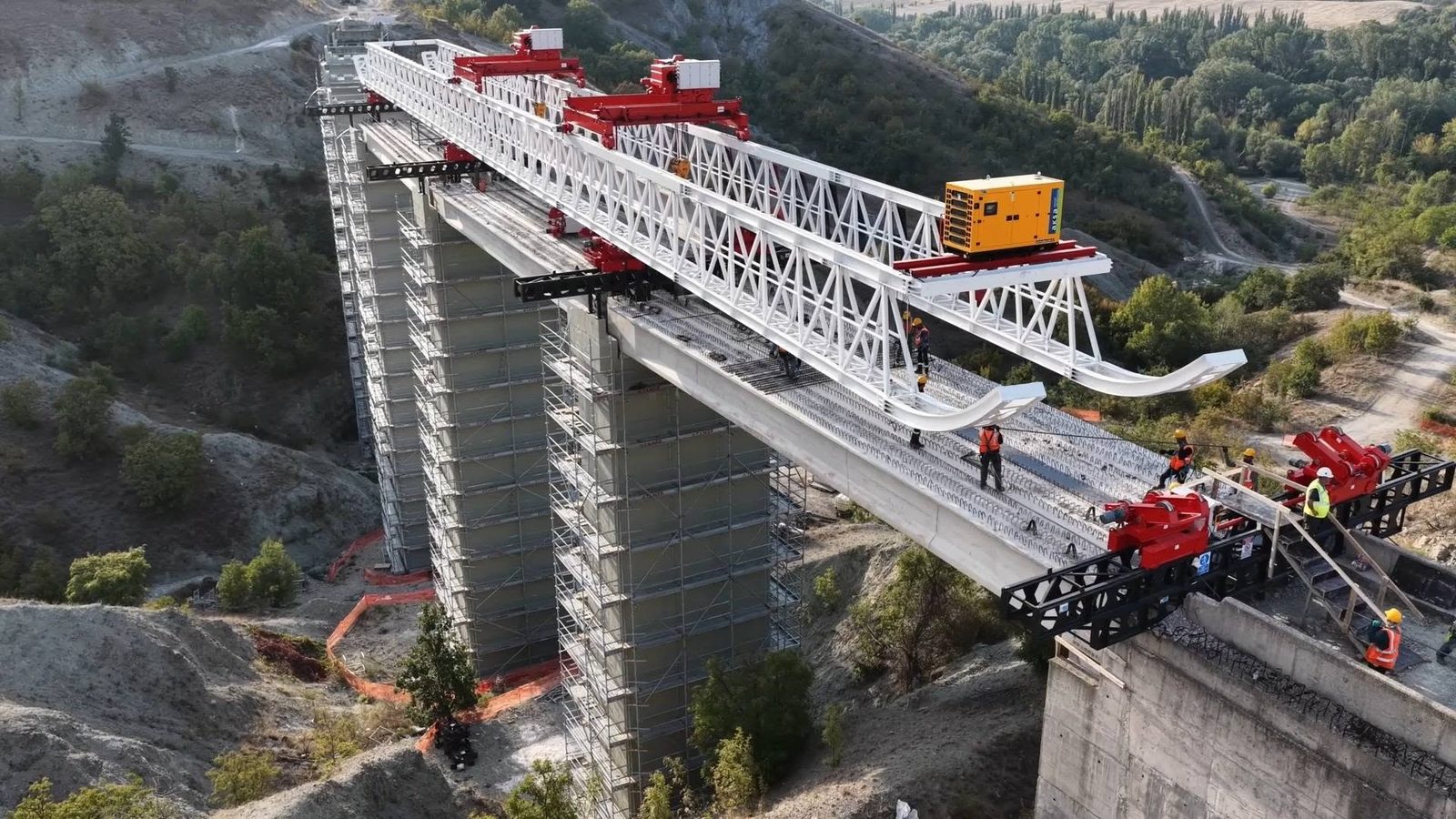
Officials described the section under preparation as technically demanding. The route covers 22 kilometres and will include 21 tunnels along with 52 bridges and viaducts, figures highlighted by state railway managers.
Sinisha Ivanovski, director of Macedonian Railways - Infrastructure, warned about the complexity: "Over 60 percent of this route will be in bridges and tunnels, and that is technologically truly challenging. It involves difficult terrain access and there is a need for additional geodetic, hydrological, geological and geotechnical investigations... I believe that within the set deadline this section will be completed and we will all witness that we as a country can execute serious and technologically specific capital projects."
Prime Minister Hristijan Mickoski noted that until recently the project concept stopped short of a through tunnel linking the two states. "It took time. Progress had to be made in talks with our eastern neighbour; that progress was achieved, agreements were signed, we have a commitment (pledge) from both sides and we have a tunnel which is practically the third part of the project. Because, if the third section ends at the start of the tunnel, from the end of the tunnel to the connection with the national railway in Sofia we have a pledge from our eastern neighbour for a clear modernization of that part of Corridor 8 and we have a joint project — it is the tunnel which we expect to be fully financed as a grant by the European Commission," he said.
Work on Corridor 8 is already under way on earlier sections: the first phase between Kumanovo and Beljakovce is operational, and construction of the Beljakovce–Kriva Palanka segment is ongoing. The newly funded phase completes the planned upgrade on the line toward Bulgaria and is intended to improve regional connectivity across the western Balkans and into Europe.
Photo: press material from the event